



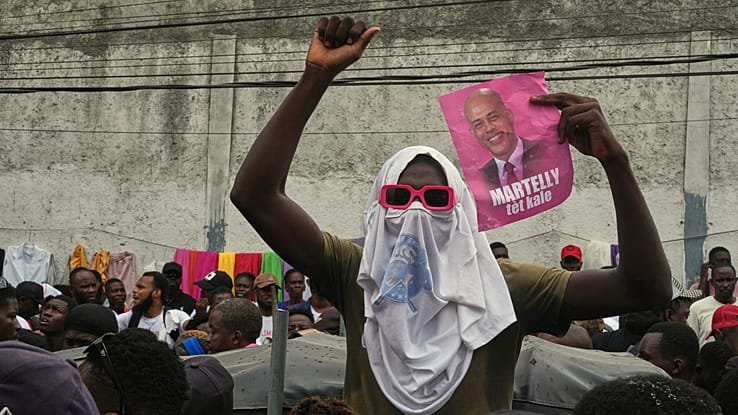
Haiti’s December presidential election is facing growing security concerns as former President Michel Martelly formally registers to contest, despite persistent gang violence and uncertainty over voters’ ability to participate.
Martelly submitted the documents required for his candidacy on Friday at the offices of the Provisional Electoral Council, accompanied by three lawyers and hundreds of supporters.
The former president, who had previously registered online, is running under Debloke, a political coalition that includes former members of the Haitian Tèt Kale Party (PHTK), which he once led.
The elections, scheduled for December 13, will be Haiti’s first general elections in more than a decade, but escalating violence has raised questions about whether authorities can organise a credible nationwide vote.
Martelly’s entry into the race follows an October 9 decision by the electoral council to remove a rule targeting candidates sanctioned by foreign governments, a development that could affect the eligibility of politicians previously barred under the provision.
The former musician, popularly known as “Sweet Micky”, served as Haiti’s president from 2011 to 2016. The United States and Canada imposed sanctions on him over allegations of facilitating drug trafficking and sponsoring multiple gangs.
The allegations have added scrutiny to his political comeback amid growing concerns about links between criminal groups and Haiti’s political and economic establishment.
A recent report submitted to the United Nations Security Council and made public earlier this month highlighted deep connections between gangs and influential political and economic actors, warning of escalating violence ahead of the elections.
Armed groups continue to control large parts of the country, including an estimated 70 per cent of the capital, Port-au-Prince, as well as major roads leading to the Central and Artibonite provinces.
The violence has displaced more than 1.4 million people, while insecurity continues to disrupt daily life and undermine preparations for the polls.
In the latest incident, armed gangs abducted four Salvadoran officers serving with the international Gang Suppression Force on Sunday. El Salvador’s President Nayib Bukele subsequently ordered special forces to conduct an operation to rescue the four aviation technicians.
The security crisis poses a significant challenge to electoral authorities, particularly because more than half of Haiti’s electorate lives in Port-au-Prince, the Central department and Artibonite.
With these areas affected by violence, concerns remain over whether prospective voters will be able to register and reach polling stations on election day.
The Provisional Electoral Council has extended the deadline for presidential candidates to register until October 31. Sixteen candidates had registered as of the latest report.
Despite the growing list of contenders, the deteriorating security situation leaves the feasibility of holding elections across the country uncertain.


