



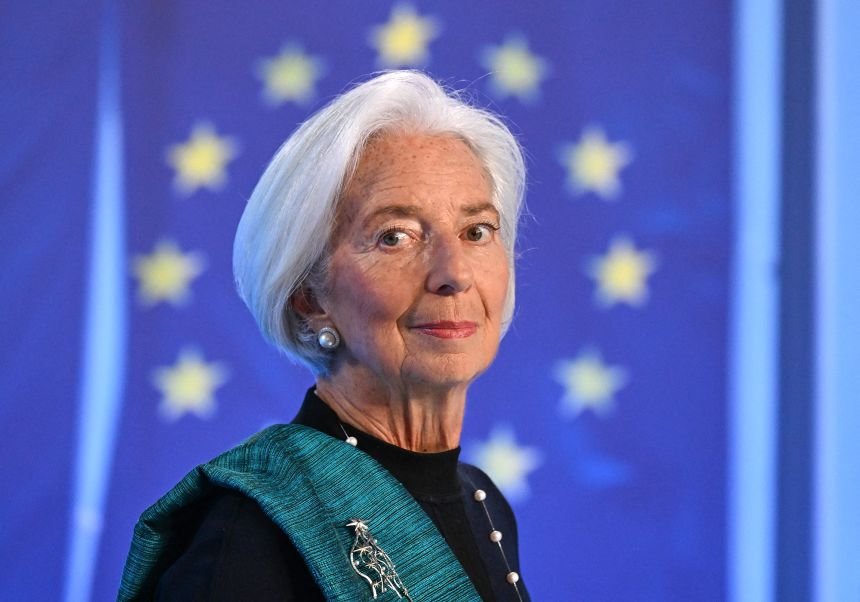
European Central Bank (ECB) President Christine Lagarde has announced plans to resign on February 7, 2027, eight months before the end of her tenure, paving the way for European leaders to appoint her successor.
Lagarde announced her decision on Thursday, October 29, 2026, in a video shared on X, saying she had informed her colleagues of her intention to leave the position.
“I have just informed my colleagues that I will step down as ECB President on 7 February 2027,” she said.
“It has been a source of great pride to serve this institution. I thank all of those who have supported me on this journey over the past seven years.”
The ECB confirmed her departure in a statement, saying Lagarde had informed its Governing Council and European Council President Antonio Costa of her decision.
Her resignation comes ahead of the scheduled expiration of her term in October 2027, allowing European leaders to begin the process of selecting a new president before France’s presidential election in April 2027.
The timing is significant as eurosceptic far-right and far-left candidates have been leading in opinion polls ahead of the French election, raising the prospect of political changes that could influence debates over European economic and monetary policy.
Lagarde has previously ruled out a bid for the French presidency, telling French newspaper La Croix in September 2026 that such a move would “not be a good idea”.
Speculation about her next move has persisted for months, with reports suggesting she could take over the leadership of the World Economic Forum, which organises the annual gathering of political and business leaders in Davos, Switzerland.
Lagarde became ECB president in November 2019 after serving as managing director of the International Monetary Fund (IMF) and France’s finance minister.
Her tenure has been marked by major economic disruptions, including the COVID-19 pandemic and a surge in inflation following Russia’s invasion of Ukraine in 2022, which triggered a sharp increase in energy prices across Europe.
During her leadership, the ECB faced the challenge of containing inflation while supporting economic stability across the euro area.
Reacting to her announcement, Costa praised Lagarde’s leadership, saying she had helped safeguard the stability and resilience of the euro area through a series of global crises.
“Through a global pandemic, a war in Europe, energy crises and inflation shocks, she has provided a steady and determined stewardship, helping to safeguard stability and the resilience of the euro area,” he said in a post on social media.
Costa added that the process of appointing her successor would begin immediately to ensure a smooth transition.
“To ensure a smooth transition to the next leadership of the ECB, the process for the appointment of her successor will be initiated today and will proceed without delay, with a view to a timely decision,” he said.


 President Christine Lagarde has announced plans to resign on February 7, 2027, eight months before the end)