



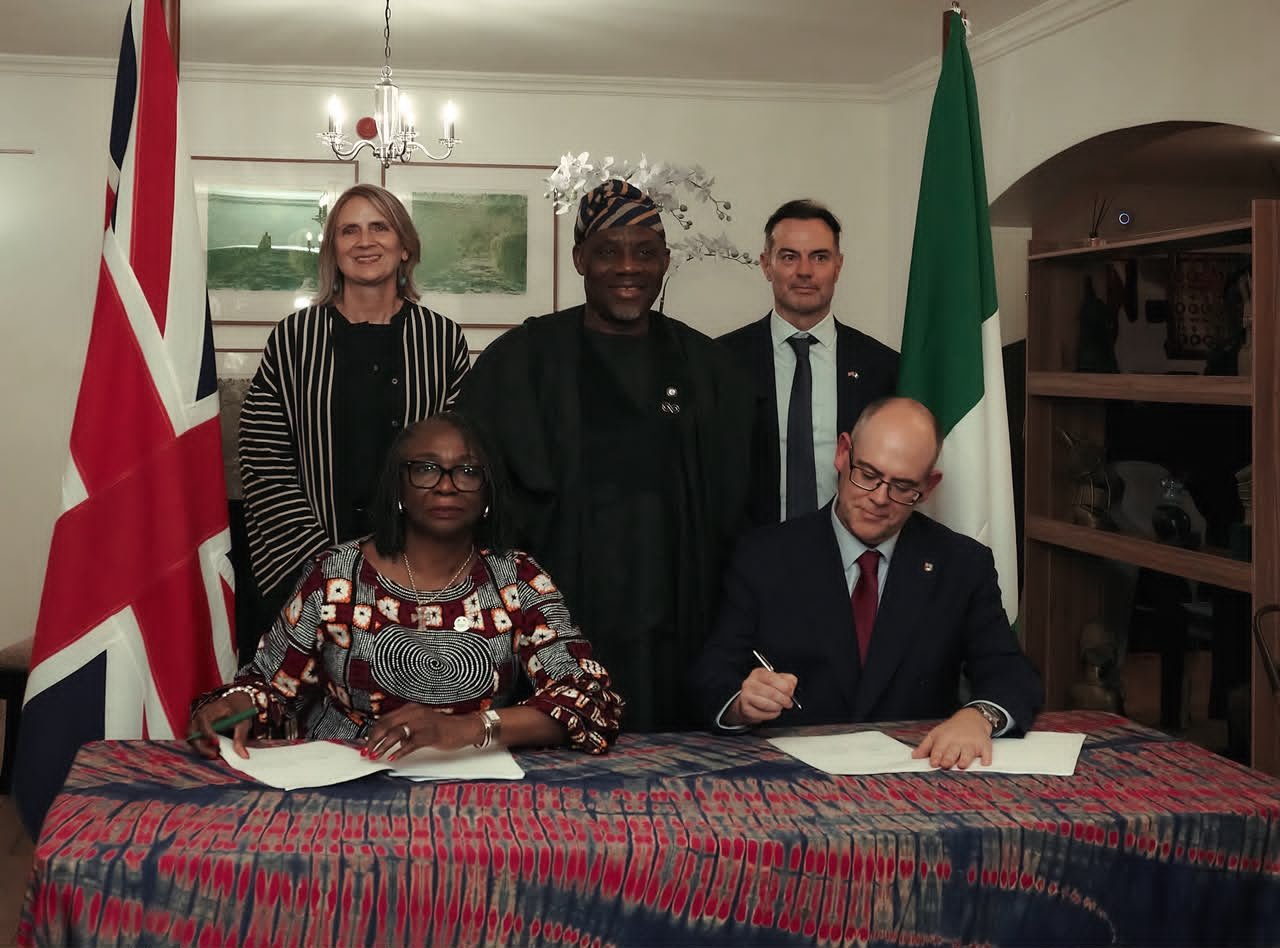
The University of Birmingham in the United Kingdom and the University of Lagos (UNILAG) have introduced two joint postgraduate programmes aimed at strengthening digital skills and expanding access to international-standard education in Nigeria.
The programmes, MSc Artificial Intelligence (AI) and Data Technologies and MA Digital Media and Communications, will run for one year in Lagos, with academic activities scheduled to commence in September 2027.
The initiative follows a Memorandum of Understanding signed by the two institutions in January. It was unveiled by the University of Birmingham’s Provost, Professor Nick Vaughan-Williams, and UNILAG Vice-Chancellor, Professor Folasade T. Ogunsola, in the presence of the Minister of Education, Dr Tunji Alausa.
The development was disclosed in a statement issued by the university’s media office on Friday.
The programmes were developed in collaboration with the Federal Ministry of Education and the National Universities Commission and will be delivered through a Transnational Education Unit based in Lagos.
Alausa described the partnership as timely, noting that it aligned with efforts to strengthen Nigeria’s tertiary education system and improve access to quality learning opportunities.
“Our planned collaboration and partnership with the University of Birmingham is both timely and strategic at this critical phase of Nigeria’s tertiary education advancement,” he said.
The minister said the initiative would build on ongoing reforms in the university system by making globally recognised education and best practices more accessible to Nigerian students.
He added that the partnership demonstrated the government’s Renewed Hope Agenda through initiatives designed to produce tangible benefits for students, educational institutions and national development.
Vaughan-Williams said the programmes would help address Nigeria’s growing demand for skilled professionals while supporting the country’s economic aspirations.
“We’re proud to launch these programmes with our partners at UNILAG. Together we are supporting Nigeria’s tertiary education and talent needs, which are central to its ambitions for economic growth,” he said.
He stressed that universities had a responsibility to prepare graduates for evolving global economies by equipping them with relevant skills and creating pathways to entrepreneurship and employment.
According to him, the joint programmes would provide students with the knowledge and practical capabilities needed to pursue rewarding careers and contribute to Nigeria’s development.
Ogunsola said the collaboration reflected UNILAG’s commitment to international partnerships founded on mutual respect, co-creation and shared responsibility.
She described the initiative as a significant step towards internationalising Nigeria’s higher education sector, adding that it would support curriculum modernisation, enhance the university’s global visibility and strengthen research collaboration.
She identified artificial intelligence, digital media, communications, health sciences and engineering as areas that could benefit from the broader partnership.
The MSc Artificial Intelligence and Data Technologies programme will cover machine learning, deep learning, computer vision, large language models, data management and AI ethics. Students will also develop programming and data-analysis skills.
The MA Digital Media and Communications programme will focus on digital cultures, power and identity, media ethics, research methods, content creation and broadcasting, preparing graduates for careers in journalism and digital communications.
The British Deputy High Commissioner in Lagos, Jonny Baxter, said the initiative illustrated how international university partnerships could respond to the changing demands of the economy.
“As Nigeria continues to grow as a technology and innovation hub, strengthening skills in areas such as Artificial Intelligence, data science, and digital communications will be critical,” he said.
Similarly, the British Council Nigeria Country Director, Donna McGowan, said the partnership would make international postgraduate education more accessible to Nigerian students by allowing them to obtain UK degrees without leaving the country.
“Enabling Nigerian students to access UK postgraduate degrees in-country offers a more affordable and accessible pathway to quality international education whilst contributing to national development,” she said.


 have introduced two joint postgraduate)