



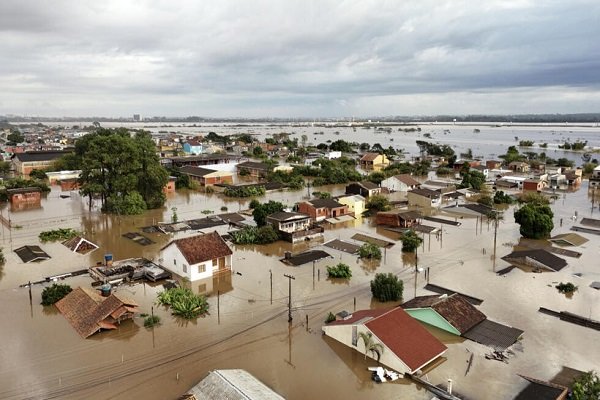
Brazilian prosecutors have filed a $108 million lawsuit against Shell’s subsidiary in the country, seeking compensation for material and moral damages linked to devastating floods that struck the southern state of Rio Grande do Sul in 2024.
The lawsuit, filed in conjunction with Brazilian non-governmental organisation Instituto Preservar, argues that Shell should be held accountable for its contribution to global warming through greenhouse gas emissions associated with its fossil fuel operations.
The floods, triggered by torrential rains in April and May 2024, killed nearly 200 people, displaced about 500,000 others and caused widespread destruction.
According to court documents, the prosecutors contend that Shell’s liability should be proportional to its contribution to global warming, which they estimate at two per cent of historical global greenhouse gas emissions.
“This civil suit is aimed at holding the defendant company accountable, in terms of its environmental and climate-related responsibilities, for collective material and moral damages stemming from the extreme weather event that hit Rio Grande do Sul state,” the prosecutors said.
They argued that the British energy giant should bear responsibility for its past and present greenhouse gas emissions arising from the exploration, production and sale of fossil fuels.
The $108 million claim covers both material losses and moral damages arising from the disaster.
The case marks a significant development in climate litigation, as Brazilian prosecutors seek to establish a direct link between a major oil company’s contribution to global warming and the harm caused by an extreme weather event.
Maria Antonia Tigre, director of global climate litigation at the Sabin Center for Climate Change Law, told AFP that the lawsuit was unprecedented.
“This is the first time a national public prosecutor is suing an oil major for a climate disaster,” she said.
Thales Miola, a lawyer at Instituto Preservar, said the financial burden of climate-related destruction should not rest exclusively on affected communities and the wider public.
“The costs of climate damage should not fall solely on society and on those who lost everything in the tragedy,” he said.
The lawsuit comes amid growing efforts by communities, environmental groups and legal practitioners worldwide to make major greenhouse gas emitters pay compensation for losses associated with climate change.
In 2025, German courts moved towards recognising the possibility of holding major emitters financially liable for climate-related damage in a case brought by Peruvian farmer Saul Luciano Lliuya against German energy company RWE.
Although the courts rejected his compensation claim, their decision left open the possibility that major emitters could be held liable for climate-related payments under certain circumstances.
Other climate-related cases are also pending in different countries.
They include claims by Philippine victims of Typhoon Odette against Shell in the United Kingdom, residents of Indonesia’s Pari Island against Swiss cement maker Holcim, and Pakistani farmers affected by the 2022 floods against RWE and Heidelberg Materials in Germany.
The Brazilian case adds to mounting legal pressure on fossil fuel companies and other major emitters over their alleged responsibility for the consequences of climate change.


