


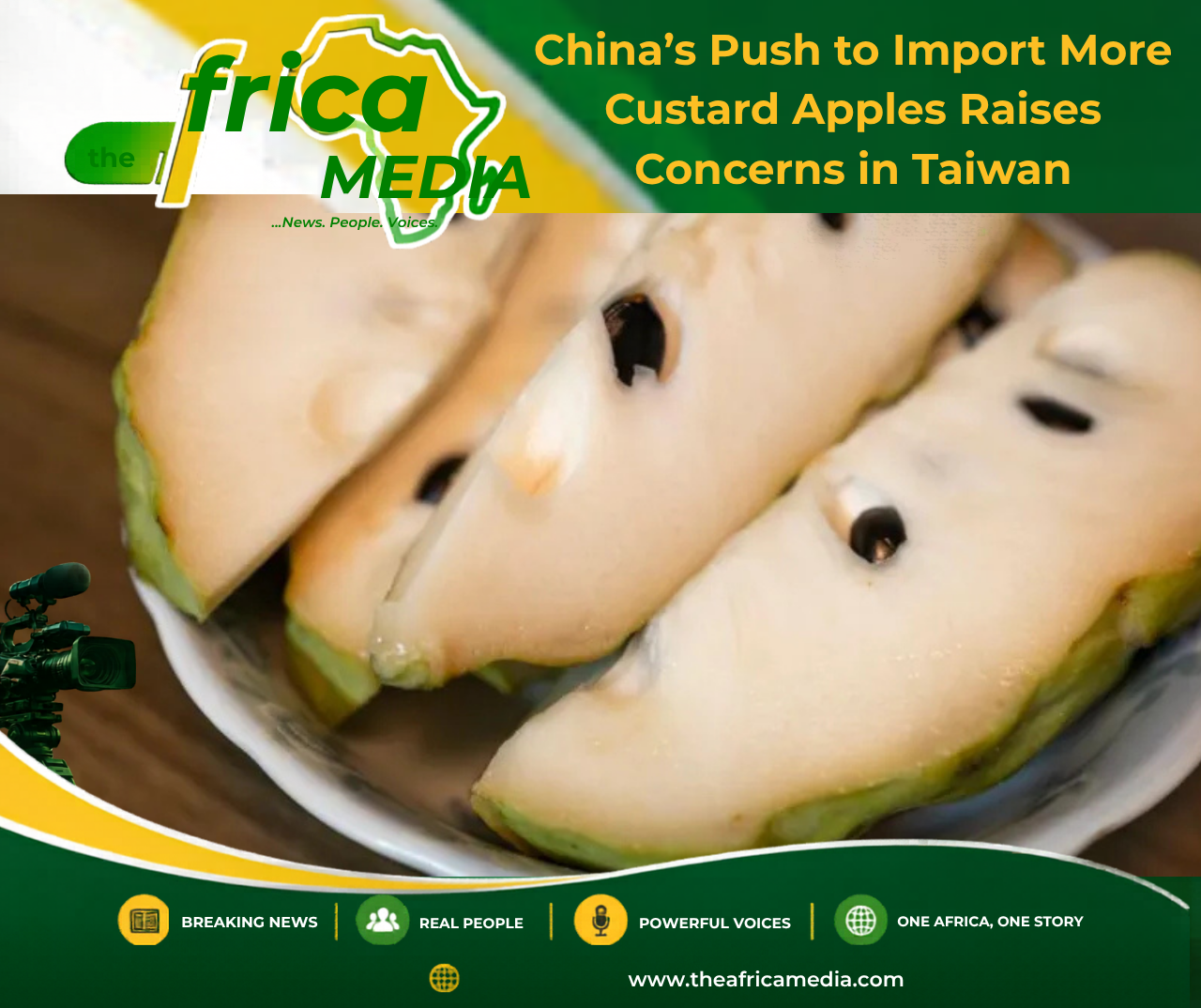
A specialty fruit grown in Taiwan has become the latest flashpoint in the island’s tense relationship with China. Taiwanese authorities have warned farmers to be cautious after Beijing announced plans to increase imports of atemoyas, a popular custard apple hybrid cultivated mainly in Taitung County.
The atemoya, known for its creamy white flesh and green scaly skin, has long been exported to China, one of its biggest overseas markets. Earlier this month, Chinese companies pledged to purchase more of the fruit as part of a broader effort to expand imports of Taiwanese agricultural products.
However, Taiwan’s Ministry of Agriculture has expressed concerns, describing the move as part of what it called a “raise, trap, kill” strategy. According to the ministry, China encourages dependence on its market through large purchases before later imposing restrictions that leave farmers vulnerable.
Officials pointed to previous actions by Beijing, including the suspension of atemoya imports in 2021 over pest concerns, the partial resumption of trade in 2023, and the introduction of tariffs in 2024. Taiwan argues that such policy shifts create uncertainty for farmers and threaten the long-term stability of the industry.
The issue comes against the backdrop of ongoing tensions between China and Taiwan. Beijing considers Taiwan part of its territory and has increased political, economic, and military pressure on the self-governed island in recent years.
Taiwanese authorities also noted that China has been expanding its own atemoya production, potentially increasing competition for Taiwan’s growers in the future. The debate intensified after Taiwanese business leaders and opposition politicians attended a trade forum in the Chinese city of Xiamen, where commitments to purchase more Taiwanese agricultural products were announced.
Taiwan’s government has warned that officials who participated could face investigation for violating restrictions on engagement with China. In response to the uncertainty, Taiwan’s agriculture ministry said it would focus on diversifying the atemoya industry by encouraging the production of frozen fruit products, fruit puree, and wine to reduce dependence on a single export market.
Opposition politicians, however, have criticized the government’s stance, arguing that it politicizes agricultural trade and could harm farmers. Taipei Mayor Chiang Wan-an praised Taiwan’s atemoyas, calling them the “TSMC of the fruit world” and highlighting their unique quality and global appeal.
The dispute underscores how agricultural trade has become another arena in the broader political and economic rivalry between China and Taiwan.


