


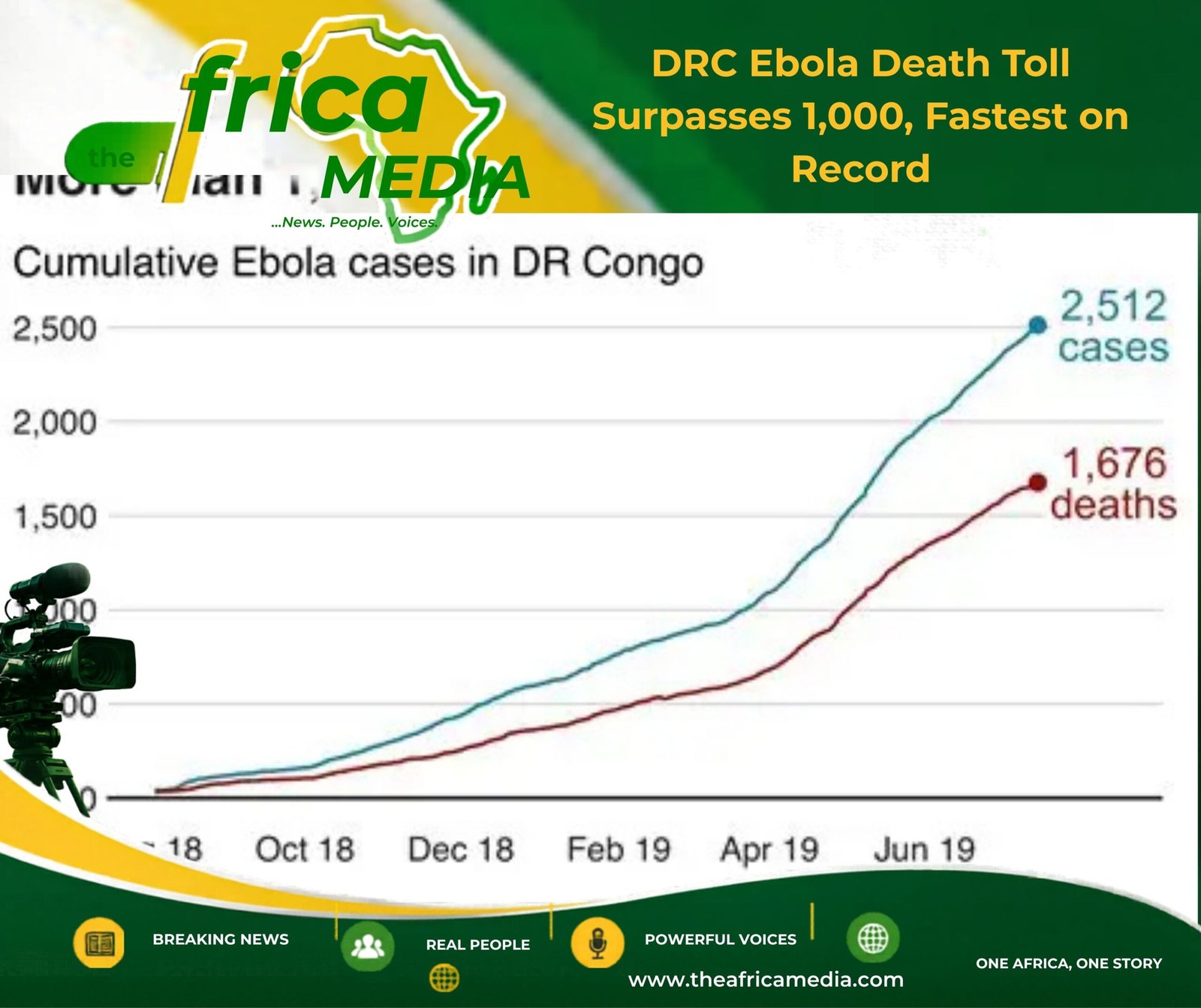
More than 1,000 people have died in the latest Ebola outbreak in the Democratic Republic of Congo, according to official government data and the Africa Centres for Disease Control and Prevention (Africa CDC). The DRC Ebola death toll now marks the fastest fatal surge in the virus’s recorded history.
Speaking at a health summit in Ghana on Wednesday, Dr. Jean Kaseya, director-general of the Africa CDC, confirmed that 1,031 deaths had been recorded since the Bundibugyo strain of the virus first emerged in May. “These are people dying,” Kaseya said. “They are dying because we don’t have vaccines, we don’t have medicine, we don’t have funding.”
Outpacing Every Previous Ebola Outbreak
DRC health authorities reported 1,033 deaths and 2,536 confirmed cases as of Thursday, with 506 patients recovered and 738 remaining in isolation, according to the World Health Organization (WHO). The outbreak was declared on May 15 in Ituri Province and surpassed 1,000 confirmed cases within just 40 days of the response being activated. By comparison, the 2018 Ebola outbreak in North Kivu, DRC, took roughly 235 days to reach the same threshold, according to the US Centers for Disease Control and Prevention (CDC).
The current outbreak has also outpaced the 2013-2016 West Africa epidemic, the deadliest on record with more than 11,000 deaths from at least 28,000 cases, which took about eight months to reach 1,000 deaths. This outbreak crossed that threshold in less than 10 weeks.
“If we do not stop it today, this will become the worst outbreak the world has ever documented,” Kaseya warned in a post on X, calling for the international community to mobilise every available resource.
Response Struggles to Keep Pace
The outbreak’s footprint has reached 47 health zones across five provinces, of which 46 remain under active transmission, according to the WHO. Treatment capacity remains under strain in North Kivu, where 182 patients were in isolation against a bed capacity of just 141. Contact tracing has also fallen far short of what’s needed to contain the outbreak, with Africa CDC reporting that less than 9 percent of expected contacts of confirmed patients are currently being monitored.
“There’s never been an Ebola outbreak that started with so many cases because it was so late to be identified,” said Trish Newport, emergency programme manager for Doctors Without Borders (MSF), who has been working in Congo. “It’s like the outbreak is outrunning the response.”
Adelard Lufongola, operations manager for the national Ebola response coordination, said at a Wednesday press conference in Bunia that case notifications had plateaued or shown a slight downward trend in some areas, but cautioned that it remains too early to say the outbreak has peaked.
Why Containment Has Been So Difficult
Ituri Province, the epicentre of the outbreak, accounts for around 90 percent of confirmed cases. The region has poor road infrastructure, and armed groups have waged conflict there for decades. Roughly 900,000 people live in displacement camps in the area, many without easy access to clean water, conditions that have made contact tracing and persuading sick residents to seek treatment extremely difficult.
Early Ebola symptoms, including headaches and fever, can also resemble more common illnesses such as malaria, further complicating detection efforts.
Funding Shortfall Compounds the Crisis
The WHO’s joint $518 million response plan with the Africa CDC faces a funding shortfall exceeding $400 million, according to reporting from mid-July. Kaseya has previously said the lack of vaccines, medicine and funding is directly contributing to preventable deaths.
Cases Reported in Uganda and France
The outbreak has also spread beyond the DRC. Twenty cases, including two deaths, have been confirmed in neighbouring Uganda, though Kampala says it has gone three weeks without registering a new case. France separately recorded a case involving a health worker who had been infected in Congo and later recovered.
WHO Director-General Tedros Adhanom Ghebreyesus has written to US Health Secretary Robert F. Kennedy Jr., requesting that Washington lift Ebola-related travel restrictions on Uganda, arguing the country has reported no new infections in roughly a month.


