



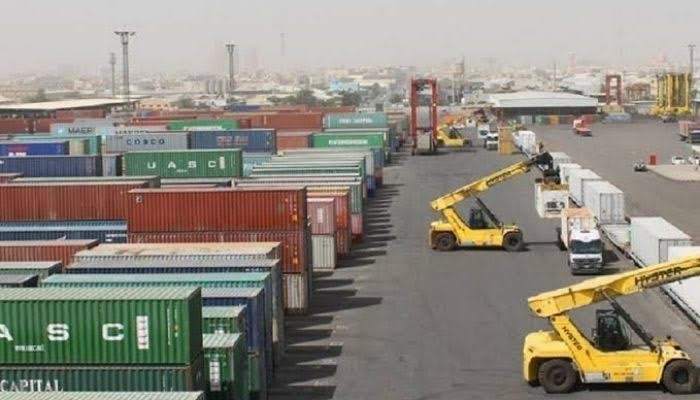
The approval of the Tsamiya Inland Dry Port in Kebbi State by President Bola Tinubu has raised expectations of a new trade and logistics hub in North-West Nigeria, with the potential to open up the state’s agricultural economy, strengthen cross-border commerce and reduce the cost of moving goods to and from the country’s coastal seaports.
The President, on Tuesday, November 17, approved the full operationalisation of the facility following a request by Kebbi State Governor, Nasir Idris, during the All Progressives Congress (APC) presidential campaign rally at the Haliru Abdu Township Stadium, Birnin Kebbi.
The approval represents an important development for Kebbi, particularly as the state seeks to translate its agricultural strength and strategic location into greater commercial activities, investment and employment opportunities.
Governor Idris had appealed to Tinubu to facilitate the take-off of the facility, describing it as a strategic economic asset capable of positioning Kebbi as a major commercial and logistics centre.
He said the operationalisation of the dry port would unlock the state’s economic potential by facilitating international trade, attracting local and foreign investment, stimulating commercial activities and creating employment for residents.
For a state whose economy is substantially driven by agriculture, the project offers an opportunity to improve the movement of agricultural produce, connect farmers and processors to wider markets and strengthen the distribution of goods across Nigeria and neighbouring West African countries.
However, the importance of the presidential approval extends beyond Kebbi. If properly developed and connected to an efficient transport network, Tsamiya could become another important link in Nigeria’s efforts to decentralise its maritime trade infrastructure and bring shipping services closer to businesses operating far from the coastal ports.
Governor Idris expressed confidence in the continued loyalty and support of the people of Kebbi State for Tinubu, the APC and its candidates ahead of the 2027 general elections.
“Mr President, what you are witnessing here today clearly demonstrates that Kebbi State is with you, the APC, all our candidates and me,” the governor declared.
He reaffirmed his commitment to mobilising support for the party across the state.
Also speaking, APC National Chairman, Prof. Nentawe Yilwatda, expressed confidence in the commitment of Kebbi residents to the party and commended Governor Idris for his efforts towards strengthening its political structures.
Earlier, the Director-General of the APC Presidential Campaign Council, Senator Abdulaziz Abubakar Yari, highlighted federal projects and initiatives undertaken by the Tinubu administration, urging residents to acknowledge the government’s interventions in infrastructure development, including the Sokoto-Badagry Superhighway and other federal road projects.
While the political significance of the announcement was evident at the rally, the economic implications of the dry port deserve particular attention, especially when considered against the experience of other inland dry ports in Nigeria.
How Tsamiya compares with other inland dry ports*
An inland dry port is essentially a seaport located away from the coast. It provides facilities for receiving, storing, handling and clearing import and export cargoes, including customs examination and other shipping services.
According to the Nigerian Shippers’ Council, the facilities are designed to bring shipping services closer to importers and exporters in the hinterland, reduce congestion at coastal seaports and lower the overall cost of moving cargoes to inland destinations and neighbouring landlocked countries.
Nigeria’s inland dry port programme dates back to 2006, when the Federal Government approved the development of facilities across different parts of the country under a Public-Private Partnership (PPP) arrangement.
The seven principal locations are Kaduna, Kano, Funtua in Katsina State, Jos in Plateau State, Maiduguri in Borno State, Isiala Ngwa in Abia State and Erunmu in Ibadan, Oyo State.
However, progress has been uneven, with only three facilities identified as functioning by the Nigerian Ports Authority in October 2026: Kaduna, Dala in Kano and Funtua in Katsina State.
The Kaduna Inland Dry Port, commissioned in January 2018 by former President Muhammadu Buhari, is the country’s first operational inland dry port. With a designated capacity of 5,000 twenty-foot equivalent units (TEUs), it provides importers and exporters in Kaduna and neighbouring states with access to cargo handling and customs services without having to undertake every port-related process at the coastal terminals.
The facility recorded 4,885 TEUs of container import traffic in 2024, according to the Nigerian Shippers’ Council’s annual report. Its performance demonstrated the potential of inland dry ports, although inadequate rail connectivity and incomplete access road infrastructure continued to affect its operations.
The Dala Inland Dry Port in Kano, commissioned in January 2023, has a designated capacity of 20,000 TEUs, making it one of the largest of the existing facilities. Its location in Kano, one of northern Nigeria’s major commercial centres, gives it considerable potential to serve manufacturers, traders and importers across the North-West and neighbouring regions.
Similarly, the Funtua Inland Dry Port in Katsina State has a capacity of 10,000 TEUs and was declared a port of origin and final destination for import and export cargoes in February 2023.
Together, Dala and Funtua have a designated capacity of 30,000 TEUs. However, both facilities have faced logistical constraints, particularly inadequate rail connections, which limit their ability to move cargo efficiently between the hinterland and coastal seaports.
This is an important lesson for the proposed Tsamiya facility. Its success will depend not simply on presidential approval or the construction of a container terminal, but on the availability of reliable transport infrastructure, efficient customs services, private sector participation and sufficient cargo traffic to sustain commercial operations.
Why Tsamiya could be different
What gives Tsamiya an additional strategic advantage is its location in Bagudo Local Government Area, close to Nigeria’s border with the Republic of Benin.
Unlike Kaduna, Dala and Funtua, whose principal commercial advantage lies in serving inland markets and connecting businesses to the country’s coastal seaports, Tsamiya could also strengthen cross-border trade along the Nigeria-Benin corridor.
The Nigerian Shippers’ Council had, in August 2026, announced a partnership with the Kebbi State Government and promoters of the proposed Tsamiya Inland Dry Port and Vehicle Transit Park. The Council described the projects as strategic investments capable of strengthening trade and logistics across North-West Nigeria and neighbouring West African countries.
This geographical advantage could enable the facility to serve businesses involved in the movement of agricultural commodities, manufactured goods and other merchandise across the border.
Kebbi is one of Nigeria’s important agricultural states, with significant production of rice, onions, livestock and other food commodities. The state also has rice-processing activities in Birnin Kebbi, Argungu, Bagudo and Yauri, which President Tinubu specifically promised to support during his visit.
An operational dry port could provide a more organised channel for handling agricultural exports, connecting producers and processors to international buyers and reducing some of the difficulties associated with transporting goods over long distances.
It could also attract warehouses, freight forwarding companies, haulage operators, clearing agents, packaging businesses and other logistics service providers to the area.
The proposed Vehicle Transit Park could complement the dry port by providing facilities for truck operators, including parking, vehicle management and other services required for cross-border transportation.
For Kebbi, these activities could generate employment beyond the immediate operations of the facility, while stimulating demand for accommodation, restaurants, retail businesses and other services.
There is also the prospect of strengthening Nigeria’s participation in regional trade under the African Continental Free Trade Area (AfCFTA), provided the necessary customs procedures, border infrastructure and trade agreements are effectively implemented.
The infrastructure challenge
Despite the opportunities, the experience of other inland dry ports shows that operationalising Tsamiya will require sustained investment and coordination among relevant government agencies.
The absence of functional rail connections has remained one of the biggest challenges confronting existing facilities. In January 2025, The Guardian reported that inadequate rail connectivity was disrupting cargo movement at Kaduna, Dala and Funtua, forcing greater reliance on road transportation.
The Nigerian Ports Authority also raised concerns about logistics constraints when it announced plans in October 2026 to inspect the northern inland dry ports and address obstacles limiting their performance.
The authority stressed the need for modern equipment, improved technical systems and better integration with the digital processes being introduced at the country’s seaports.
Tsamiya will therefore require dependable road connections, efficient cargo handling equipment, adequate storage facilities, electricity, security infrastructure and effective coordination among the Nigeria Customs Service, immigration authorities and other relevant agencies.
The Federal Government and Kebbi State Government must also clarify the project’s implementation structure, financing arrangements, concessionaire responsibilities and operational timetable. The presidential announcement is an important policy commitment, but it should not be mistaken for evidence that the facility is already fully operational.
The development of the other inland dry ports offers a cautionary example. Facilities in Ibadan, Aba, Jos and Maiduguri have experienced prolonged delays, despite their economic importance and the original investment plans.
The Nigerian Shippers’ Council’s published project information has also shown considerable differences in completion levels among the facilities.
For Tsamiya, avoiding a similar situation will require clear implementation deadlines, effective monitoring and the commitment of both public and private investors.
Ultimately, the economic value of the project will be measured not by the announcement of its approval but by the volume of cargo it handles, the businesses it attracts, the jobs it creates and the extent to which it reduces trade and transportation costs.
If these conditions are met, Tsamiya could become an important trade gateway for Kebbi, strengthen commercial relations with neighbouring West African countries and provide a new economic opportunity for Nigeria’s North-West.
For a country seeking to diversify its economy, expand non-oil exports and improve its logistics infrastructure, the successful take-off of the Tsamiya Inland Dry Port could represent a worthwhile investment in the future of regional commerce.


