


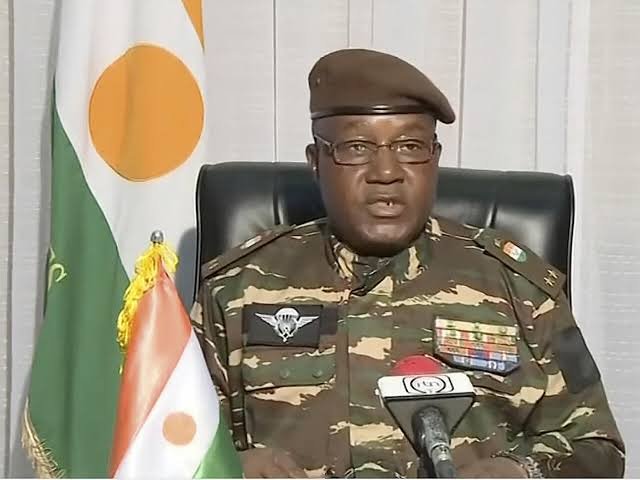
Niger has accused France of orchestrating last week’s failed military mutiny, alleging that the former colonial power was behind a network that sought to destabilise the military-led government.
The allegation was contained in a government statement read on national television on Friday and cited by Reuters and AFP.
On August 29, disgruntled soldiers attacked a strategic military base in the capital, Niamey, and exchanged gunfire near the presidential palace. The mutiny was eventually crushed by Nigerien forces with assistance from Russian paramilitary allies.
Niger’s Foreign Affairs Ministry said three members of the presidential guard were killed during the unrest, while AFP reported that the overall death toll stood at five, including civilians.
Following an investigation, Niger’s Council of Ministers said it had uncovered evidence suggesting that the attempted mutiny was backed by a broad network of accomplices allegedly led by France.
“A substantial body of evidence has been compiled regarding this attack, and Niger reserves the right to bring the matter before international courts,” the government said, according to Reuters.
France, however, has strongly rejected the accusation.
French Foreign Minister Jean-Noël Barrot dismissed the allegation as unfounded, saying France had no involvement in the attempted mutiny.
“These are nothing but pure fantasies,” Barrot told French broadcaster RFI on Saturday, describing the accusation as another attempt to wrongly blame France for events for which it bore no responsibility.
The latest accusation follows an earlier claim by a Nigerien military official, who appeared on national television on Tuesday and accused several countries, including France, Ivory Coast and Benin, of supporting the failed mutiny, according to RFI.
Relations between Niger and France have deteriorated sharply since the 2023 military coup that brought General Abdourahamane Tiani to power.
Niger, along with neighbouring Burkina Faso and Mali, has since distanced itself from Paris and strengthened security and political ties with Russia.
The three Sahel countries have increasingly relied on Russian support as they battle jihadist insurgencies that have continued to cause widespread insecurity across the region.


