


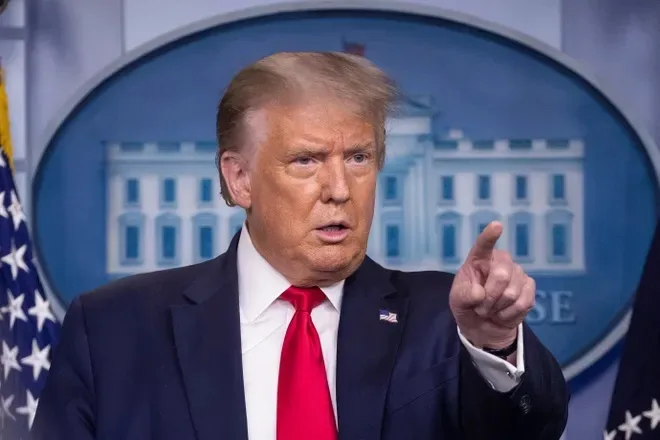
Christian leaders across northern Nigeria have rejected United States President Donald Trump’s claim that American military action has ended the killing of Christians, describing the statement as false, misleading and disconnected from the reality facing millions of Nigerians.
The Christian Association of Nigeria in the 19 northern states and the Federal Capital Territory, together with the Ecumenical Synods of Bishops, Archbishops, Apostles and Senior Clergy, said Trump’s remarks risk downplaying the country’s worsening security crisis.
Speaking in Washington on Friday, Trump claimed recent American military action had largely stopped attacks on Christian communities in Nigeria. He said thousands of Christians had previously been butchered and declared that US forces had crippled those responsible by eliminating senior terrorist leaders.
But the Chairman of CAN in the North and the FCT, Reverend Joseph Hayab, said Nigerians continue to suffer daily killings and abductions regardless of religion.
Hayab told Sunday PUNCH that only Nigerians living through the violence could judge whether security had improved, insisting that Trump’s comments appeared to be based on inaccurate advice.
“The people who should say whether Trump has succeeded are Nigerian Christians and the victims themselves, not Trump,” he said. “People are still being killed every day. We want genuine help, not political claims or propaganda.”
He acknowledged that recent American operations had targeted terrorist commanders but argued that such actions had not stopped attacks on civilians.
Hayab pointed to continued kidnappings and killings in states including Borno, Katsina, Kwara, Kogi and Oyo, saying families across the country were still living under the threat of bandits and extremist groups.
“We want support that ends the killings, not statements claiming victory while innocent people are still dying,” he added.
The Ecumenical Synods of Bishops, Archbishops, Apostles and Senior Clergy also dismissed Trump’s comments, saying there was no convincing evidence that any reported US intervention had brought an end to the violence.
Nigeria has battled insecurity for years, including attacks by Boko Haram, Islamic State West Africa Province, armed bandits and criminal gangs. Security analysts and conflict researchers have repeatedly warned that while Christians have suffered horrific attacks, Muslims have also been killed in large numbers, with violence often driven by a mix of insurgency, banditry, ethnic tensions and disputes over land and resources rather than religion alone.
International conflict monitors have similarly reported that both Christians and Muslims continue to be victims of extremist violence, with available data showing no evidence that recent military action has ended the wider security crisis.


