


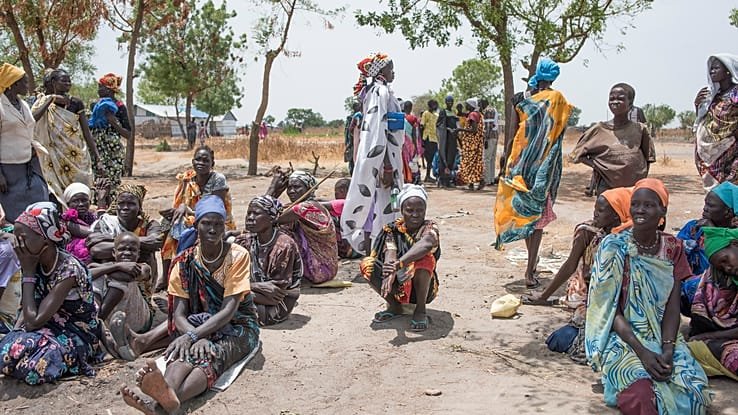
More than one million vulnerable people in South Sudan could lose access to vital food and nutrition assistance by October unless urgent funding is secured, the World Food Programme (WFP) has warned.
The UN agency said conflict, displacement, climate shocks and the ongoing war in neighbouring Sudan were combining to worsen food insecurity across the country, while declining international aid was further compounding the crisis.
WFP Assistant Executive Director for Operations, Matthew Hollingworth, said at a press conference in Geneva that 7.8 million people, representing more than half of South Sudan’s population, were currently struggling to find enough food each day.
He added that about 2.2 million children and 1.2 million pregnant and breastfeeding women urgently required nutritional support.
“Unless additional resources are secured, more than a million vulnerable people could lose access to life-saving food and nutrition assistance by October. So this is looming,” Hollingworth said.
According to the WFP, it is currently facing an $86 million funding shortfall, while more than $400 million will be required to sustain its operations over the next six months.
The funding gap comes during the peak of the rainy season, when food supplies become scarcer, prices increase and flooding makes roads difficult to access, further complicating humanitarian operations.
The agency said many families were being forced to cope by reducing the amount of food they consume, selling their possessions and cutting spending on essential needs such as healthcare, education and shelter.
“While South Sudan is a country that has faced many challenges in its short life as an independent nation, we are seeing something different now,” Hollingworth said.
“We are about to drop off a financial cliff at a time when the needs are at the greatest level that they’ve been at for the past 13, 14 years.”
The WFP stressed that food assistance remained critical to preventing a humanitarian catastrophe but said such support should also serve as a bridge towards long-term recovery and resilience.
The agency also called on the South Sudanese government to begin mobilising more domestic resources to provide assistance and support for its own population as international humanitarian funding declines.


