


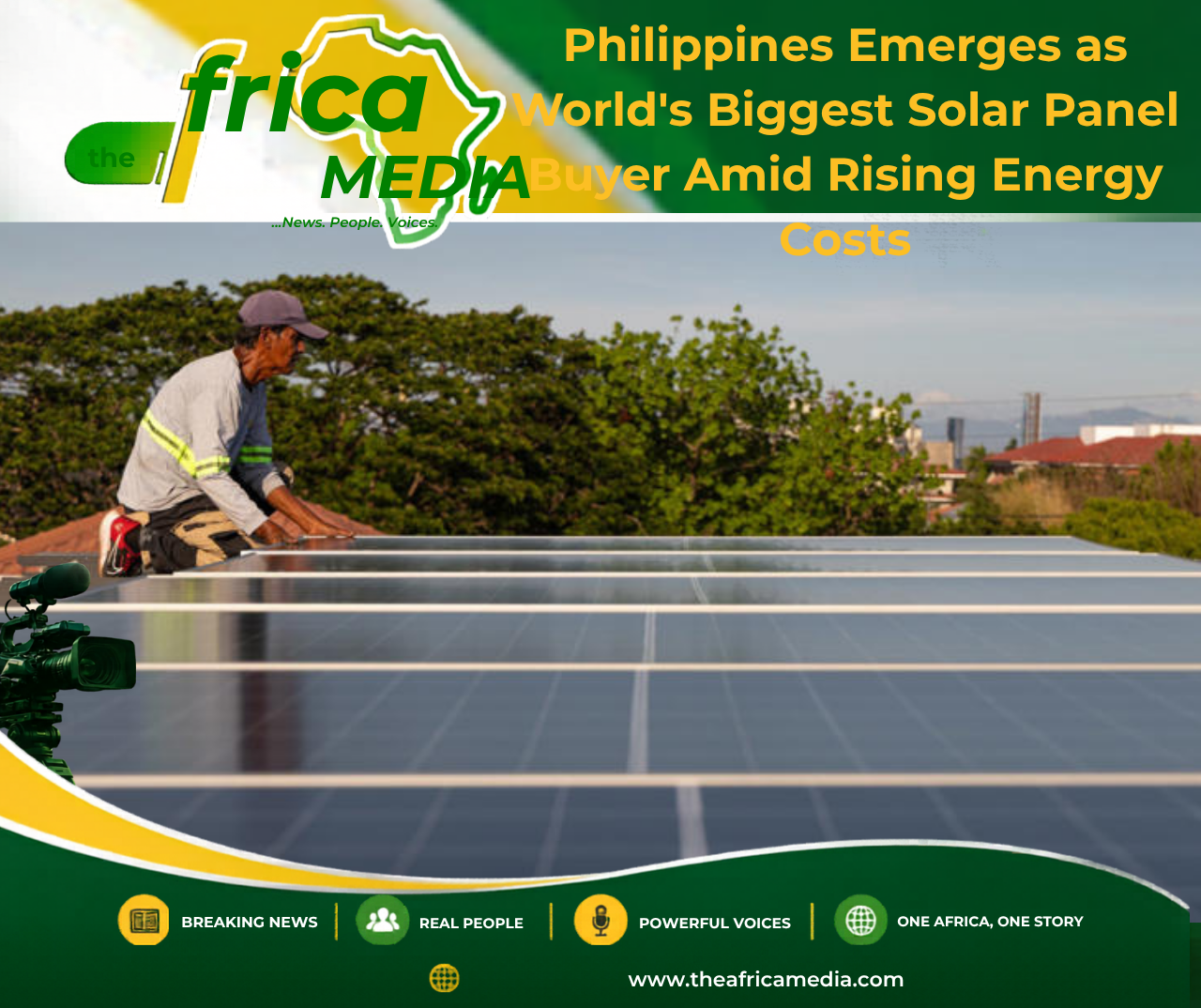
The Philippines has become the world’s largest spender on solar panels as households increasingly turn to rooftop solar systems to reduce soaring electricity costs driven by the ongoing Middle East energy crisis.
The surge in demand follows sharp increases in power prices after the conflict involving Iran disrupted global energy markets. The country’s largest electricity distributor, Meralco, has raised electricity rates by about 10% since the crisis began in late February.
With the Philippines already having the highest residential electricity prices in Southeast Asia, many families are seeking long-term alternatives to reduce monthly utility bills.
Chinese trade data show the Philippines imported approximately US$407 million worth of solar panels between March and May, representing a 145% increase compared with the same period last year. The country has overtaken traditional markets, with analysts noting that higher Dutch import figures largely reflect the Netherlands’ role as a European distribution hub.
Among those making the switch is Adrian Sabatera, a 39-year-old software engineer from Manila, who recently invested 570,000 pesos (about US$9,300) in a rooftop solar system for the home he shares with three other people.
Sabatera said declining equipment prices and rising electricity costs finally made the investment worthwhile, adding that he expects many middle-class households to adopt similar systems in the coming years.
Solar installation companies have also reported a sharp rise in customer interest. Manila-based Philergy German Solar said inquiries during the first five months of the year were more than two-and-a-half times higher than the same period in 2025, with demand peaking at around 3,000 inquiries per day.
Energy analysts project that the country’s distributed rooftop solar capacity could nearly triple to about 3,500 megawatts within the next two years, matching the Philippines’ current utility-scale solar capacity. Falling installation costs have also shortened the average payback period for residential systems from four years to just over three years.
The rising popularity of rooftop solar has been driven not only by high electricity prices but also by the weakening Philippine peso, which has increased the cost of imported coal and natural gas used to generate much of the country’s electricity.
Some homeowners are already seeing substantial savings. Manila entrepreneur Jason Porciuncula said his monthly electricity bill dropped to roughly one-fifth of what he paid last summer after installing a 12-kilowatt solar system with battery storage earlier this year.
Despite the rapid growth, challenges remain. Industry experts say installations are struggling to keep pace with demand because of supply shortages, fluctuating equipment prices and limited quality control.
Although the Philippine government offers low-interest loans of up to 500,000 pesos for solar installations, the programme is limited and excludes many private-sector workers. High upfront costs also remain a major obstacle, with the price of a typical residential system often exceeding the country’s average annual household income.
Analysts say that while rooftop solar presents a significant opportunity to reduce energy costs, broader access to financing will be necessary for more households to benefit from the transition.


