


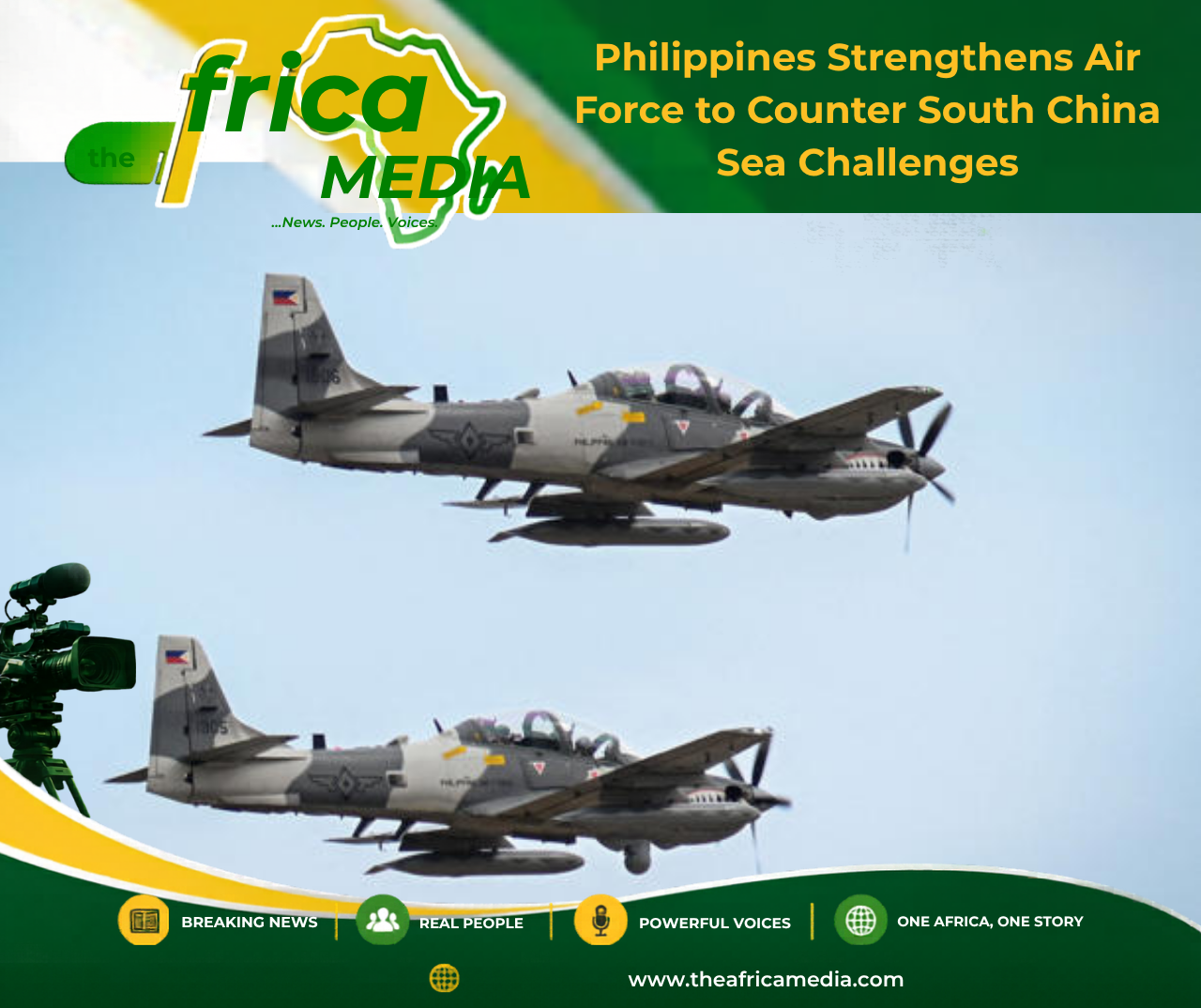
The Philippines is accelerating efforts to modernise its air force as it shifts from decades of counterinsurgency operations to defending the country’s maritime territory amid rising tensions in the South China Sea.
For years, the Philippine Air Force focused primarily on combating communist insurgents and Islamist militant groups. However, growing territorial disputes in the South China Sea have prompted Manila to invest heavily in strengthening its air defence capabilities.
“Because we are an archipelago, we really need to strengthen our air assets,” Philippine Air Force spokesperson Colonel Maria Christina Basco said. “This means a 360-degree defence of the Philippines.”
The country’s military modernisation programme, launched in 2013, has gradually restored capabilities weakened by years of limited investment. Defence analysts say the reforms have expanded the air force’s operational range and improved its ability to work alongside allied forces.
The administration of President Ferdinand Marcos Jr. has accelerated defence procurement since taking office in 2022, placing greater emphasis on protecting the country’s maritime interests while strengthening security partnerships with allies, particularly the United States.
Recent acquisitions include additional FA-50 light fighter jets, Spyder surface-to-air missile systems, C-130 and C-295 transport aircraft, Black Hawk helicopters and upgraded radar systems.
Speaking during the Philippine Air Force’s 79th anniversary celebration, President Marcos reaffirmed his administration’s commitment to military modernisation, pledging continued investment in equipment, training and infrastructure.
In 2024, the government approved the “Re-Horizon 3” programme, allocating approximately US$35 billion over the next decade to modernise the country’s armed forces.
Despite these investments, defence experts note that the Philippine Air Force remains one of the least capable among Southeast Asia’s major military powers. Countries such as Singapore, Indonesia, Malaysia, Thailand and Vietnam operate significantly larger and more advanced combat aircraft fleets.
The Philippines currently operates 11 FA-50 fighter aircraft, with 12 more on order, while also considering the acquisition of advanced multirole fighters. A proposed purchase of 20 F-16 Block 70/72 fighter jets from the United States remains under consideration, although funding has yet to be secured.
Analysts say the military build-up reflects growing concern over China’s increasing presence in disputed areas of the South China Sea, where Philippine and Chinese vessels have repeatedly faced tense confrontations.
While acknowledging improvements in training and international cooperation, defence experts caution that significant financial investment will still be required if the Philippines is to develop an air force capable of effectively deterring threats and protecting its maritime territory.


