


The Presidency and the Securities and Exchange Commission (SEC) have unveiled plans to deepen Nigeria’s capital market and mobilise domestic savings as part of efforts to achieve President Bola Ahmed Tinubu’s $1 trillion economy target.
A major component of the initiative is the proposed National Savings Scheme, which will provide tax incentives to encourage Nigerians to save and invest in the capital market.
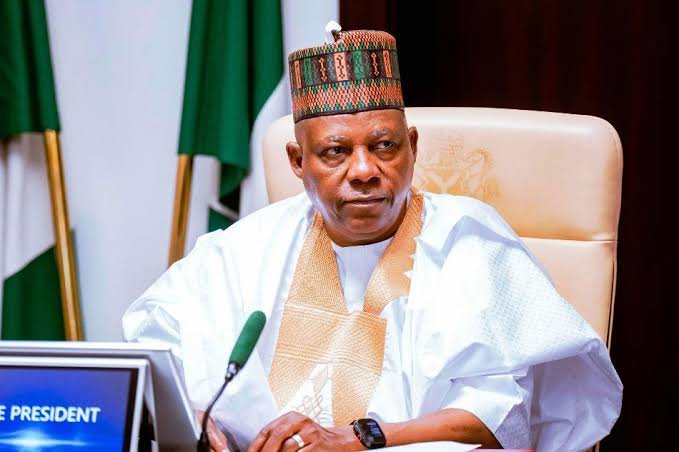
The Vice President, Kashim Shettima, is also expected to endorse the Nigerian Capital Market Master Plan 2.0, a 10-year strategic framework designed to guide the development of the country’s capital market.
The initiatives will feature prominently at the Capital Market Conversation scheduled for October 19, 2026, at the Presidential Villa, Abuja.
The Presidency and SEC disclosed this at the weekend during a strategic partnership meeting in Abuja ahead of the event, which is expected to bring together local and international investors, capital market operators, listed companies, market infrastructure institutions, policymakers and other stakeholders.
Speaking at the briefing, Technical Adviser to the President on Economic and Financial Inclusion in the Office of the Vice President, Dr Nurudeen Abubakar Zauro, said the administration viewed a deeper capital market as critical to mobilising capital, expanding investment opportunities and strengthening financial inclusion.
Zauro said the October 19 event would enable stakeholders to review developments in the sector and identify additional measures required to accelerate its growth.
“It is no longer news that the capital market of Nigeria has been doing very well, especially under Mr President, with all the reforms that are ongoing to make Nigeria an investor-friendly environment,” he said.
He said the event would also provide an opportunity to showcase achievements recorded in the capital market and expand access to investment opportunities for Nigerians.
According to Zauro, financial inclusion should extend beyond opening bank or investment accounts to ensuring that ordinary Nigerians have access to financial and economic opportunities.
“When you are talking about inclusion, you are not only talking about opening an account; you are also talking about access to basic financial and economic services,” he said.
He added that recent reforms had helped create greater awareness among Nigerians that even small amounts of money could be invested in the capital market.
Zauro said the Capital Market Conversation would focus on investment inclusion, savings mobilisation, digital financial services and the development of products capable of attracting more Nigerians into the investment market.
He said the initiative was aligned with the administration’s Renewed Hope Agenda and its target of building a $1 trillion economy.
“The whole conversation on that day is deepening the sector to achieve the $1 trillion economy target set by Mr President, and that aligns with his Renewed Hope Agenda,” he said.
Zauro added that the administration was open to contributions from stakeholders in shaping policies and reforms for the sector.
The Director-General of the SEC, Dr Emomotimi Agama, said the proposed National Savings Scheme was designed to give Nigerians an opportunity to save and have their savings invested for the future.
“The National Savings Scheme, principally, is an inclusion tool wherein every Nigerian is given an opportunity to save, and such savings will now be invested for the future,” Agama said.
He explained that the scheme would incorporate tax incentives as part of efforts to encourage participation, adding that it was consistent with the Federal Government’s broader fiscal reform agenda.
The planned Capital Market Master Plan 2.0 is expected to provide a long-term framework for strengthening the market, while the savings initiative is aimed at increasing domestic participation and channeling more household savings into productive investments.


 have unveiled plans to deepen Nigeria’s capital market and mobilise)