



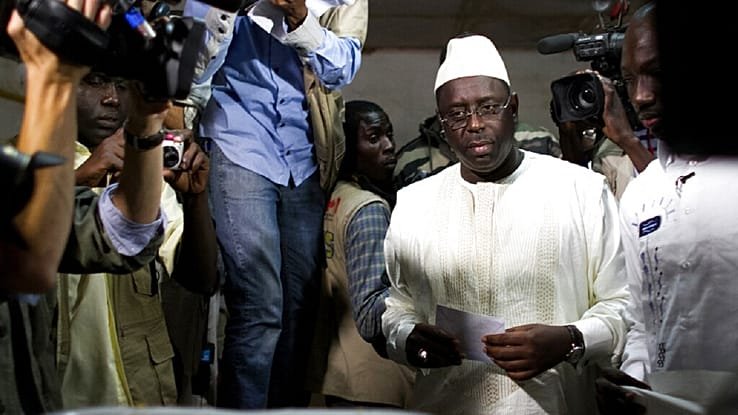
Senegal’s former president, Macky Sall, is facing renewed calls from political loyalists to return to domestic politics following his withdrawal from the race for United Nations Secretary-General, fuelling speculation about a possible bid to reclaim power in 2029.
Sall’s decision to step away from the international contest has reignited debate over his political future, with supporters viewing his return as an opportunity to revive his development agenda, while critics insist he should answer questions about his administration rather than seek another term.
The former president’s Alliance for the Republic (APR) has openly expressed its desire to see him return to the political arena.
“I’ll be blunt: it is our absolute wish that Macky Sall—who remains the president of the Alliance for the Republic—returns to continue the fight alongside us,” APR spokesman Saourou Sène said.
He pointed to Sall’s “Emerging Senegal” development plan, which was designed to run until 2035, as a reason for the former leader to resume his political activities.
However, the prospect of a comeback has divided public opinion in the West African country.
Some Senegalese believe Sall could offer a way out of the country’s current difficulties. Amadou Fall, a teacher, told Africanews that he believed there was still a place for the former president in national politics.
According to him, conditions had become increasingly difficult since Sall left office, prompting some citizens to reconsider his leadership and the development direction he pursued.
Others, however, oppose the idea of his return to the presidency, arguing that he should first address questions surrounding his administration.
A Dakar resident, Thierno Ndiaye, said Sall should return to provide answers about issues including the country’s reported hidden debt and alleged violent crimes.
Although acknowledging the former president’s significance in Senegalese politics, Ndiaye argued that a return to power was not the appropriate way for him to address those concerns.
Another resident, Cheikh Ahmed Tidiane Sène, urged Sall to give other political leaders an opportunity to govern, saying the country needed to explore alternative leadership after his lengthy tenure.
The debate has also raised questions about how Sall’s possible return could affect the political calculations of his successor, President Bassirou Diomaye Faye, and Prime Minister Ousmane Sonko, a leading figure in the current political establishment.
Political analyst Abdoulaye Mbow said several scenarios remained possible, including the emergence of a broader political alliance ahead of future elections.
Mbow questioned whether Sall would return to challenge Faye, noting that the current president had recently supported him in connection with his international ambitions.
He also pointed to political discussions following a meeting in Doha involving Karim Wade as a possible indication of efforts to build a coalition ahead of future electoral contests.
Such an alliance, he suggested, could potentially include factions of the Senegalese Democratic Party (PDS), depending on how political negotiations unfold.
Mbow cautioned, however, that the direction of any potential realignment remained uncertain and would become clearer as the 2029 presidential election approached.
For Sall’s supporters, the next presidential contest is already a central consideration, with many insisting that the former leader remains their strongest option for returning the APR to power.
Whether Sall intends to return to Senegalese politics, challenge the current leadership or pursue another role remains unclear. His withdrawal from the UN race, however, has placed his political future firmly back in the national conversation.
ENDS


