


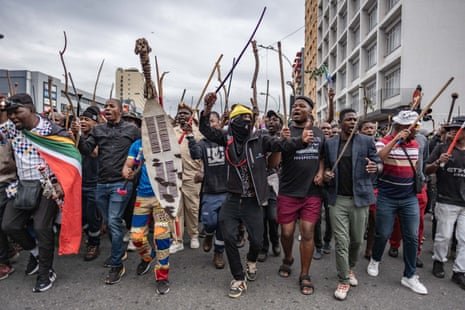
Protesters in South Africa have given undocumented migrants until September 30 to leave the country, threatening renewed and larger demonstrations if their demands are not met.
Weekly protests have continued in Durban, where the movement has gathered momentum in recent months amid growing tensions over migration and access to public services.
Sphelele Shinga, a leader of the March and March movement, said activists expected as many as 1.5 million people to participate in the next major demonstration.
“You should know that all the communities are gathering up again,” Shinga said. “They are waking up, they’re standing up for their home, standing up for their country.”
Shinga said protesters planned to “write another history” on September 30 by intensifying their call for undocumented migrants to leave South Africa.
The latest decision came amid concerns over the safety and welfare of people who have spent months participating in demonstrations and living on the streets.
Princess Adjei, a Ghanaian refugee involved in the protests, said the situation had become increasingly difficult.
“We can’t keep sleeping on the streets forever as well. People have died because of sleeping on the street,” she said, adding that the group was waiting for buses while their documentation was being verified.
Peace activists, including Ela Gandhi, a former South African parliamentarian and granddaughter of Mahatma Gandhi, joined the demonstration in support of the refugees.
Gandhi criticised the protesters’ rhetoric and rejected claims that migrants were responsible for the problems being highlighted by the movement.
“The rhetoric that these people are using is completely untrue,” she said. “It’s not the migrants that are causing the problems that they talk about.”
The September 30 deadline has raised concerns that Durban could witness renewed large-scale protests, potentially escalating tensions between anti-immigration activists and migrant communities.


