


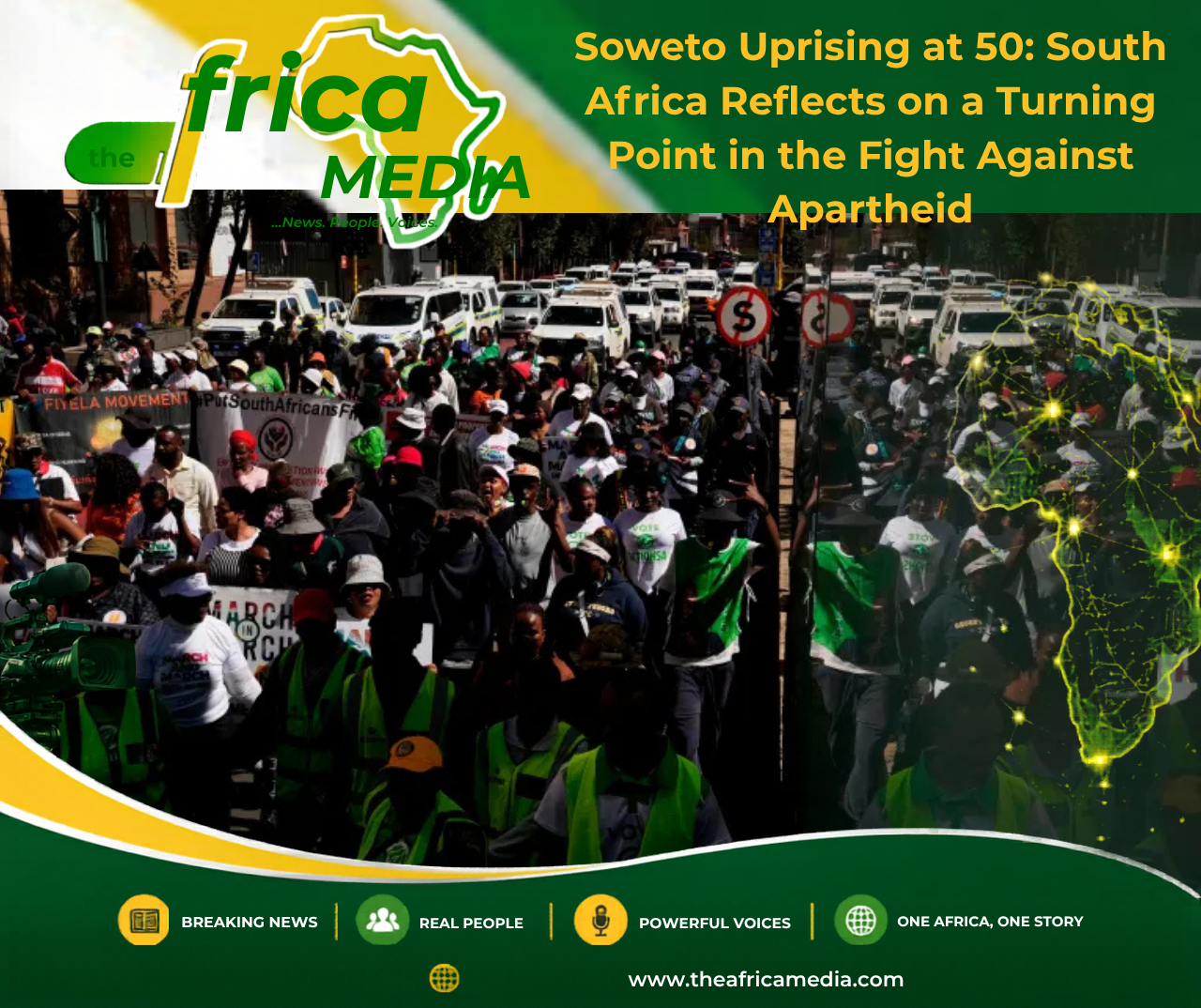
Fifty years after the Soweto uprising, South Africa is reflecting on one of the most defining moments in its struggle against apartheid — a student-led protest that reshaped the country’s political history but whose legacy still echoes in today’s social and economic challenges.
In June 1976, Black students in Soweto took to the streets to protest discriminatory education policies imposed by the apartheid government. The demonstration, which began peacefully, quickly escalated after police opened fire on unarmed students, sparking days of unrest that spread beyond Johannesburg.
Clad in school uniforms, students faced bullets, police dogs, and mass arrests as they resisted the introduction of Afrikaans as a compulsory language of instruction. The policy, seen as a tool of oppression, became the final trigger for long-standing frustrations over unequal and racially segregated education.
One of the most enduring symbols of the uprising was the death of 12-year-old Hector Pieterson, whose image carrying a dying schoolboy became a global icon of resistance against apartheid.
The protests left at least 176 people dead, thousands injured, and many more detained, but they also marked a turning point in international pressure against South Africa’s white minority government.
Although apartheid would only officially end in 1994, the Soweto uprising is widely seen as a catalyst that accelerated internal resistance and global condemnation of the system.
Today, South Africa marks the anniversary in a very different context — one shaped by democracy but still burdened by deep inequality, unemployment, poverty, and rising social tensions.
President Cyril Ramaphosa noted in a commemorative message that young South Africans now face new struggles, particularly economic exclusion, even in a post-apartheid society.
The unrest of 1976 remains a powerful reminder of youth activism and resistance, with June 16 now observed as Youth Day in South Africa — a national holiday honoring the students who stood against apartheid and paid the ultimate price.
Despite the political transformation since 1994, many analysts say the anniversary also raises difficult questions about how far the country has truly progressed in addressing inequality and opportunity for the Black majority.


