


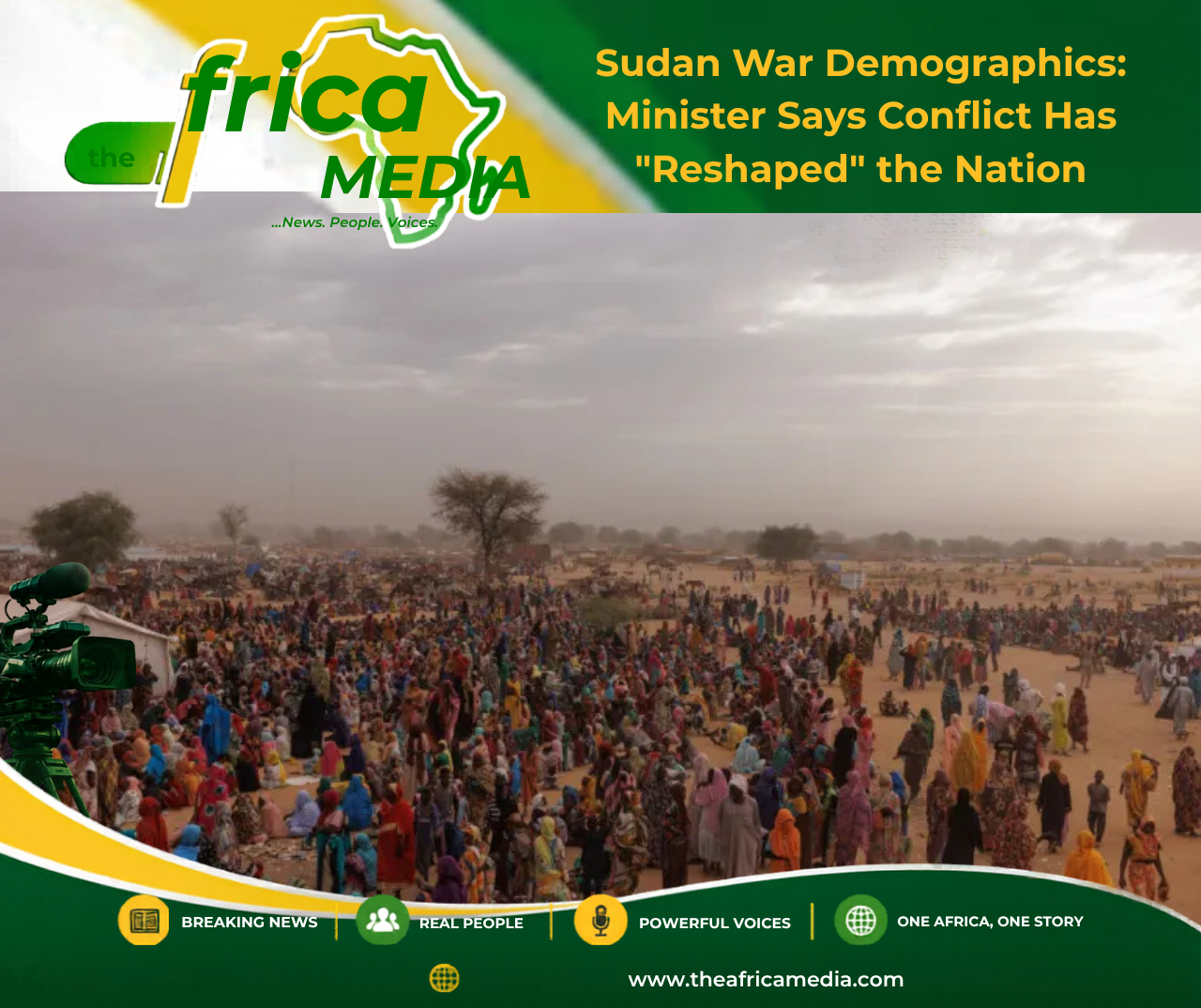
A senior Sudanese minister says more than three years of devastating war have profoundly reshaped Sudan’s war demographics and the country’s population makeup.
Minister of Human Resources and Social Development Mutasim Ahmed Saleh told Al Jazeera Arabic that his ministry was working with several partners to strengthen population policies and link them to social protection programmes.
Sudan has been engulfed in a brutal civil war between its army and the Rapid Support Forces (RSF) paramilitary group since April 2023.
The war is estimated to have killed around 200,000 people and displaced more than 11 million, creating what the United Nations calls the world’s largest humanitarian crisis.
How the War Has Shifted Sudan’s PopulationBefore the war, Sudan’s population was expected to exceed 64 million by 2035, according to official data. In 2020, the population stood at about 44.4 million, with forecasts projecting a growth rate of around 2.39 percent, one of the highest rates globally.
The war has displaced millions internally within South Darfur, North Darfur and Central Darfur states. It has also forced tens of thousands of others to seek asylum in neighbouring countries, including Egypt, South Sudan and Chad.
Saleh said the most significant demographic changes caused by the war include a general rise in poverty levels, a large segment of citizens losing their income, deteriorating basic services in several areas, and a decline in the labour market and human capital.
Government Vows to Strengthen Social ProtectionTo mark World Population Day on July 11, Saleh said his government would focus its efforts on the people, describing them as the ultimate aim of state attention, and would work to strengthen social protection programmes.
Saleh said his ministry, working through the National Population Council and other state partners, would strengthen Sudan’s population policies. He said these efforts would link to social protection, the voluntary return of refugees, the reintegration of displaced people, and human resource development, aiming to rebuild the country’s human capital as what he called the cornerstone of national recovery and sustainable development.
Investing in people, he said, represents the real investment in Sudan’s future. He added that the more the country succeeds in restoring population stability and empowering citizens economically and socially, the closer it comes to building a more stable, just and prosperous homeland.
A Youthful Population Facing Deep ImbalancesExperts say Sudan’s demographic structure stands out for its large youth population, with about 70 percent of citizens under age 30, according to data from the country’s last census, conducted in 2008.
Analysts say this youth population could give Sudan a demographic dividend capable of driving economic development. However, Saleh’s ministry noted that young people faced challenges including limited access to education, scarce job opportunities and widespread poverty, even before the conflict made them one of the worst-affected groups.
Khalid Saad, director of the Sudanese Center for Development Communication, told Al Jazeera that Sudan’s population crisis did not begin with the war.
He said that despite the country’s vast territory and abundant natural resources, Sudan has suffered for decades from a clear imbalance in population distribution.
“The war came to deepen this imbalance, redraw the demographic map through displacement and asylum, empty some areas of their populations, burden other cities with numbers beyond their capacity to absorb, while large numbers of people have returned to areas retaken by government forces,” he said.
Return of Displaced People Doesn’t End the Crisis, Expert WarnsSaad said the likely return of displaced people does not mean the demographic crisis is over, since returnees often go back to areas that have lost much of their economic infrastructure.
He said the challenge remains in rebuilding an environment that ensures their stability and prevents renewed displacement.
The war, Saad added, raises questions that still require precise answers, including the actual scale of human losses, how the war has affected mortality rates, how it has changed patterns of marriage and childbearing, the impact of displacement and migration on birth rates and age structure, and how the emigration of skilled professionals will affect the size of the workforce in the years ahead.


