


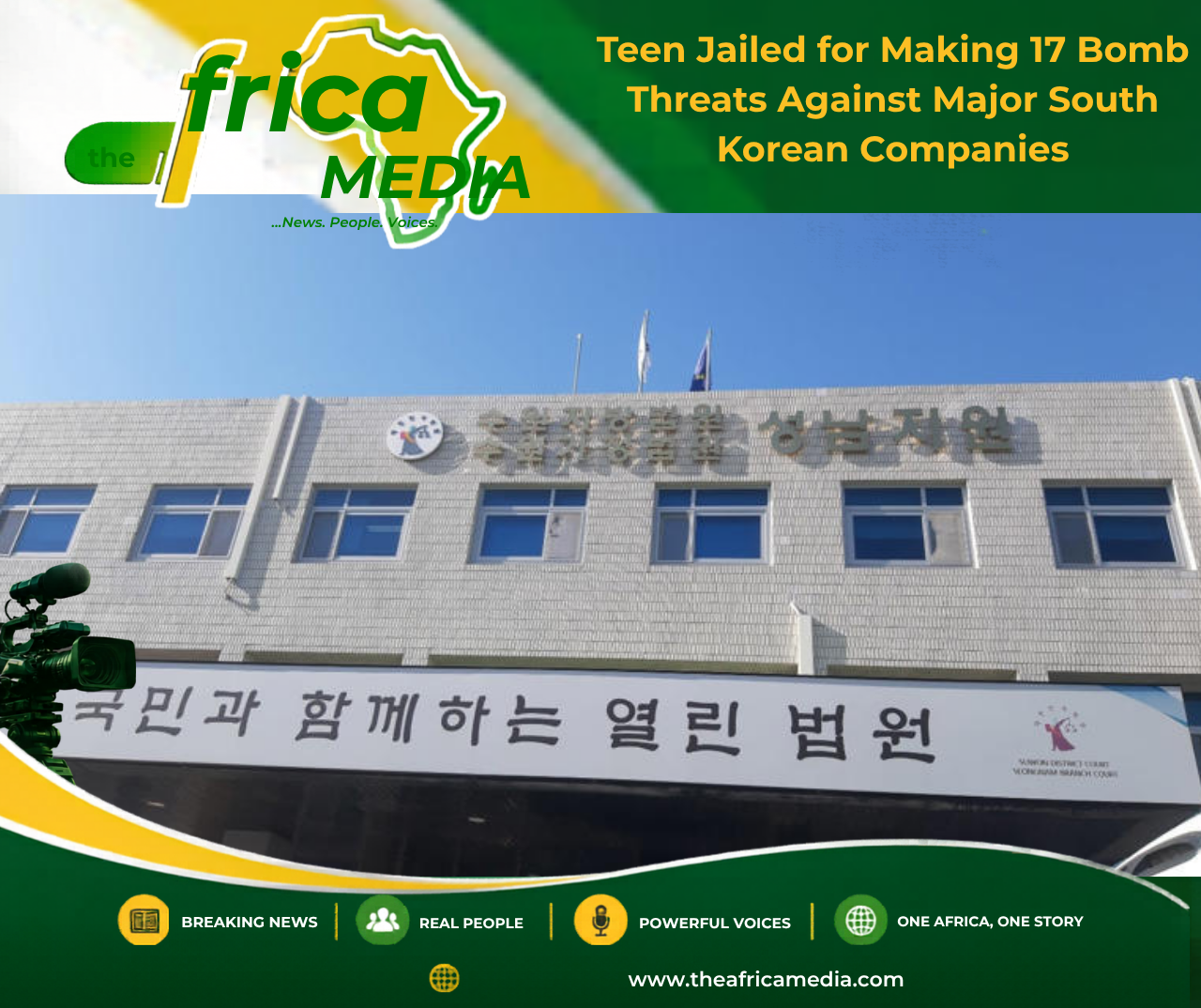
A South Korean court has sentenced a 17-year-old teenager to prison for making a series of false bomb threats targeting major companies and public facilities, causing widespread disruption and prompting large-scale security responses.
Judge Hwang Ji-hyun of the Suwon District Court sentenced the teenager, identified only as A, to a long-term prison term of two years and a short-term term of one year on charges including public intimidation.
Under South Korea’s Juvenile Act, the indeterminate sentence allows for the possibility of release after the shorter term if the offender demonstrates good behavior while incarcerated.
A second teenager, identified as B, aged 15, was fined 8 million won for aiding and abetting the crimes.
According to prosecutors, A made 17 bomb threat reports between December 2025 and February 2026, targeting major organizations including Kakao, Naver, Samsung Electronics, KT Corporation, Toss Bank, and Seoul Station.
The threats, a form of false emergency reporting known as “swatting,” included claims that explosives had been planted in company buildings and threats to kill top executives unless money was transferred to specified accounts.
Investigators found that A used a virtual private network (VPN) to disguise their location through overseas IP addresses and posted threats using stolen identities. Authorities also discovered that the teenager impersonated Lee Jae Myung on a Kakao customer service platform, falsely claiming that explosives had been installed at Kakao’s headquarters in Pangyo.
The court heard that A also used the messaging platform Discord to carry out the threats, while B supplied personal information, including phone numbers and bank account details, to facilitate the scheme.
In delivering the verdict, Judge Hwang said the crimes caused significant public anxiety and forced authorities to divert police resources away from other public safety responsibilities.
The case highlights growing concerns in South Korea over online swatting incidents, which can trigger costly emergency responses and pose risks to public safety despite being based on false information.


