


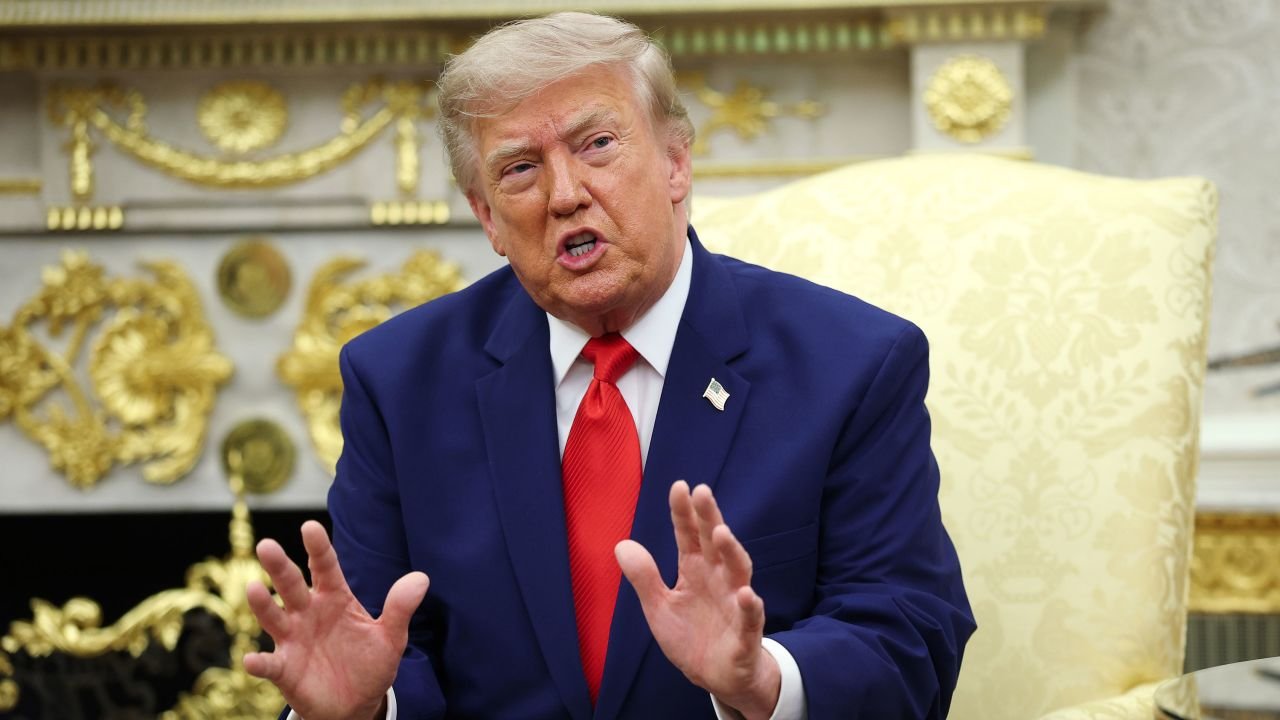
US President Donald Trump has declared that Iran is “completely collapsing” as Washington prepares to unveil a new round of economic measures aimed at intensifying pressure on Tehran.
Trump’s remarks came as the United States shifted its focus from military action to economic warfare, nearly six months into a conflict that has left peace negotiations stalled and the strategic Strait of Hormuz closed.
“IRAN IS COMPLETELY COLLAPSING!!!” Trump wrote on social media on Monday, as his administration prepared to announce details of the latest sanctions campaign.
US Treasury Secretary Scott Bessent, writing in the Financial Times, described the new campaign as an “economic D-Day” and warned that countries continuing to support Iran could become a “global pariah.” He also claimed that US military operations had severely damaged Iran’s military infrastructure and nuclear programme.
Iran, however, rejected the claims and accused Washington of effectively admitting that its military strategy had failed.
Deputy Foreign Minister Kazem Gharibabadi said the decision to intensify financial pressure contradicted US claims of victory. He questioned why Washington would need to launch what he described as a major financial offensive if it had already achieved its military objectives.
The conflict began with US and Israeli strikes linked to concerns over Iran’s nuclear programme, but the Strait of Hormuz has since become a major flashpoint. Iran’s continued blockade of the waterway, a crucial route for global oil and gas shipments, has disrupted energy markets and increased economic pressure worldwide.
According to maritime tracker Kpler, Iran’s oil exports through the strait have fallen from about two million barrels per day before the war to roughly 400,000 barrels per day by mid-August following the US naval blockade.
Washington has increasingly warned other countries against helping Tehran, while Iranian officials have vowed to resist the pressure. Iranian parliamentary speaker and chief negotiator Mohammad Bagher Ghalibaf said the United States was not in a position to further restrict Iran’s international economic relations.
Foreign Ministry spokesman Esmaeil Baqaei also warned countries of unspecified “consequences” if they cooperated with the US campaign.
For ordinary Iranians, however, the prolonged confrontation threatens to deepen an already difficult economic situation. Years of inflation and economic hardship have fuelled public discontent, with large anti-government protests reported in December and January.
Sarah Hassanbeigi, a 32-year-old pharmacist in Tehran, said many Iranians were struggling to cope with the continued crisis and wanted an end to the war.
Meanwhile, diplomatic efforts to end the conflict have continued. Pakistan’s army chief, Asim Munir, visited Iran on Monday and met with Ghalibaf as Islamabad renewed its mediation efforts.
Ghalibaf said Tehran remained committed to implementing the terms of an Islamabad memorandum signed with Washington in June, but blamed the United States for failing to honour its commitments and preventing regional stability.
Oman’s foreign minister is also expected in Iran as Muscat and Tehran work towards an agreement on regulating the movement of vessels through the Strait of Hormuz.


