


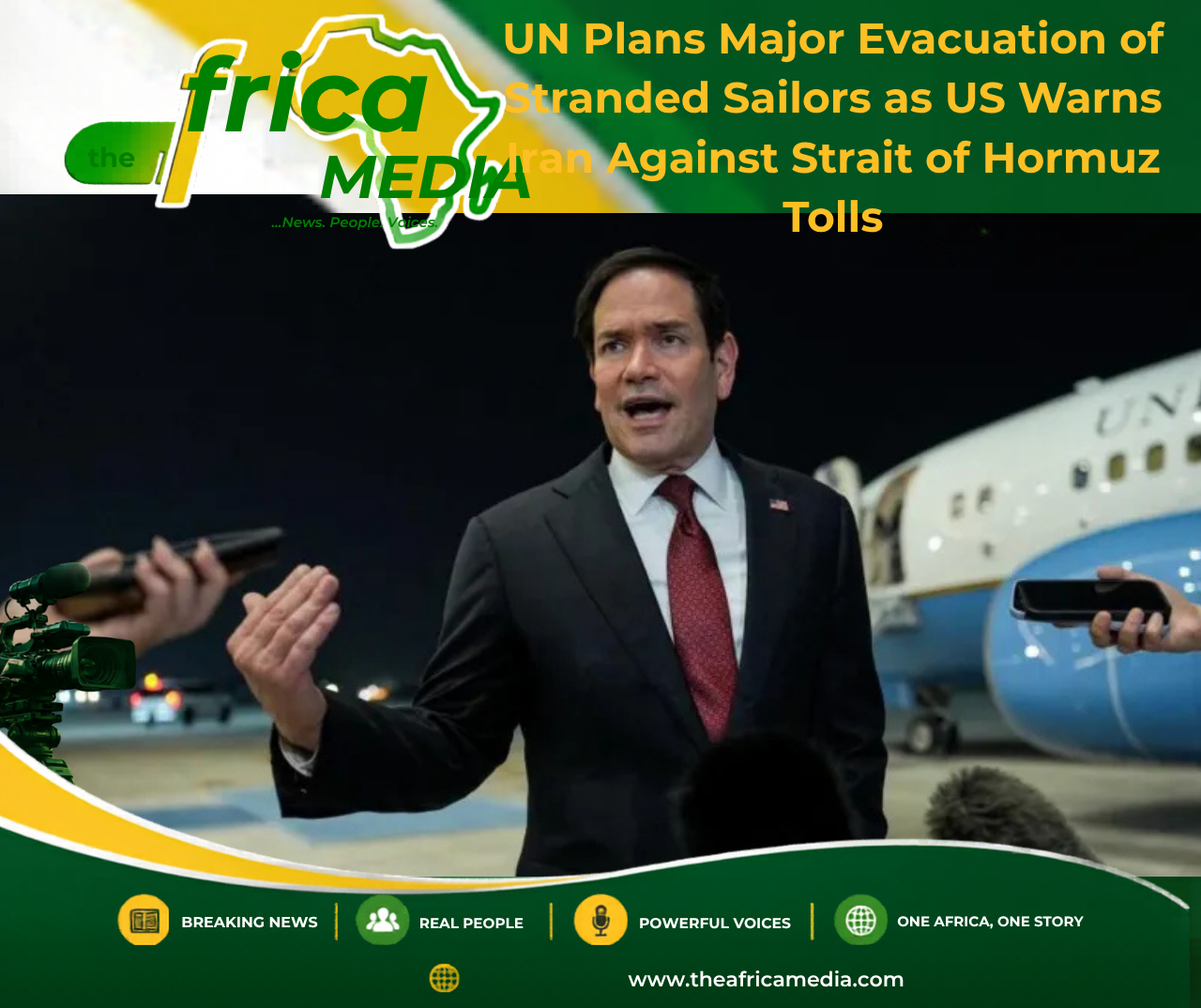
The United Nations’ International Maritime Organization (IMO) has announced plans to evacuate more than 11,000 sailors stranded in the Gulf following months of disruption caused by the conflict involving the United States, Israel and Iran.
IMO Secretary-General Arsenio Dominguez said the large-scale operation would be conducted in coordination with Iran, Oman, the United States, regional coastal states and key maritime industry stakeholders.
According to Dominguez, all necessary safety guarantees have been secured and navigation conditions carefully assessed to ensure the safe movement of ships and crews during the operation.The evacuation effort comes after an interim agreement was reached last week aimed at ending the conflict.
However, disagreements remain between Washington and Tehran over the details of the Memorandum of Understanding (MoU) intended to formalize the arrangement.
The United States maintains that the agreement includes provisions allowing inspections of Iran’s nuclear programme by the International Atomic Energy Agency (IAEA).
US President Donald Trump stated that Iran had agreed to extensive nuclear inspections, describing the arrangement as a measure to ensure long-term transparency regarding its nuclear activities.
Iran, however, has signaled resistance to certain inspection demands, saying sites previously targeted during military operations would not be accessible to inspectors. American officials insist Tehran has nevertheless committed to robust oversight of its nuclear programme. Meanwhile, Iranian President Masoud Pezeshkian reiterated that Iran would not engage in negotiations concerning its defensive capabilities, including its missile programme.
During a joint appearance with Iranian President Pezeshkian, Pakistan’s Prime Minister Shehbaz Sharif clarified that ballistic missiles were not part of the discussions between Iran and the United States and were not included in the memorandum. As diplomatic efforts continue, US Secretary of State Marco Rubio began a regional tour that includes the United Arab Emirates, Kuwait and Bahrain, where he is expected to discuss the agreement and broader regional security concerns.
Rubio also issued a warning regarding reports that Iran may seek to impose charges on vessels transiting the Strait of Hormuz. He stressed that the strait remains an international waterway governed by international law and that no country has the authority to levy tolls or fees on ships passing through it.
The future success of the sailor evacuation operation depends heavily on the continued reopening and stability of the Strait of Hormuz, one of the world’s most important maritime trade routes.
Dominguez described the planned evacuation as a significant step toward restoring maritime security and ending attacks on civilian shipping in the region.


