



The United Nations has warned that about 50 million people could face increased hunger as an exceptionally powerful El Niño threatens to intensify extreme weather conditions across vulnerable regions, urging governments and financial institutions to provide emergency funding before the crisis worsens.
The UN said the weather phenomenon, expected to peak in December, could trigger severe droughts, floods and extreme temperatures, with humanitarian consequences likely to persist into 2027 and beyond.
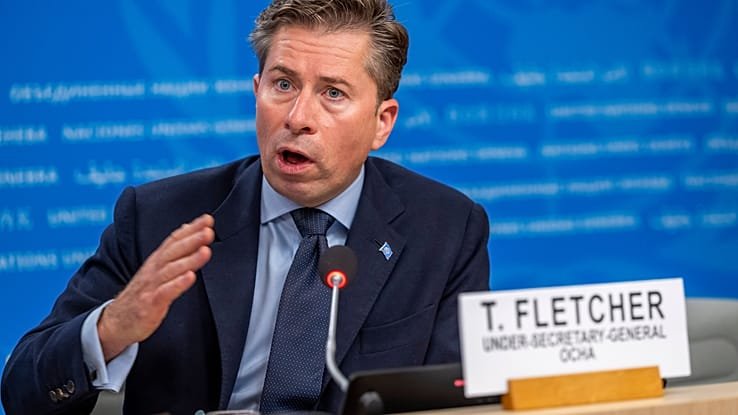
The warning was issued jointly by the World Meteorological Organisation (WMO) Secretary-General, Celeste Saulo, and UN aid chief, Tom Fletcher, at a press conference in Geneva, where they called for urgent, coordinated action to protect communities already struggling with conflict, displacement and rising living costs.
Saulo described the developing weather event as potentially unprecedented in strength, warning that its intensity could exceed the limits of monitoring records accumulated over the past four decades.
“The current event could be unprecedented in strength, literally off the monitoring charts that we have used for the past four decades,” she said.
She added that extreme weather events were already being observed and could multiply as the phenomenon intensifies.
A super El Niño is characterised by sea surface temperatures in the central Pacific Ocean rising more than two degrees Celsius above normal, disrupting global weather patterns and influencing rainfall, drought and temperature conditions across several continents.
Fletcher described the impending crisis as a “wrecking ball” capable of devastating communities across Latin America, eastern and southern Africa, Asia and the Pacific.
He warned that the effects would compound existing humanitarian emergencies, including armed conflicts, mass displacement, high food and fertiliser prices, rising fuel costs and reductions in international aid.
These overlapping pressures, he said, could leave tens of millions of people in need of humanitarian assistance, particularly in countries with limited resources to prepare for extreme weather.
“The risk is you have tens of millions of people pushed into humanitarian need,” Fletcher said, warning that approximately 50 million people could experience increased hunger.
He identified the next two weeks as a critical period for preventive action, urging governments and humanitarian organisations to deliver supplies and support before extreme weather conditions cause further damage.
According to him, Somalia, Ethiopia and Kenya need supplies ahead of anticipated heavy rains, while countries in southern Africa require seeds and livestock to protect agricultural livelihoods.
Central American communities need assistance to sustain their livelihoods, while countries across Asia and the Pacific must strengthen preparations for droughts, floods and cyclones.
Fletcher also warned that the economic consequences would extend beyond countries directly exposed to the weather system, potentially triggering global economic shocks, increased migration and further instability.
He stressed that humanitarian agencies could not manage a crisis of such magnitude without additional support from governments, development banks and international financial institutions.
“We cannot stop El Niño, but we can prevent many of its worst human consequences,” Saulo said.
Fletcher disclosed that he had released $50 million to support 11 countries facing heightened risks, including Chad, El Salvador, Ethiopia, Somalia and South Sudan.
He called for financial resources to be made available before the anticipated damage occurs, arguing that early intervention would help protect lives and reduce the long-term cost of humanitarian emergencies.
El Niño is a recurring climate phenomenon involving the warming of surface waters in the central and eastern equatorial Pacific Ocean. It alters atmospheric circulation, winds and rainfall patterns, producing different effects across the world.
The phenomenon typically occurs every two to seven years and lasts between nine and 12 months, although its intensity and regional consequences vary.
The UN agencies stressed that early preparation, timely funding and coordinated international support would be essential to protecting vulnerable populations from the anticipated effects of the developing climate emergency.


