


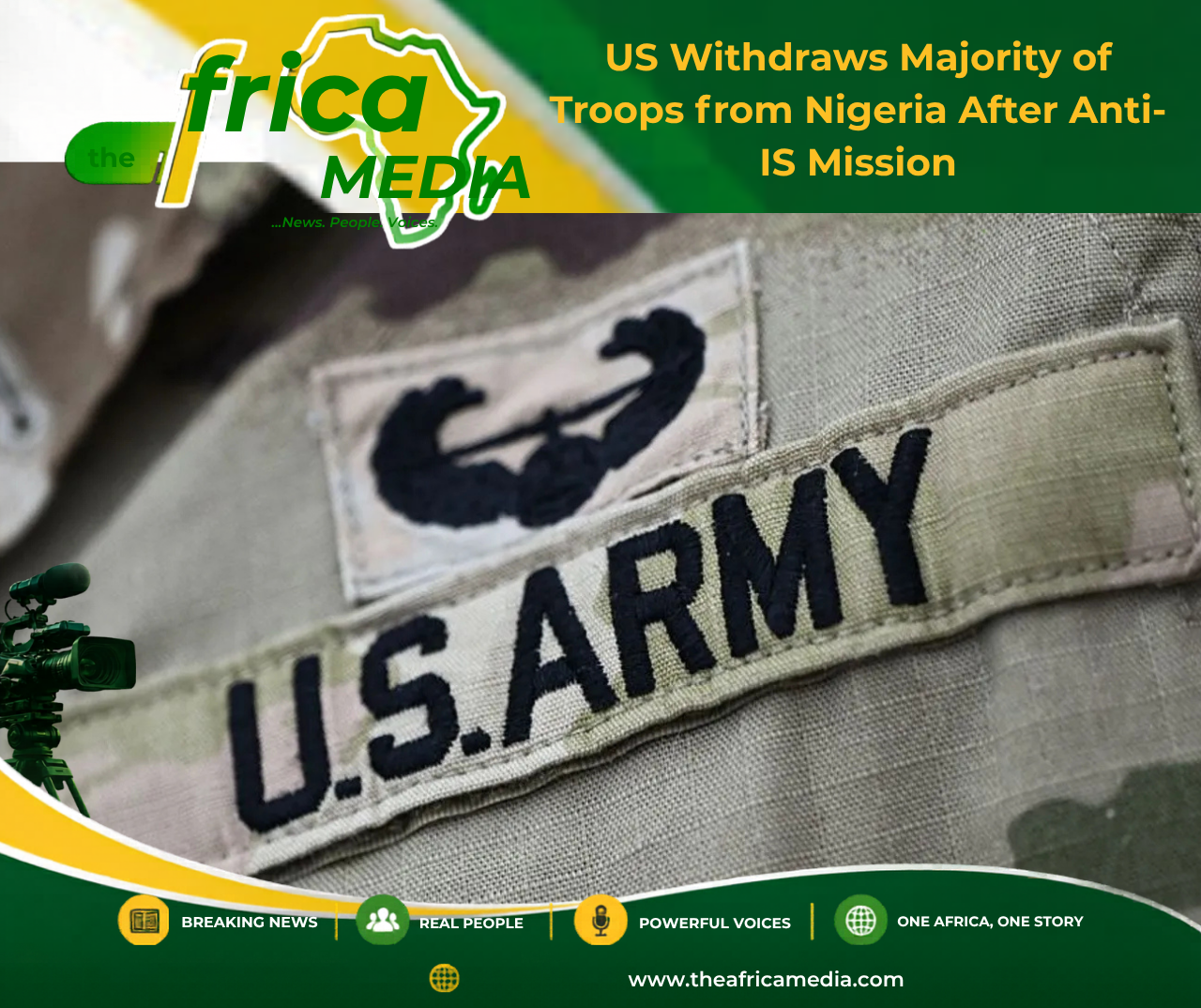
The United States has withdrawn most of the troops it deployed to Nigeria earlier this year following the completion of a joint counterterrorism operation targeting Islamist militants in the Lake Chad Basin.
The military mission began in December when U.S. and Nigerian forces launched coordinated operations against extremist groups, including airstrikes carried out on Christmas Day. Around 200 U.S. troops were later deployed to support intelligence, surveillance and operational planning.
During the operation, senior Islamic State commander Abu-Bilal al-Minuki was killed, with U.S. military officials describing the mission as a success that significantly weakened the group’s leadership and communication network.
Despite the troop withdrawal, U.S. officials confirmed that military cooperation with Nigeria will continue through intelligence sharing and security collaboration. Nigerian military spokesperson Major General Michael Onoja said the departure of the American troops would not affect ongoing counter-insurgency operations.
The deployment came amid increased security cooperation between both countries after Washington raised concerns about attacks by Islamist militant groups. Nigeria has consistently rejected claims that the violence amounts to a targeted campaign against Christians, maintaining that the conflict affects people of different religious backgrounds.
Security analysts note that the Islamic State has shifted much of its global activity to sub-Saharan Africa in recent years, with its Nigeria-based affiliate remaining one of the group’s most active branches.
Although the joint operation dealt a setback to the militants, Nigeria continues to face multiple security challenges, including insurgency in the northeast, banditry, kidnappings, and other forms of armed violence across several parts of the country.


