


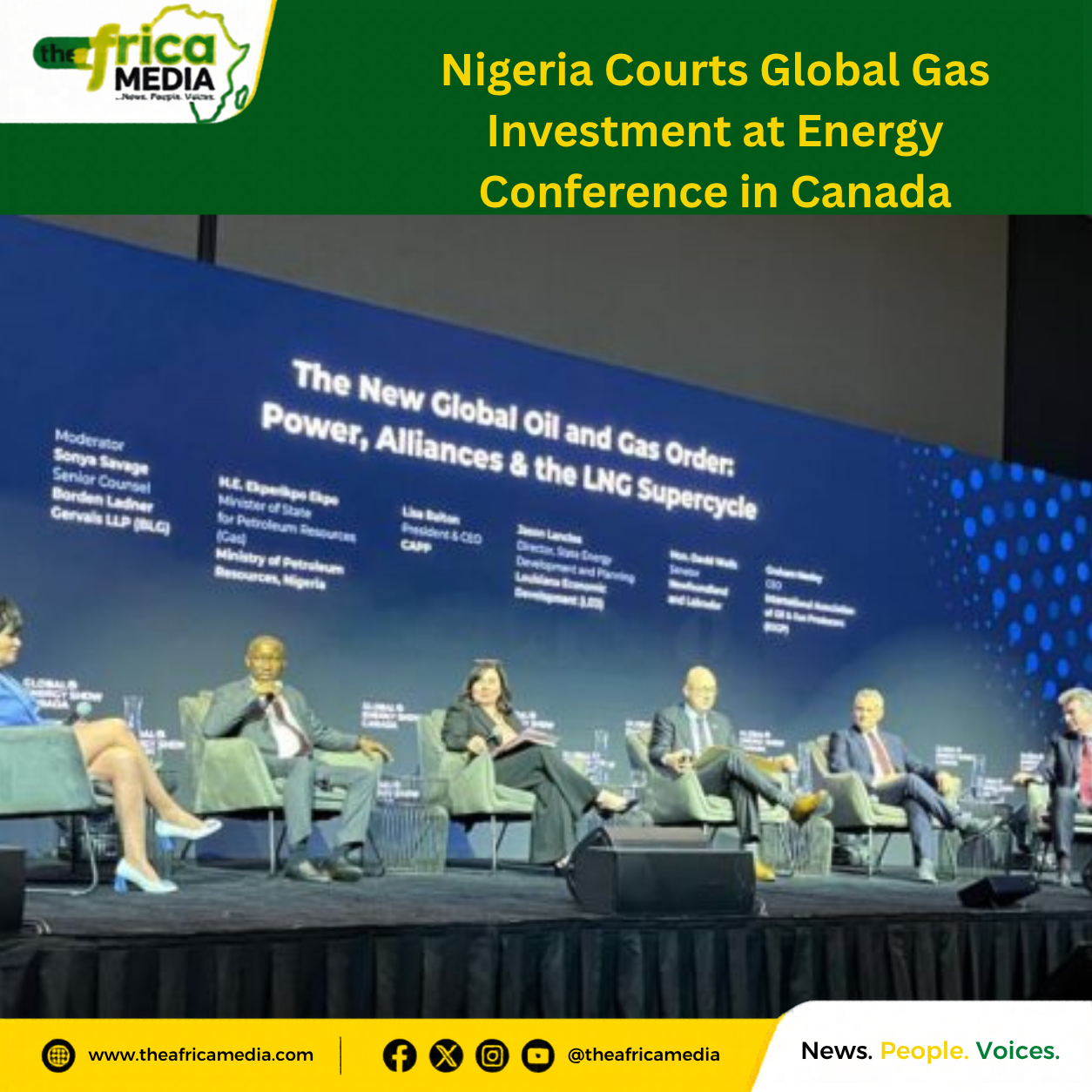
Nigeria has restated its ambition to attract increased global investment into its gas sector, positioning itself as a key player in the evolving global energy market during the 2026 Global Energy Show in Calgary.
The Minister of State for Petroleum Resources (Gas), Ekperikpe Ekpo, said Nigeria holds vast natural gas reserves and is well-placed to contribute significantly to global energy supply and transition needs.
Nigeria Describes Itself as Key Gas Hub
Speaking at a panel session, Ekpo described Nigeria as an “essential gas province,” emphasising the country’s potential to drive industrial growth and energy security through expanded gas development.
He assured international investors of a stable and supportive regulatory environment, stating that government policies are designed to protect investments and encourage long-term participation in the sector.
The minister also highlighted ongoing reforms aimed at improving efficiency and unlocking new opportunities in Nigeria’s oil and gas industry.
Infrastructure Push to Expand Gas Reach
Ekpo pointed to major infrastructure projects such as the Ajaokuta–Kaduna–Kano (AKK) pipeline and the Obiafu–Obrikom–Oben (OB3) pipeline as critical to Nigeria’s gas expansion strategy.
According to him, the projects are expected to improve domestic gas distribution, strengthen regional supply networks across West and North Africa, and potentially open pathways for exports to European markets.
He added that expanding pipeline infrastructure remains central to Nigeria’s long-term energy strategy.
Global Energy Transition in Focus
The conference brought together policymakers, investors, and energy industry leaders to discuss shifts in global oil and gas markets, including the growing importance of liquefied natural gas (LNG) in meeting future demand.
Nigeria’s participation reflects its broader effort to secure a stronger position in the global energy transition while attracting capital for upstream and midstream gas development.
Officials reiterated Nigeria’s commitment to international partnerships aimed at strengthening energy security and supporting sustainable development across the sector.
Outlook for Investment
Analysts at the conference noted that Nigeria’s large reserves and ongoing infrastructure projects could make it a more attractive destination for energy investors, provided regulatory stability and project execution remain consistent.
The government maintains that its current policy direction is focused on creating a competitive environment capable of drawing global capital into the country’s gas industry.


