


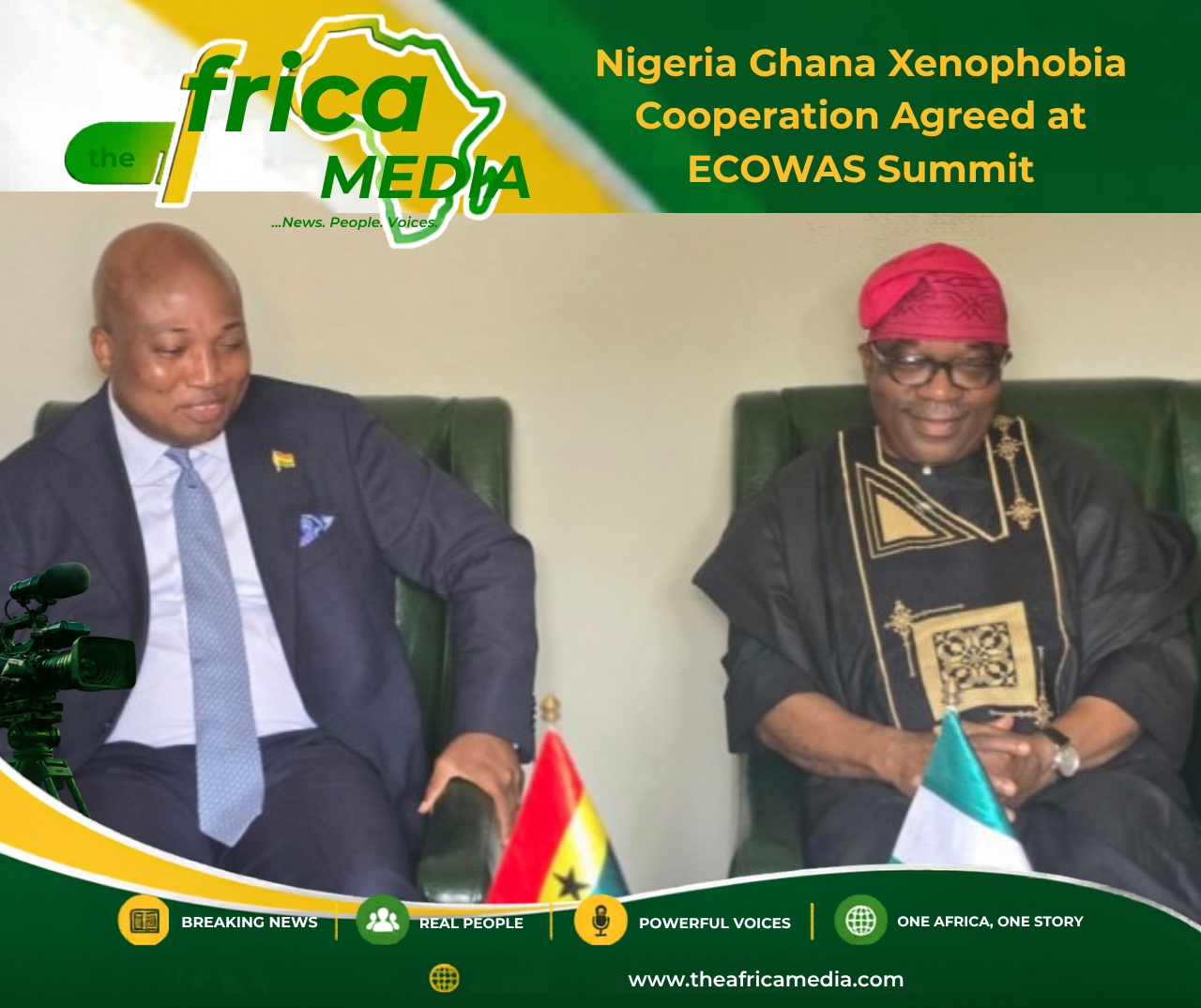
Nigeria and Ghana have agreed to pursue coordinated action against the resurgence of xenophobic attacks on African nationals across the continent.
The Nigeria Ghana xenophobia cooperation agreement comes amid diplomatic tension between South Africa and many Sub-Saharan African countries, sparked by a recent wave of xenophobic violence.
Nigeria and Ghana reached the agreement during a meeting on the sidelines of the ECOWAS Mid-Year Summit in Freetown, Sierra Leone, on Friday.
Nigeria’s Minister of State for Foreign Affairs, Sola Enikanolaiye, met with Ghana’s Minister of Foreign Affairs, Samuel Ablakwa, to discuss recent attacks on African migrants in South Africa and the broader implications of the violence for Pan-Africanism.
What the Two Countries Agreed OnThe Nigerian Ministry of Foreign Affairs, in a statement issued after the meeting, said the diplomats condemned xenophobia, Afrophobia and all forms of violence against fellow Africans. “Migrants should not be subjected to mob violence or collective punishment based on their nationality,” the statement read.
The ministers stressed that such actions undermine the African Union’s vision of unity, the free movement of persons, and the objectives of the African Continental Free Trade Area (AfCFTA).
They underscored the need for urgent, coordinated regional and continental responses to address the root causes of the tensions, protect the lives and dignity of African migrants, and promote harmonious coexistence.
The two ministers also emphasised the shared values of Pan-Africanism and the continent’s collective progress. They stressed that criminals among migrant populations must be treated in accordance with the rule of law, rather than being subjected to violence and mob actions that often target regular, law-abiding migrants as well.
Nigeria Praises Ghana’s UN Slave Trade ResolutionEnikanolaiye commended Ghana for a landmark UN resolution on the transatlantic slave trade. Ghana introduced the resolution before the UN General Assembly in March, seeking recognition of the transatlantic slave trade as the gravest crime against humanity.
The country also asked UN member states to consider a formal apology alongside a designated reparations fund. The resolution received overwhelming support, passing with 123 member states in favour and only Israel and the United States voting against it.
Fifty-two countries, primarily in Europe, including Britain, Portugal and Spain, abstained from voting.Enikanolaiye emphasised Nigeria’s support for reparative justice globally, saying Nigeria aligns with and fully supports the conference’s decisions in the quest for reparative justice for Africans.
The statement also noted that Ghana’s foreign minister, in his response, backed the need for action-oriented preventive diplomacy achieved through direct, less bureaucratic communication between nations.


