



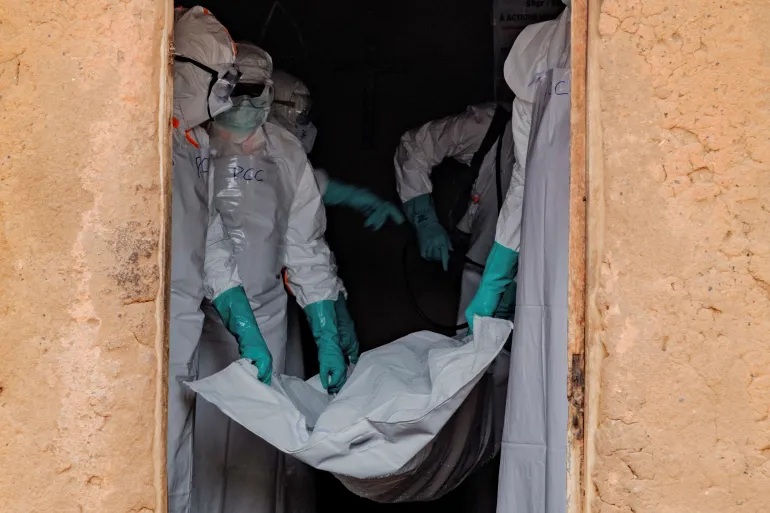
The Ebola outbreak in the Democratic Republic of the Congo (DRC) has killed more than 1,500 people, as the spread of the virus continues to outpace response efforts, new statistics have revealed. The DRC Ebola death toll now stands at 1,521, according to a government update issued Thursday, alongside 3,442 confirmed cases.
The data marks a 50 percent increase in the death toll over the past week, with authorities continuing to struggle to rein in the outbreak in the east of the country, where decades of conflict with rebel groups have left government control and infrastructure lax or absent.
Why the Toll Jumped So Sharply
The Africa Centres for Disease Control and Prevention (Africa CDC) said the sharp rise since last week partly reflects a backlog of cases and deaths that had not yet been confirmed or recorded.
The lack of a proven vaccine for Bundibugyo, the rarest of the four Ebola variants known to affect humans, combined with the fact the epidemic is unfolding in an area of active hostilities between armed groups, has produced a severe shortage of public health resources. A public health consultant who helped establish Africa CDC told Al Jazeera earlier this month this combination has allowed the virus to spread “like wildfire.” Africa CDC added that delays in contact tracing, difficulties accessing affected areas, and mistrust from communities have further hindered an effective response.
Ituri Remains the Epicentre
The outbreak remains mostly concentrated in eastern Congo’s remote Ituri province, which accounts for nearly 90 percent of cases, though five other provinces have confirmed infections, including one of the country’s largest cities, Kisangani.
Neighbouring Uganda, by contrast, declared itself free of Ebola on Tuesday, following the discharge of the country’s last patient in mid-June.
Unsafe Burial Practices Driving Deaths Outside Treatment Centres
Africa CDC Director-General Dr Jean Kaseya said 63 percent of confirmed deaths in the last two weeks occurred outside treatment centres. This is largely due to unsafe handling of infected bodies by residents, including touching the remains of the deceased, whose bodies remain highly infectious even after death.
Earlier this month, healthcare workers in Ituri went on strike over unpaid wages and unsafe working conditions, further impeding efforts to contain the disease’s rapid spread. In Ituri’s Nyakunde health zone, international partners supporting the Ebola response were forced to temporarily relocate after a July 15 attack on a hospital and treatment centre, prompted by a patient’s death. Officials said the attack disrupted surveillance, contact tracing and supply chains.
Global Spread Risk Remains Low, WHO Says
Despite the accelerating death toll in the DRC, the World Health Organization has said the risk of global spread remains low, since Ebola does not travel through the air, making it far harder to spread than respiratory viruses. Cases detected outside the DRC have so far been quickly identified and contained without leading to sustained transmission, the agency said.


