



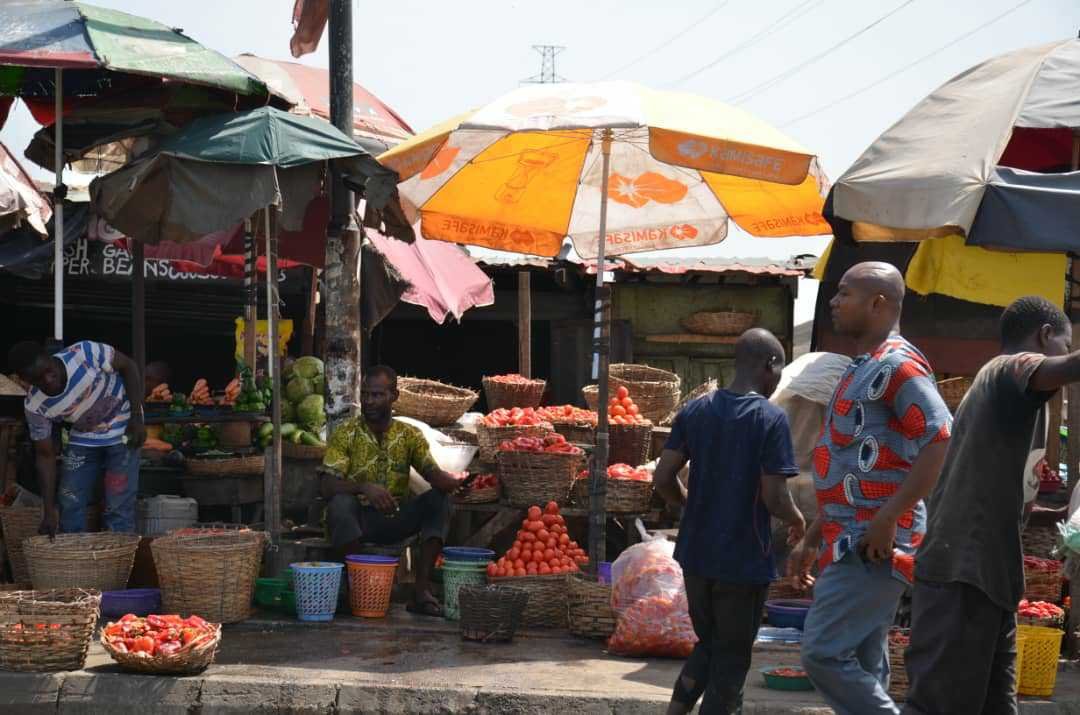
Despite a moderation in Nigeria’s national food inflation rate, the cost of food remains stubbornly high across much of the country, with 19 states recording annual food inflation above 20 per cent in October 2026, raising fresh concerns about the worsening pressure on household budgets and the struggle of millions of Nigerians to afford basic meals.
The affected states account for more than half of Nigeria’s 36 states, reflecting the uneven impact of food price movements across the country. While the national annual food inflation rate declined from 19.59 per cent in September to 19.13 per cent in October, prices in several states continued to rise at considerably higher rates.
An analysis of the September and October Consumer Price Index reports and accompanying statistical tables published by the National Bureau of Statistics (NBS) showed that Ondo, Lagos and Imo recorded the highest annual food inflation rates during the period.
Ondo topped the list with 31.74 per cent, rising marginally from 31.49 per cent in September, while Lagos recorded 31.43 per cent, although this represented a decline from 34.40 per cent in the previous month.
Imo followed with 29.75 per cent, down from 33.79 per cent, while Oyo recorded 28.81 per cent, significantly higher than the 24.50 per cent reported in September.
According to the NBS, “Food inflation on a Year-on-Year basis was highest in Ondo (31.74 per cent), Lagos (31.43 per cent), and Imo (29.75 per cent).”
The figures showed that food inflation remained above 25 per cent in six states, while two states recorded rates exceeding 30 per cent, suggesting that the national moderation was yet to translate into comparable relief across several parts of the country.
Ebonyi recorded a sharp increase to 27.96 per cent from approximately 22 per cent in September, while Rivers posted 25.33 per cent, compared with about 28 per cent previously.
Other states with food inflation above 20 per cent included Abia at 24.22 per cent, Delta at 23.91 per cent, Enugu at 23.48 per cent, Zamfara at 22.88 per cent, Ogun at 22.47 per cent, Yobe at 22.26 per cent, Anambra at 22.23 per cent and Kebbi at 22.21 per cent.
Akwa Ibom recorded 21.56 per cent, Edo 21.52 per cent, Sokoto 21.40 per cent, Ekiti 20.61 per cent and Kaduna 20.32 per cent.
The continued high annual rates mean that food prices in these states remain substantially higher than they were a year earlier, even where the pace of increase has slowed. For households already struggling with reduced purchasing power, the difference between inflation easing and prices actually becoming affordable remains significant.
However, the monthly figures presented a more mixed picture, with food prices declining nationally for the second consecutive month, although the pace of reduction weakened.
National food inflation on a month-on-month basis stood at -0.75 per cent in October, compared with -1.55 per cent in September. The change represented an increase of 0.80 percentage points in the monthly inflation rate, indicating that food prices continued to decline, but at a slower pace.
The NBS stated, “On a month-on-month basis, the Food inflation rate in October 2026 was -0.75 per cent, up by 0.80 percentage points from September 2026 (-1.55 per cent).”
The September report had shown that monthly food inflation declined from 1.02 per cent in August to -1.55 per cent, representing a 2.57 percentage-point drop.
October’s performance, therefore, marked a continuation of the downward movement in monthly food prices, but the slowdown suggested that the pace of easing was losing momentum.
At the state level, however, the movement was far from uniform, with some states recording sharp increases in monthly food inflation after experiencing price declines in September.
Yobe recorded the most dramatic reversal, with monthly food inflation rising to 18.41 per cent in October from -7.0 per cent in September, representing a 25.41 percentage-point increase.
Kebbi followed with 16.45 per cent, compared with -4.9 per cent in the preceding month, while Sokoto recorded 13.0 per cent against -1.7 per cent previously.
Zamfara’s monthly rate increased to 8.7 per cent from 6.0 per cent, while Anambra recorded 4.3 per cent compared with -0.3 per cent in September.
Enugu recorded 4.9 per cent against 14.5 per cent previously, Abia rose to 2.6 per cent from 0.4 per cent, while Ebonyi increased to 2.4 per cent from -2.1 per cent.
Ogun’s monthly food inflation stood at 1.5 per cent, compared with -0.4 per cent in September, while Edo rose to 0.9 per cent from -2.8 per cent. Imo, however, recorded a moderation to 0.6 per cent from 5.2 per cent.
Ondo’s monthly rate declined to 0.6 per cent from 2.6 per cent, while Kaduna recorded a -4.7 per cent rate, reversing September’s 3.2 per cent increase.
In Lagos, food prices declined by 5.93 per cent month-on-month, compared with a 0.4 per cent increase in September. Rivers recorded -4.3 per cent against -2.0 per cent previously, while Delta posted -3.8 per cent compared with a 2.2 per cent increase.
Oyo recorded -2.6 per cent against 3.8 per cent in September, Akwa Ibom declined to -1.5 per cent from -0.4 per cent, while Ekiti improved to -0.4 per cent from -1.5 per cent.
Overall, 11 of the 19 states recorded monthly food price increases in October, while eight experienced declines, highlighting the divergent experiences of households across the country.
The NBS attributed the national movement in food prices to changes in the prices of vegetable oil, sardines, green peas, frozen fish, local rice, fresh catfish, beef tripe, palm oil and millet flour.
It cautioned, however, that direct comparisons between states should be treated carefully because consumption patterns and the weights assigned to food items in the CPI basket differ across locations.
While the latest figures suggest some easing in food price pressures nationally, the continued high annual inflation rates across 19 states underscore the scale of the affordability challenge confronting Nigerians.
For many households, particularly those whose incomes have failed to keep pace with the cost of living, a decline in inflation does not necessarily mean cheaper food or improved living conditions. The October figures may signal a gradual easing in the rate of price increases, but the reality in several states remains that food is still becoming more expensive over the year, leaving millions struggling to meet their most basic needs.


