



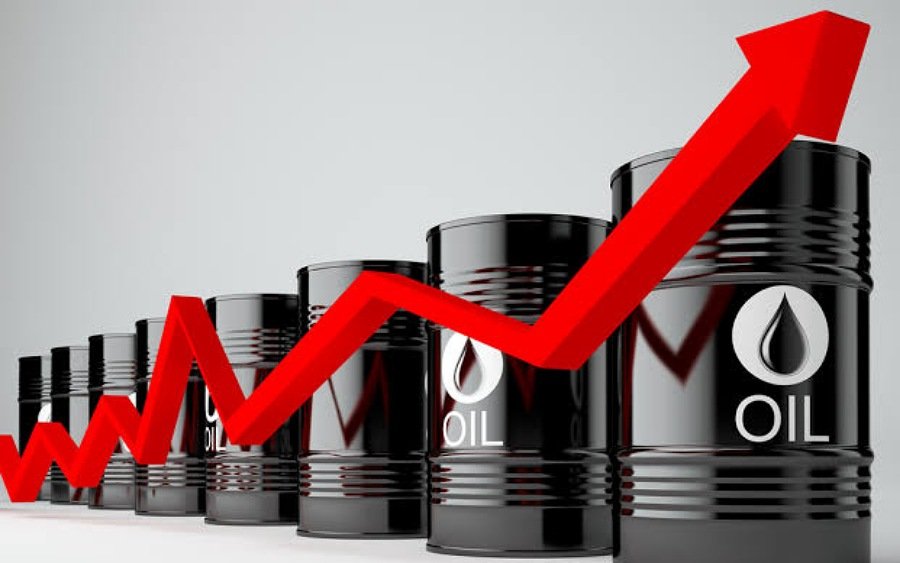
Oil prices climbed on Monday, August 17, 2026, as hopes for a breakthrough in United States-Iran peace talks faded and tanker traffic through the Strait of Hormuz slowed following a series of attacks on vessels.
Brent crude futures rose by as much as 1% to $89.40 per barrel before easing to $89.20, up 72 cents, by 0229 GMT. U.S. West Texas Intermediate (WTI) crude futures also gained 44 cents to trade at $82.83 a barrel.
Both benchmarks advanced by more than 5% last week after attacks on tankers operated by the Abu Dhabi National Oil Company (ADNOC) in the Strait of Hormuz and an attack on a Saudi Aramco refinery.
Iranian Foreign Minister Abbas Araqchi said over the weekend that Tehran had yet to decide whether to resume negotiations with Washington, while U.S. President Donald Trump urged Americans to accept slightly higher gasoline prices as the conflict continues.
Priyanka Sachdeva, head of market insights at Phillip Nova, said oil prices had almost fully recovered from their early-August lows as expectations of a lasting resolution between the U.S. and Iran diminished.
“Oil prices have now rebounded almost completely from the lows seen in early August, as hopes for a more permanent resolution between the U.S. and Iran have faded and geopolitical risk premiums have returned to the market,” Sachdeva said.
However, she said the potential for further gains remained limited unless there was evidence of renewed attacks in the Strait of Hormuz, particularly significant damage to tankers or oil infrastructure.
Shipping activity through the strategic waterway slowed over the weekend following the attacks.
Kpler tracking data showed that only five commodity vessels passed through the Strait of Hormuz on Saturday, while no vessels were recorded as having transited the route on Sunday.
The United Arab Emirates accused Iran of attacking a third ADNOC-operated vessel transiting the strait on Friday, according to the Emirati state news agency WAM.
The UAE had previously blamed Iran for two other incidents involving ADNOC vessels in the strait on Thursday evening.
The Strait of Hormuz is a critical global oil shipping route, and any prolonged disruption could further tighten supplies and put additional upward pressure on crude prices.


