



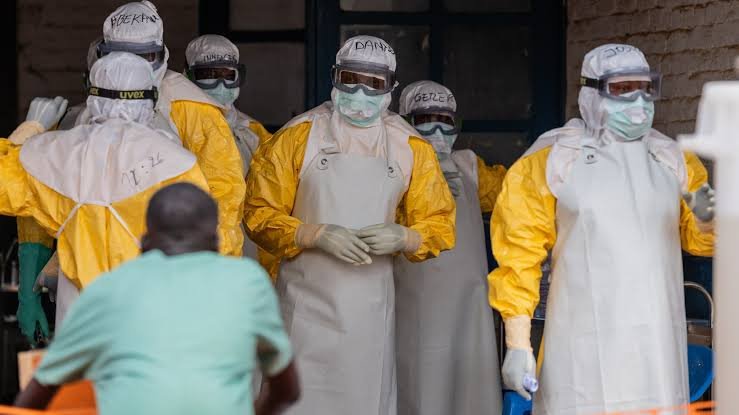
Congo’s response to its fastest-growing Ebola outbreak is coming under increasing strain as health workers go unpaid for months, triggering strikes and hampering efforts to trace people exposed to the deadly virus.
In Nizi, eastern Congo, community health worker and contact-tracing coordinator Gédéon Banga Ngbape and his team continue to move through communities daily, searching for people who may have come into contact with Ebola patients.
Ngbape said one of the biggest challenges facing the response is the failure to pay health workers for more than three months.
“We’re also facing challenges related to the limited mobility of our field staff,” he said.
The crisis deepened on Thursday when health workers at the Nizi Treatment Center went on strike, forcing the facility to temporarily shut down.
Contact tracers are responsible for investigating dozens of alerts each day, identifying people who may have been exposed to suspected or confirmed cases and ensuring those who develop symptoms are taken for treatment before they can infect others.
But the surveillance system is increasingly struggling to keep pace with the outbreak.
Ngbape said effective surveillance is critical to the entire Ebola response, warning that weaknesses in the system could undermine efforts to contain the virus.
Government data released overnight into Tuesday showed that the outbreak has reached 4,381 confirmed cases, including 2,011 deaths. The death toll was reached almost three times faster, from the first confirmed case, than during the 2014–2016 Ebola epidemic in West Africa, the deadliest outbreak on record.
The current outbreak was officially declared on May 15, although health authorities now say genetic sequencing indicates that it began months earlier, in February.
In Nizi, contact-tracing teams receive an average of 60 to 70 alerts each day.
Community health worker Ana Ndroy Kasime said she visits homes to educate residents about Ebola and reports suspected cases to health officials. However, she said workers are operating without adequate protective equipment and other essential supplies.
The outbreak is being driven by the rare Bundibugyo Ebola virus and is unfolding amid severe logistical and security challenges.
There are currently no approved vaccines or treatments specifically for the Bundibugyo virus, although clinical trials are underway.
The response has also been undermined by strikes among unpaid health workers, threats from rebel groups, distrust among communities traumatised by years of conflict and misinformation claiming that Ebola does not exist.
With surveillance teams struggling to reach communities and treatment centres facing disruptions, health officials fear the widening gaps in the response could make it increasingly difficult to contain the deadly outbreak.


