


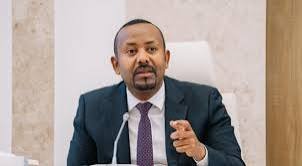
Ethiopia’s national dialogue has endorsed sweeping constitutional reforms that would replace the country’s current political system with an executive presidency combining the powers of the prime minister and president, raising concerns among critics that Prime Minister Abiy Ahmed could further consolidate power.
More than 4,000 delegates participated in the weeks-long national dialogue, which concluded on August 22 after discussions on Ethiopia’s political tensions, ethnic divisions and persistent armed conflicts.
Delegates overwhelmingly supported a proposal to establish an executive presidency that would merge the largely ceremonial presidency with the powers currently exercised by the prime minister.
The recommendations could be submitted to parliament when lawmakers reconvene in October.
Although Abiy did not attend the dialogue, observers expect him to be a leading contender for the proposed executive presidency if the constitutional changes are approved. Under the proposed system, the president would be elected by a parliament dominated by members of Abiy’s ruling party.
Supporters See Stronger National Leadership
Supporters of the proposal argue that an executive presidency could provide stronger and more cohesive national leadership by allowing the president to represent all ethnic groups rather than being elected as a parliamentary representative from Oromia.
Critics, however, fear that the reforms could reshape Ethiopia’s political system around a single individual and weaken institutional checks on executive authority.
Political analyst Befekadu Hailu said the proposed reforms could effectively pave the way for Abiy to move from prime minister to executive president, concentrating significant political power in one office.
The proposal has drawn comparisons with Turkey, where Recep Tayyip Erdogan transitioned from prime minister to a powerful executive presidency following constitutional reforms.
Ethnic Politics Also Targeted
The national dialogue also recommended reducing state funding for ethnic-based political parties and encouraging political organisations with broader national platforms.
The recommendation comes as Ethiopia continues to grapple with serious security challenges, including armed insurgencies in Oromia and Amhara.
There are also fears that conflict could once again erupt in northern Tigray, where a devastating war between 2020 and 2022 killed an estimated 600,000 people.
Key opposition parties boycotted the national dialogue, while armed groups were excluded from the process.
Merera Gudina, chairman of the Caucus of Opposition Parties, questioned the ability of the dialogue to deliver lasting peace and democratic governance.
“The dialogue cannot guarantee the country’s two most pressing needs: lasting peace and democratic governance,” he said.
Peace-building expert Naga Tesfaye similarly called for the recommendations to be followed by broader negotiations involving the government, opposition parties and armed groups as part of efforts to end continuing violence.
Addis Ababa Issue Exposes Deep Divisions
The status of Addis Ababa emerged as one of the most contentious issues during the dialogue.
The Ethiopian capital has a constitutionally recognised self-governing status but is geographically surrounded by Oromia, which has long asserted claims over the city and surrounding areas.
Several delegates reportedly walked out during discussions on the issue, underscoring the depth of Ethiopia’s unresolved ethnic and regional tensions.
Despite the disagreements, some participants described the dialogue as a rare opportunity for groups with competing visions of the Ethiopian state to engage directly and seek common ground.
Major Political Test Ahead
Abiy has governed Ethiopia since 2018 and secured another landslide election victory in June amid criticism from opposition groups and international observers over restrictions on political parties and the media.
The proposed constitutional overhaul could become one of the most significant changes to Ethiopia’s political system in decades.
Its ultimate impact will depend largely on how parliament considers the recommendations and whether the government can simultaneously address the armed conflicts, ethnic tensions and political divisions that continue to challenge the country.
For supporters, an executive presidency could strengthen national cohesion and provide clearer leadership. For critics, however, the reform risks concentrating too much power in the hands of one leader at a time when Ethiopia’s democratic institutions remain under intense scrutiny.


