


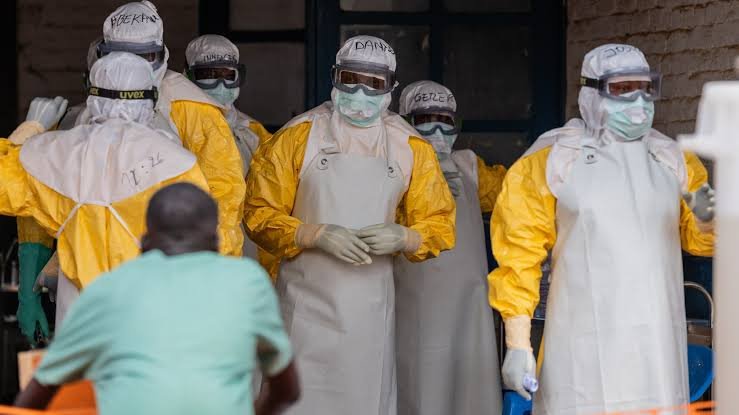
Medical teams in eastern Democratic Republic of Congo (DRC) are working under difficult and dangerous conditions as they race to contain the country’s worst recorded Ebola outbreak.
More than 7,000 cases of the virus have been confirmed since the outbreak was declared in mid-May, including more than 3,000 deaths, according to Congolese authorities.
The outbreak is being driven by the Bundibugyo strain of Ebola, for which there is currently no approved treatment or vaccine.
Fabrice Ngoyi Nsakalumpu, Medical Activity Manager with Médecins Sans Frontières (MSF), said health workers were struggling to provide care amid violence, limited access to healthcare and the absence of specific treatment for the strain.
“It is not easy, you know, to work in my country, to see the community affected by an outbreak like Ebola without specific treatment and to work in this environment with violence, difficult for patients to access healthcare,” Ngoyi said.
“So we are managing even though it is not easy, but we make the best.”
Eastern DRC remains an active conflict zone, complicating efforts by health workers to reach remote communities, trace people who may have been exposed to the virus and provide timely medical assistance.
Health workers are also facing resistance in some communities, particularly over the handling of bodies of Ebola victims. Relatives have at times demanded access to the remains of loved ones despite the risk of further transmission.
The outbreak has spread to seven provinces, according to authorities, increasing pressure on health teams and response agencies working to contain the virus.
However, officials said there were indications that the outbreak may have reached its peak, with infection rates beginning to slow.
Neighbouring Uganda, which recorded 20 Ebola cases and two deaths linked to infections imported from the DRC, has meanwhile been declared free of the disease.
Health authorities and medical organisations continue to face the challenge of maintaining surveillance and treatment efforts in affected areas while dealing with insecurity, limited healthcare access and community concerns.


 are working under difficult and dangerous conditions as they race to contain)