



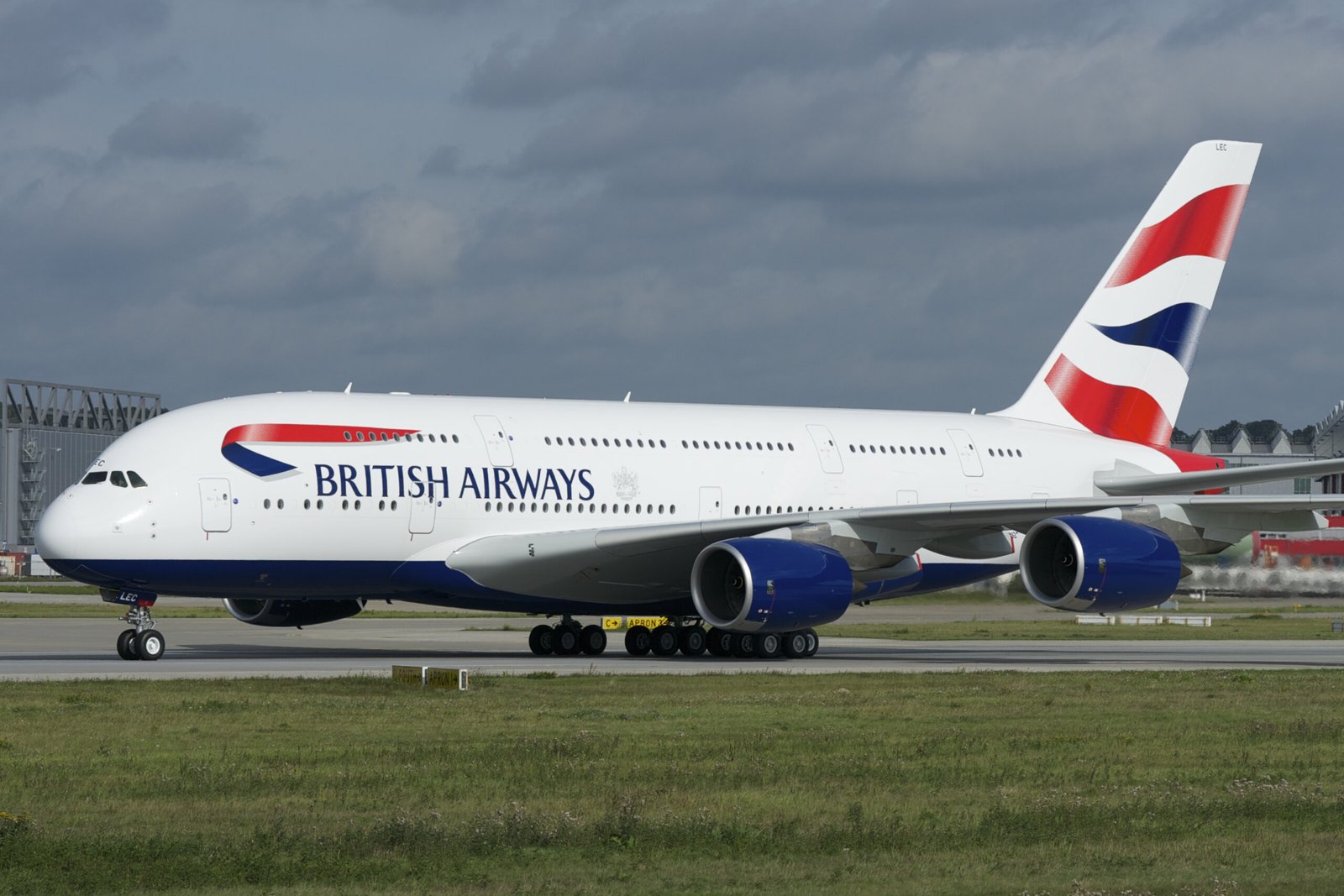
Nigeria’s aviation market may be on the verge of expanded international connectivity following the Federal Government’s willingness to review its Bilateral Air Services Agreement (BASA) with the United Kingdom, a move that could pave the way for increased flight frequencies by British Airways and potentially deepen trade, tourism and business relations between both countries.
The Minister of Aviation and Aerospace Development, Festus Keyamo, has reaffirmed the Federal Government’s commitment to an open and competitive aviation market, assuring British Airways of Nigeria’s readiness to review the existing BASA to accommodate increased flight operations and greater connectivity between Nigeria and the United Kingdom.
Keyamo gave the assurance on Thursday when a delegation of British Airways executives, led by the airline’s Chief Planning Officer, Neil Chernoff, paid him a courtesy visit in Abuja.
The delegation included Patrice Gordon, Director of Global Sales and Distribution; Moran Birger, Head of Sales, Middle East and Africa; Adetutu Otuyalo, Regional Commercial Manager, West Africa; and Tara Kemsley, International Affairs Executive, who also oversees government affairs for the airline.
The visit was to discuss the airline’s longstanding relationship with Nigeria, opportunities for expansion and the future of aviation cooperation between Nigeria and the United Kingdom.
Speaking during the meeting, Chernoff said British Airways remained interested in expanding its Nigerian operations, noting that the country’s growing economic opportunities, increasing travel demand and deepening trade relations with the United Kingdom presented considerable prospects for the airline.
“We definitely see an opportunity to increase both the opportunity for individuals to travel, but also trade and the various agreements that have happened between the two nations,” he said.
He, however, explained that the existing BASA, which provides for 21 weekly frequencies, had become a consideration for the airline, particularly as British Airways and Virgin Atlantic currently operate within the allocated frequencies while Nigerian carriers are yet to fully utilise their own allocation.
Chernoff said that notwithstanding the prevailing arrangement, British Airways remained committed to supporting the growth of the Nigerian aviation industry and exploring opportunities for expansion.
In his response, Keyamo clarified Nigeria’s position, stressing that the Federal Government had no intention of deliberately restricting frequencies between both countries or blocking the market from healthy competition.
He explained that his philosophy was anchored on an open-market approach, where airlines willing and qualified to operate in Nigeria should have the opportunity to compete.
“You know, it’s a free economy. Everybody should come and compete. I’m for the fact that we can review the BASA and increase the frequencies,” Keyamo said.
The Minister further assured the delegation that he would support efforts to revisit the existing Nigeria-United Kingdom BASA, emphasising that the country’s aviation market should remain accessible to operators willing to invest and provide services.
He also disclosed that discussions towards a new or reviewed BASA between Nigeria and the United Kingdom were already being considered at the government-to-government level.
Keyamo said the development represents a significant opportunity to deepen air connectivity between Nigeria and the United Kingdom, while expanding international access to one of Nigeria’s most important commercial and industrial centres.
He reiterated that Nigeria’s aviation policy would continue to encourage genuine competition, strategic partnerships and increased connectivity in the overall interest of passengers, businesses and the national economy.
The meeting was attended by senior officials of the Ministry of Aviation and Aerospace Development.
The proposed expansion of British Airways’ operations raises broader questions about the benefits Nigeria could derive from increased international flight frequencies, particularly at a time when the country is seeking to strengthen trade, attract investment, boost tourism and improve its access to global markets.
For passengers, additional flights could mean greater flexibility in travel schedules, more options for connecting flights and potentially improved competition in the international market. Increased capacity could also ease pressure on available seats, particularly during peak travel periods when demand for flights between Lagos, London and other destinations is often high.
The Lagos-London route remains one of Nigeria’s most commercially significant international air corridors, driven by business travellers, tourists, students, families, government officials and Nigerians in the diaspora. The volume of movement between the two countries makes the route particularly important to airlines operating in the market.
More frequencies could also strengthen connections for Nigerian passengers travelling beyond the United Kingdom to destinations in Europe, North America and other parts of the world through British Airways’ international network.
For businesses, improved flight availability could facilitate the movement of executives, investors, professionals and other commercial travellers, potentially supporting trade negotiations, investment activities and business partnerships.
Nigeria and the United Kingdom maintain longstanding commercial relations, with British businesses operating across sectors including finance, energy, telecommunications, professional services, manufacturing and consumer goods. Easier air connectivity could support companies whose operations require regular movement between both countries.
Increased flight capacity could also provide opportunities for tourism and hospitality businesses, particularly hotels, travel agencies, tour operators and other service providers that depend on international visitors.
However, the benefits of additional frequencies would depend significantly on the extent to which increased capacity translates into affordable fares, improved service delivery and greater passenger convenience.
While more flights could improve availability, increased frequencies alone do not necessarily guarantee lower ticket prices. The cost of aviation fuel, foreign exchange, airport charges, insurance, maintenance and other operational expenses continue to influence international airfares.
The review of the BASA could also reignite discussions around reciprocity and the competitive position of Nigerian airlines in international markets.
Bilateral air service agreements are designed to establish the framework under which airlines from both countries operate, including designated carriers, routes, frequencies and other conditions governing international air transport.
The existing Nigeria-United Kingdom arrangement provides for 21 weekly frequencies, according to the discussions between Keyamo and the British Airways delegation.
The question of how effectively Nigerian airlines utilise their allocated frequencies is therefore central to any proposed review.
While the Federal Government’s position appears to favour greater market access, the expansion of foreign airline operations must also be considered alongside the capacity of Nigerian carriers to compete, expand their international networks and take advantage of reciprocal opportunities.
Aviation stakeholders have consistently raised concerns about the operating environment facing domestic airlines, including access to foreign exchange, high operating costs, aircraft acquisition and maintenance expenses, financing constraints and infrastructure challenges.
Consequently, any adjustment to the BASA could have implications beyond passenger convenience, touching on the competitiveness of Nigeria’s aviation industry and the country’s ability to develop stronger indigenous international carriers.
The government’s open-market position, as articulated by Keyamo, suggests that the proposed review would be guided by the need to encourage competition and improve connectivity. However, the broader economic benefits would depend on how the agreement balances market access with opportunities for Nigerian operators.
For Nigeria, the potential increase in British Airways’ flight frequencies presents an opportunity to strengthen international connectivity and facilitate economic activities. But the real measure of its value will be whether the expanded operations deliver tangible benefits to passengers, businesses, tourism and the wider aviation industry, while creating an environment in which Nigerian airlines can also grow and compete.


