



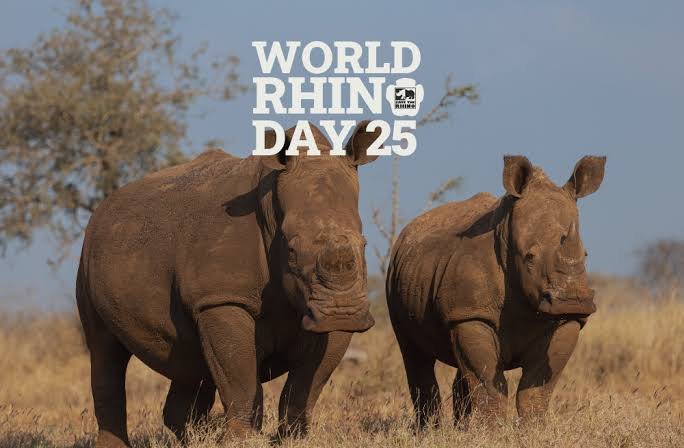
Fewer than 27,000 rhinos remain in the wild as conservationists across the world mark World Rhino Day with renewed calls to protect the threatened species.
This year’s observance, held on Tuesday, is themed “Keep the Five Alive,” drawing attention to the fragile survival of the five remaining rhino species found across Africa and Asia.
Although conservation efforts have recorded some successes, experts say several rhino populations remain under severe threat from poaching, habitat loss and other pressures.
Africa is home to two species — the black and white rhinos. The black rhino is classified as critically endangered, with fewer than 7,000 estimated to remain in the wild.
Conservation efforts, however, have produced notable gains. A World Wide Fund for Nature (WWF) South Africa project recently relocated 20 black rhinos to Botswana, doubling the country’s population of the species.
The relocation came amid concerns over increasing poaching pressure in Botswana, particularly in the Okavango Delta.
Since 2003, the WWF’s Black Rhino Expansion Programme has helped establish 18 new black rhino populations across South Africa, Malawi and Botswana.
The southern white rhino, meanwhile, is classified as near threatened, with nearly 16,000 remaining. Its recovery is regarded as a major conservation success after its population fell to fewer than 100 animals in the late 19th century.
The northern white rhino faces an even more precarious future. Only two are known to remain, both females, and they are being protected around the clock at the Ol Pejeta Conservancy in Kenya.
In Asia, the critically endangered Javan and Sumatran rhinos remain among the species facing the greatest risk of extinction. The greater one-horned rhino, found mainly in India and Nepal, is classified as vulnerable.
Beyond their value as wildlife attractions, rhinos play an important role in maintaining healthy ecosystems as large herbivores.
Their feeding activities help open up dense vegetation and create pathways, allowing sunlight to reach smaller plants and supporting other wildlife.
Rhino dung also returns nutrients to the environment and contributes to seed dispersal, further highlighting the animals’ role in sustaining biodiversity.
World Rhino Day therefore serves as both a celebration of conservation achievements and a reminder of the urgent need to protect the remaining wild populations.


