



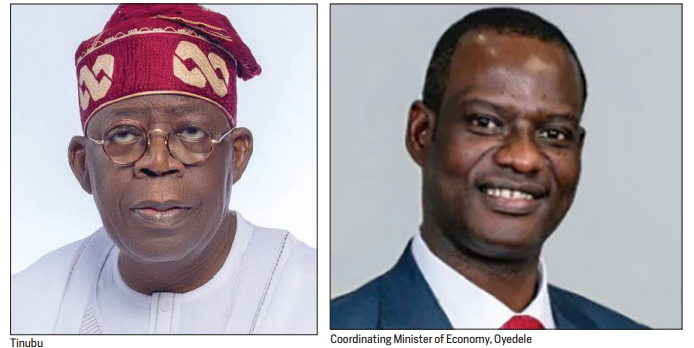
Nigeria’s ambition to grow its economy to $1 trillion by 2030 is facing a major test, with persistent electricity shortages threatening the productive capacity required to drive the expansion. With barely four years left to the target year, the country’s power supply situation remains a significant constraint on businesses, manufacturing, industrial growth and investment.
President Bola Tinubu, barely five months after assuming office, announced his administration’s ambition to expand Nigeria’s economy to $1 trillion by 2030, setting an ambitious growth trajectory for the country.
Before his ascension to office in May 2023, Nigeria had an estimated Gross Domestic Product (GDP) of $477.4 billion, according to World Bank data for 2022. Achieving the $1 trillion target within seven years would require a substantial expansion of economic activity, increased investment, stronger productive capacity and a sustained growth momentum across critical sectors.
While the government’s ambition is not without potential, its realisation depends heavily on the availability of essential infrastructure capable of supporting the scale of economic expansion envisaged.
Among the critical enablers are transportation infrastructure, efficient logistics, a thriving manufacturing sector, access to finance, a stable business environment and, perhaps most importantly, reliable electricity supply.
Electricity is central to virtually every productive activity, from manufacturing and processing to telecommunications, healthcare, commerce, agriculture and the operations of millions of small businesses. Without dependable power, businesses are forced to spend more on production, operate below capacity or divert resources meant for expansion into alternative energy sources.
Ironically, Nigeria’s electricity supply situation remains one of the biggest obstacles to the economic growth ambition of the Tinubu administration.
While the government has set an ambitious target for economic expansion, electricity generation and supply remain inadequate to support the scale of manufacturing, industrial production, commercial activities and other productive investments required to drive the economy towards the $1 trillion mark.
Over the last couple of weeks and months, power supply across the country has deteriorated considerably, leaving large and small businesses increasingly dependent on independent power generation to sustain operations.
The persistent instability in electricity supply has continued to impose additional costs on businesses, particularly manufacturers and small enterprises already grappling with inflation, high borrowing costs, rising energy prices and weak consumer purchasing power.
For many businesses, electricity has become a major operational expense, with the cost of running generators, purchasing fuel and maintaining alternative power systems significantly reducing profit margins.
Some businesses have been forced to scale down operations, while others are struggling to remain afloat amid rising operating costs and declining patronage. The situation is particularly difficult for enterprises that cannot easily transfer additional production costs to consumers.
The challenge of inadequate electricity supply, however, predates the Tinubu administration. Successive governments have struggled to attract sufficient investment, address infrastructure deficiencies, improve transmission and distribution networks, and resolve the structural problems confronting the power sector.
Despite reforms and the privatisation of generation and distribution companies, the country has yet to achieve a stable electricity supply capable of meeting the demands of its growing population and economy.
A comparison between the power sector situation when Tinubu assumed office in May 2023 and the position as of November 2026 suggests that the country has made limited progress in improving actual electricity delivered to consumers.
In fact, power supply was already on a downward trajectory when Tinubu assumed office, despite his campaign promise to improve electricity supply and make it more reliable.
Records of the Nigerian Electricity Regulatory Commission (NERC) showed that installed electricity generation capacity stood at approximately 12,721 megawatts (MW) in May 2023. However, average available generation capacity was approximately 4,545MW, while actual average daily generation stood at about 4,191MW.
The figures exposed the gap between the country’s installed capacity and the electricity it could actually generate and deliver to consumers. Having generating plants with a combined installed capacity of more than 12,000MW did not translate into adequate power supply, as operational constraints, gas shortages, infrastructure limitations and other challenges continued to prevent the sector from achieving its full potential.
As of November 2026, a report by the Nigerian Independent System Operator (NISO) put electricity generation at approximately 4,020.41MW, up from about 3,500MW.
Although the increase represents some improvement, it remains insufficient to meet the country’s electricity demand, particularly as businesses, households and industries continue to depend on the national grid for their operations.
The report indicated that 20 power plants were connected to the national grid at the time, but the available generation remained inadequate to provide stable electricity across the country.
The implication is that Nigeria’s power sector continues to struggle with the fundamental challenge of translating available generation capacity into reliable electricity supply.
The problem is not limited to generation alone. Transmission bottlenecks, distribution infrastructure deficiencies, commercial losses, liquidity challenges and the inability of the sector to sustain adequate investment have continued to undermine the delivery of electricity to consumers.
For businesses, the consequences are immediate and measurable. Manufacturers that require uninterrupted electricity to operate machinery, preserve raw materials and maintain production schedules are particularly exposed to the consequences of frequent outages.
Small businesses, including restaurants, bakeries, salons, printing shops, cold-room operators, pharmacies and retail outlets, are equally affected. Many rely on generators for several hours daily, adding fuel and maintenance expenses to their already high operating costs.
The additional cost of electricity also affects the competitiveness of Nigerian businesses. Manufacturers operating in countries with more stable power supply enjoy an advantage in production costs, while Nigerian enterprises must contend with the extra burden of generating a significant portion of their electricity independently.
This has implications for the country’s ability to attract new investments, expand existing industries, create jobs and increase exports.
For an economy targeting $1 trillion in GDP, the capacity of businesses to expand production and improve productivity will be critical. An economy cannot sustainably grow to that level if a significant proportion of its enterprises spend substantial resources addressing basic infrastructure deficiencies rather than investing in expansion, innovation and employment.
The manufacturing sector, which is expected to play a significant role in economic expansion, remains particularly vulnerable. Manufacturers require predictable energy supply to plan production, meet delivery schedules, maintain quality standards and operate at competitive costs. Erratic electricity supply makes such planning difficult and could discourage investments in new production lines and industrial facilities.
The consequences extend beyond manufacturing to the broader economy. Inadequate power supply affects service delivery, digital infrastructure, agricultural processing, the preservation of food and medical products, and the ability of businesses to operate efficiently.
It also raises questions about the pace of economic growth required to achieve the President’s target. Growing the economy from its 2022 level of $477.4 billion to $1 trillion by 2030 would require more than nominal expansion. The country would need sustained growth in productive output, investment, industrial activity and value creation.
While exchange-rate movements and changes in the valuation of GDP can influence the dollar size of the economy, sustained economic expansion would ultimately require stronger productivity and increased output across key sectors.
The power sector therefore remains central to the broader economic reform agenda. Improvements in electricity generation, transmission and distribution are necessary to ensure that investments in other sectors translate into increased production, employment and economic activity.
Nigeria has continued to pursue reforms aimed at addressing the structural challenges in the electricity industry, including efforts to improve the electricity market, attract private investment and strengthen the regulatory framework. However, the benefits of such reforms must translate into more reliable electricity supply for businesses and households.
The challenge is particularly urgent as the country approaches 2030. With less than four years remaining, the gap between the economic ambition and the infrastructure required to support it remains considerable.
The $1 trillion target may not necessarily be beyond Nigeria’s reach, given its population, natural resources, market size and entrepreneurial capacity. But the ambition will be difficult to realise if the power sector continues to constrain businesses, weaken industrial productivity and increase the cost of doing business.
Reliable electricity is not merely an infrastructure aspiration. It is a fundamental requirement for economic growth.
Until Nigeria can provide businesses with more dependable and affordable power, the country’s $1 trillion economy ambition risks remaining a target on paper rather than an achievement supported by the productive strength of the economy.


