


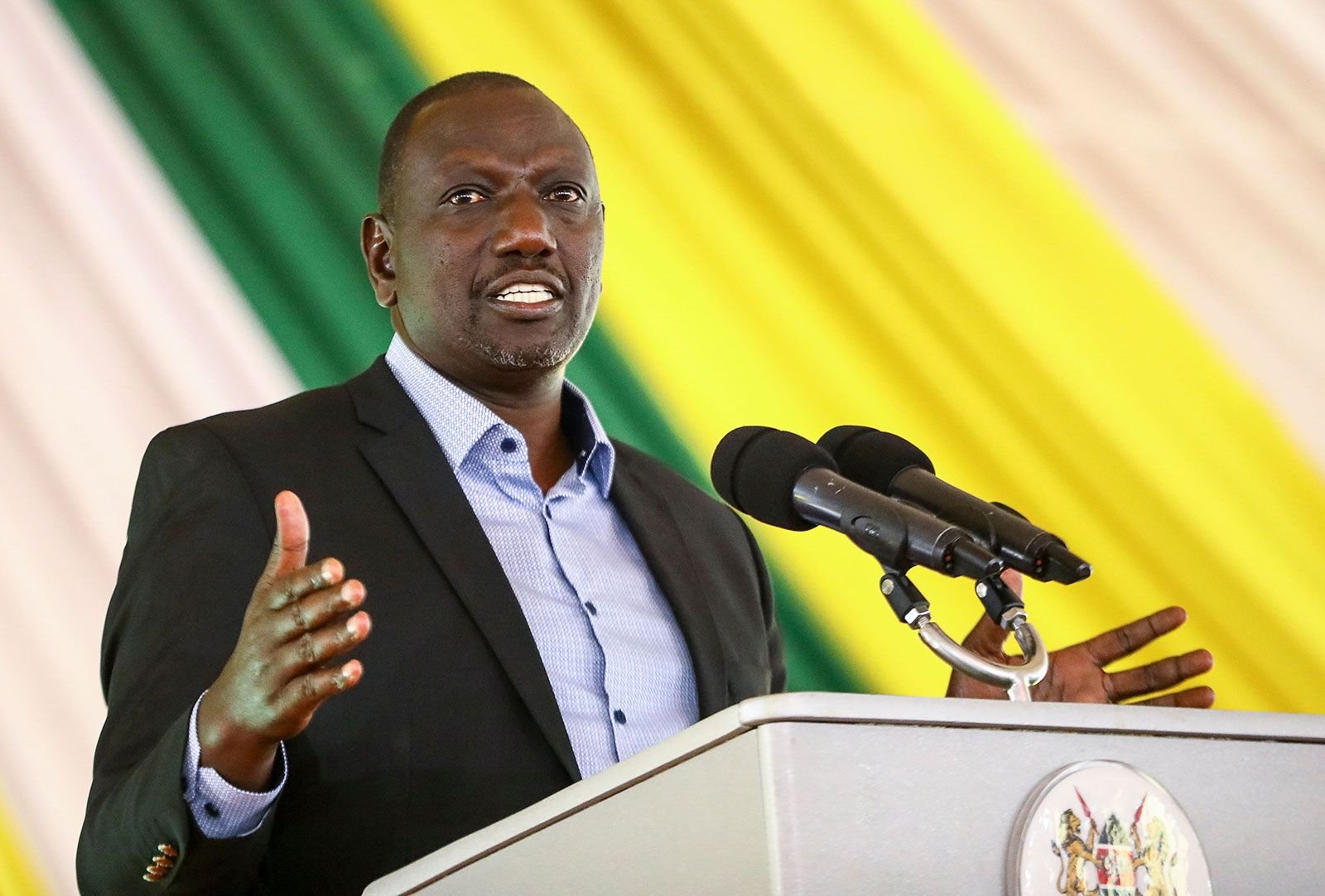
Kenyan President William Ruto has called for reforms to the global financial system to enable African countries to unlock more of their existing resources and finance sustainable development.
Ruto made the call during the Partners for Multilateralism Summit (P4M), held on the sidelines of the United Nations General Assembly High-Level Week.
The summit was co-hosted by Australia, Barbados, Brazil, Canada, the European Union, India and Kenya, bringing together countries from different regions committed to strengthening multilateralism, upholding international law, promoting peace and advancing inclusive and sustainable prosperity.
The meeting came amid growing geopolitical tensions and conflicts, as well as emerging global challenges including climate change and artificial intelligence, which are placing additional pressure on multilateral institutions.
Speaking at the summit, Ruto said international institutions must become more representative if they are to retain the confidence of the countries and people they serve.
“Institutions that do not reflect the people whose cooperation they require will eventually struggle to command their trust,” he said.
The Kenyan president also called for a shift in the way international financial partnerships with Africa are structured.
“So, the question to our international partners should no longer be only ‘how much money can you bring to Africa’. It should be how can we use the international financial architecture to unlock the money Africa already has,” Ruto said.
He argued that multilateral and development finance institutions should play a broader role beyond providing loans.
“That changes the purpose of international partnership. We need multilateral and development financial institutions, not simply as lenders, but as catalysts,” he added.
The summit also saw the launch of the Partners for Multilateralism platform, aimed at bringing together countries willing to defend shared principles and develop practical responses to global challenges.
President of the European Council, António Costa, said the platform would serve as an open network for countries from different parts of the world to strengthen dialogue, build coalitions and promote practical cooperation.
“It aims to be an open platform for partners from all parts of the world who are ready to defend common principles and work towards concrete solutions,” Costa said.
He added that the platform would support coordination among participating countries while strengthening the work of the United Nations and other multilateral institutions.
The P4M summit focused on strengthening international cooperation and advancing reforms to ensure that the multilateral system remains responsive to emerging global challenges.


