



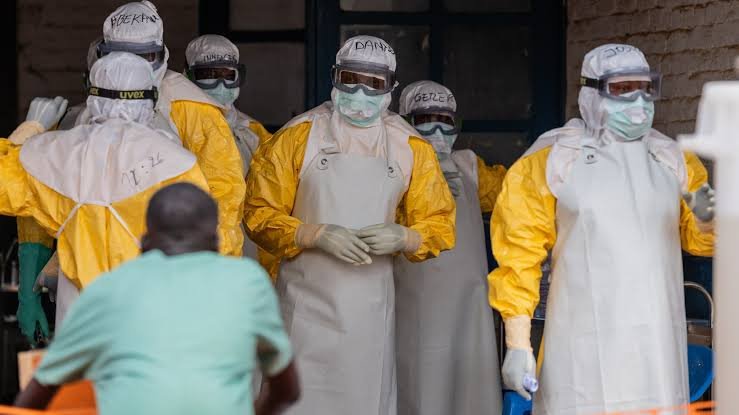
More than 250 people exposed to the Bundibugyo strain of Ebola are participating in a clinical trial of an experimental drug in the Democratic Republic of Congo (DR Congo), raising hopes for a new approach to preventing the deadly disease.
The trial is taking place at a medical centre in the country’s eastern Ituri Province, where participants who have been exposed to the virus are receiving an antiviral pill designed to prevent infection.
The Bundibugyo strain currently has no licensed vaccine, making the study a significant step in efforts to contain the outbreak.
One participant said the death of his uncle from Ebola motivated him to join the trial.
“What motivated me to take part was the death of my uncle. When he died, the results were positive (for Ebola). Since I was a contact case with him, this motivated me to come here,” he said.
Another participant said she had witnessed families in which an Ebola infection spread to several members of the same household.
However, she expressed optimism about the trial, saying no member of her family had developed the disease since she enrolled.
“But compared to that, when I joined this EBO-PEP trial, I found that no one from the family found themselves sick with this disease. That is to say, these tests are working really positively in our bodies,” she said.
The experimental drug is a form of post-exposure prophylaxis (PEP), administered shortly after a person is suspected of having contact with the virus in an effort to prevent infection.
Jacques Zawadi, an investigating physician with the EBO-PEP trial, said participants had generally expressed satisfaction with the treatment.
“To identify a medication, to treat a disease that does not have medication, this gives hope. Most of the participants are happy to be with us and to be able to benefit from this treatment, although it is still a trial,” he said.
Launched in July, the study is among several research initiatives aimed at combating the outbreak.
Researchers hope to recruit nearly 1,000 adults and children aged 12 and above who have been in contact with a confirmed Ebola case within the previous five days but have not developed symptoms.
Participants are monitored in person daily for 21 days, followed by a final telephone call or visit on the 42nd day.
At least 8,300 confirmed cases, including about 4,000 deaths, have been recorded since the outbreak was declared in mid-May.
Meanwhile, DR Congo has begun vaccinating healthcare workers with Ervebo, a vaccine that proved effective during previous outbreaks caused by a different and more common Ebola virus strain.
Although authorities believe Ervebo could offer some protection against the Bundibugyo strain, studies are still underway to establish whether it can prevent the disease.
The ongoing drug trial is expected to provide further evidence on whether post-exposure treatment can help protect people who have been exposed to the virus, particularly in communities facing the threat of further transmission.


