



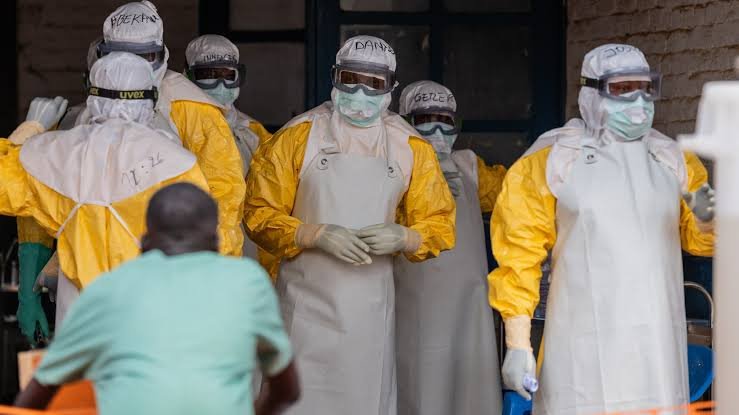
The Ebola outbreak in eastern Democratic Republic of Congo (DR Congo) is intensifying psychological distress among patients, survivors and bereaved families, with health workers warning that stigma and ongoing armed conflict are deepening the crisis.
At a mental health treatment centre in Bunia, one woman is receiving support after losing two close relatives and three members of her extended family to Ebola.
She said fear of the disease had left her family isolated, with neighbours reluctant to approach them.
“We were afraid, but we went to the hospital. Everyone at home was afraid. The neighbours are afraid to come near us. It is as though you are alone because of this disease,” she said.
Healthcare workers said the stigma surrounding Ebola affects not only patients and survivors but also medical personnel, compounding the emotional strain associated with the outbreak.
Anicet Katembo Vyaluva, a healthcare worker, said affected individuals often experience isolation within their communities and even while receiving treatment.
“It affects almost all of us, it affects the health care community, the patients themselves, even the survivors of this disease here. Because in the community, there will often be stigma, the isolation of this patient. And when the patient, for example, finds himself in a centre for the treatment of the disease, he feels isolated,” he said.
The psychological crisis is unfolding amid persistent armed conflict and displacement across eastern DR Congo, where already vulnerable communities are facing additional pressures from the outbreak.
Mirella Riccardi, who works in mental health and psychosocial support for Médecins Sans Frontières (MSF), said insecurity was worsening the mental health challenges confronting affected populations.
“The crisis, the war, the conflict, internal conflict makes an already fragile community even more vulnerable. So Ebola, it’s one more element to fragilize the condition of mental health of people,” she said.
Aid workers stressed that psychological care must accompany medical treatment as communities grapple with bereavement, fear of infection and social exclusion.
They warned that without adequate mental health and psychosocial support, the emotional consequences of the outbreak could persist long after patients recover, particularly in communities already weakened by years of conflict and displacement.


 is intensifying psychological distress among patients, survivors and)