



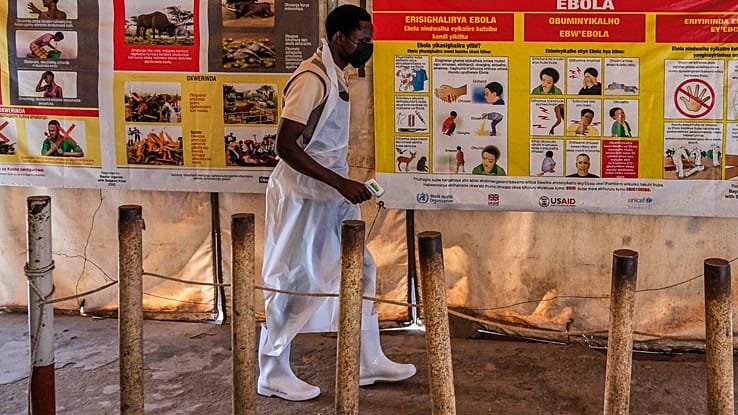
Uganda has introduced a mandatory 21-day quarantine for citizens returning from the Democratic Republic of Congo (DRC), as authorities step up measures to prevent cross-border transmission of Ebola amid a worsening outbreak in the neighbouring country.
The Ugandan Ministry of Health announced the measure on Sunday, alongside intensified screening at Entebbe International Airport, land border crossings and designated road checkpoints.
“Returning Ugandans with a history of travel to the DRC will undergo 21 days of quarantine at their own cost,” the ministry said.
The restrictions come as the DRC battles its latest Ebola outbreak, declared in May, with the country reporting thousands of deaths amid concerns about the spread of the virus across the region.
The outbreak is caused by the Bundibugyo strain of Ebola, for which there is currently no approved vaccine or specific treatment. The disease spreads through direct contact with the bodily fluids of infected people and can cause severe haemorrhagic fever.
Uganda shares a border with the DRC and has previously recorded Ebola cases linked to cross-border travel. In August, the World Health Organisation (WHO) declared the country Ebola-free following an outbreak that recorded 20 cases, including two deaths. Most of the cases were associated with people who had travelled to the DRC.
The latest restrictions reflect growing regional concerns following reports of Ebola cases in Kenya and Nigeria in October, raising the stakes for countries seeking to prevent further transmission.
Nigeria, Africa’s most populous country, reported its first case on Tuesday involving a woman who arrived in Abuja on a flight from Uganda.
However, a Ugandan government spokesperson dismissed suggestions that the patient had contracted the virus in Uganda, insisting that the country had no active Ebola cases at the time.
Alan Kasujja described the suggestion as “absurd” in comments to AFP, arguing that the woman’s visit to Uganda should not, in itself, trigger speculation that the country was the source of infection.
The developments have placed renewed attention on international travel screening, surveillance at border crossings and the need for rapid identification of suspected infections.
Although Uganda’s latest measures specifically target returning citizens with a history of travel to the DRC, the enhanced screening at airports and land borders is intended to strengthen the country’s broader preparedness against imported cases.
The outbreak has also highlighted the challenges facing African countries in containing Ebola, particularly when infections occur across borders and involve a strain for which specific vaccines and treatments remain unavailable.
Health authorities continue to face the task of balancing travel and cross-border movement with measures designed to limit the spread of the disease across the region.


, as)