



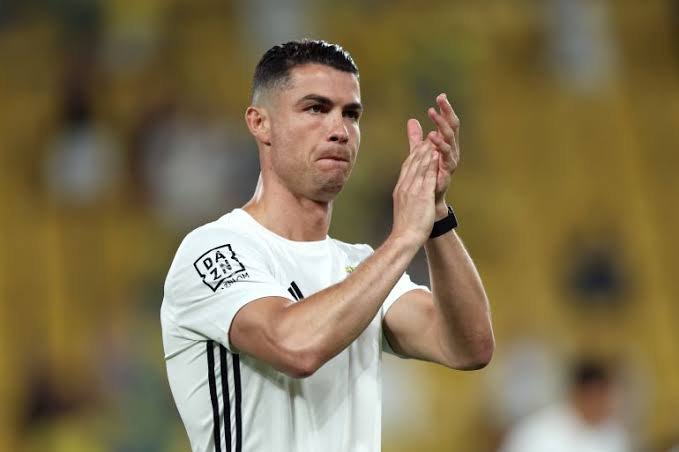
From his debut as a teenager in 2003 to becoming the highest-scoring men’s international footballer in history, Portugal captain, Cristiano Ronaldo, has built an extraordinary record defined by longevity, goals, appearances and an enduring appetite for success.
Ronaldo’s international career is one of the most remarkable stories in the history of football. For more than two decades, the Portuguese forward has represented his country on the biggest stages, breaking records, winning major honours and establishing himself as one of the most influential players ever to wear the national team shirt.
What began as the international journey of an ambitious teenager has developed into an extraordinary career spanning different generations of footballers, several managers, multiple international tournaments and an unprecedented collection of individual records.
Ronaldo’s contribution to Portugal goes beyond the number of goals he has scored. He has been the face of the country’s football for more than 20 years, leading a generation that transformed Portugal from a regular contender into a European champion and a team capable of competing for major international honours.
His international career can best be understood through the numbers that tell the story of his remarkable consistency, achievements and longevity.
The numbers alone explain why Ronaldo occupies a special place in international football. With 234 appearances and 146 goals for Portugal, he holds the men’s world records for both appearances and goals at senior international level. His closest rivals in these categories have been unable to match the combination of longevity and scoring output he has sustained.
Ronaldo’s record is particularly striking because international football offers fewer opportunities to play than club football. National teams gather for limited periods, and players must adapt quickly to different opponents, tactical systems and teammates. Maintaining a scoring rate of more than one goal for every two appearances across such a long career is a substantial achievement.
His 146 goals in 234 matches translate to approximately 0.62 goals per game. In practical terms, Ronaldo has averaged more than a goal for every two matches played for Portugal, a return that has helped him move beyond previous international scoring benchmarks.
2003: The beginning of an era
Ronaldo made his senior international debut on August 20, 2003, against Kazakhstan. He was 18 and had only recently begun attracting wider attention for his performances at Sporting CP before his move to Manchester United.
His early international years coincided with Portugal’s transition from the celebrated generation associated with Luís Figo to a younger side built around emerging talents. Ronaldo’s pace, dribbling, aerial ability and willingness to take on defenders quickly made him an important part of that transition.
His first major international tournament came at Euro 2004, hosted by Portugal. The teenager scored in the tournament, including in the final against Greece, although Portugal lost 1-0 to the visitors in a result that stunned the home crowd.
The disappointment did not prevent Ronaldo from becoming one of the defining figures of Portuguese football. Instead, the tournament marked the beginning of a long relationship between the player and a national team whose ambitions would increasingly revolve around his performances.
Over the next two decades, he would represent Portugal at European Championships, World Cups and Nations League tournaments, eventually becoming the team’s captain and its leading goalscorer.
146 goals and a record that stands apart
Ronaldo’s international scoring record is one of the clearest measures of his importance to Portugal.
He became the first European men’s player to reach 100 international goals and subsequently surpassed Iran’s Ali Daei, who had scored 109 goals for his country. Ronaldo’s tally has since risen to 146, putting him at the top of the men’s international scoring list.
His goals have come in a variety of circumstances: headers, free kicks, penalties, close-range finishes and long-range strikes. His ability to score in different ways has allowed him to remain productive as his playing style has changed with age.
In his younger years, Ronaldo was renowned for beating defenders and cutting inside from wide positions. As his career progressed, he increasingly operated as a central forward, relying on movement, positioning, anticipation and his aerial ability to find scoring opportunities.
That evolution has been important to his international longevity. Rather than depending exclusively on speed and dribbling, he adapted his game to remain a threat in the penalty area.
His scoring record has also been built against a broad range of opponents, from European rivals to teams encountered in World Cup qualifying and international friendlies. The result is a tally that reflects both sustained productivity and the ability to perform across different competitions.
Six World Cups, one extraordinary milestone
Ronaldo’s World Cup record provides another measure of his longevity. He has appeared at six editions of the tournament, from Germany 2006 through the 2026 competition, becoming the first player to score at six different men’s World Cups.
His World Cup journey has included contrasting experiences. Portugal reached the semi-finals in 2006, when the team finished fourth, but subsequent campaigns brought exits at different stages, including the round of 16 in 2010 and 2018, the group stage in 2014 and the quarter-finals in 2022.
The 2022 tournament in Qatar was particularly memorable for reasons beyond football. Ronaldo became the first man to score at five World Cups, extending a record that he would later improve. He also experienced the disappointment of being left out of Portugal’s starting line-up for the knockout matches, a reminder that even the most celebrated players must eventually contend with changes in role.
By the 2026 World Cup, his international career had entered its final chapter. His appearances across six editions reflected an exceptional capacity to remain involved at the highest level over a period when several generations of players had come and gone.
His World Cup scoring tally stands at 11 goals, another landmark in a career filled with records.
European Championship: 14 goals and a lasting legacy
If the World Cup represents football’s biggest global stage, the European Championship has arguably provided Ronaldo with his most consistent tournament scoring record.
He has scored 14 goals at the European Championship finals, making him the competition’s all-time leading goalscorer. His record also includes appearances at six editions of the tournament, from Euro 2004 to Euro 2024.
His relationship with the competition began in 2004, when Portugal hosted the tournament and finished as runners-up. Twelve years later, he finally achieved the triumph that had eluded him.
At Euro 2016 in France, Ronaldo captained Portugal to their first major international title. The final against the hosts ended in a 1-0 victory after extra time, with Éder scoring the decisive goal. Ronaldo had been forced off with an injury in the first half, but continued to encourage his teammates from the touchline.
The victory was a defining moment in his career. For years, his individual achievements had been accompanied by questions about whether he could lead Portugal to a major trophy. Euro 2016 answered those questions, even though he did not finish the final on the pitch.
His record at the European Championship also reflects his durability. He remained a central figure in the competition long after the players who began their international careers alongside him had retired.
2019 and 2025: Nations League glory
Portugal’s success under Ronaldo was not limited to the European Championship. The country won the inaugural UEFA Nations League in 2019, defeating the Netherlands 1-0 in the final. Ronaldo had played a decisive role earlier in the competition, scoring a hat-trick against Switzerland in the semi-final.
Portugal won the Nations League again in 2025, adding another international title to Ronaldo’s collection. The two triumphs established him as a central figure in the country’s success across different generations of the national team.
The Nations League victories were significant because they demonstrated Portugal’s ability to win trophies beyond the European Championship. They also helped cement Ronaldo’s reputation as a player whose international career included both individual milestones and collective achievements.
For a footballer whose career has often been discussed through comparisons with Lionel Messi and other leading players, those trophies provide an important part of the picture. International football is ultimately judged not only by personal records but also by what a player helps his country achieve.
The captain, the leader and the changing Portugal team
Ronaldo’s influence extended beyond goals and appearances. As captain, he became the public face of Portugal’s national team and a reference point for younger players entering international football.
His presence linked several generations of Portuguese footballers, including the teams built around Figo and the emerging stars who followed him. Players such as Bruno Fernandes and Bernardo Silva came to prominence in a national set-up in which Ronaldo remained one of the most recognisable figures.
His leadership style has attracted debate, particularly when questions arise about selection, playing time or his reactions to major results. But his commitment to Portugal has rarely been in doubt. Even as he moved into his late thirties and early forties, he continued to pursue international records and compete for major honours.
That commitment helps explain why his international career lasted more than 23 years. Few players remain important to a national team for so long, and fewer still maintain a goalscoring record of his scale throughout that period.
The numbers behind the farewell
On November 5, 2026, Reuters reported that Ronaldo had announced plans to retire from Portugal’s national team after the November international break. The announcement marked the approaching end of a 23-year international journey.
The final chapter will be remembered through the headline figures: 234 appearances, 146 goals, six World Cups, 14 European Championship goals and three major international titles.
Yet statistics cannot fully capture the significance of his career. They do not measure the anticipation surrounding his arrival at a tournament, the pressure of wearing Portugal’s number seven shirt or the emotions of a country that watched him rise from a teenage prospect to a global sporting icon.
They also cannot completely explain his longevity. That achievement required sustained fitness, discipline, adaptability and a determination to remain competitive in a sport that constantly introduces younger challengers.
Ronaldo’s international career was not without setbacks. Portugal endured disappointing tournament exits, and his final years brought questions about how much longer he could remain a first-choice player. But his record demonstrates that he continued to contribute at the highest level long after many players would have stepped away.
His place in the history of international football is secure. He leaves Portugal with more appearances and goals than any other man has recorded for a national team, alongside the trophies that gave his career a collective dimension.
For Portugal, the challenge after Ronaldo will be to build another era of success without the player who has defined its football for more than two decades.
For football, his numbers will remain a benchmark against which future generations are measured.


