



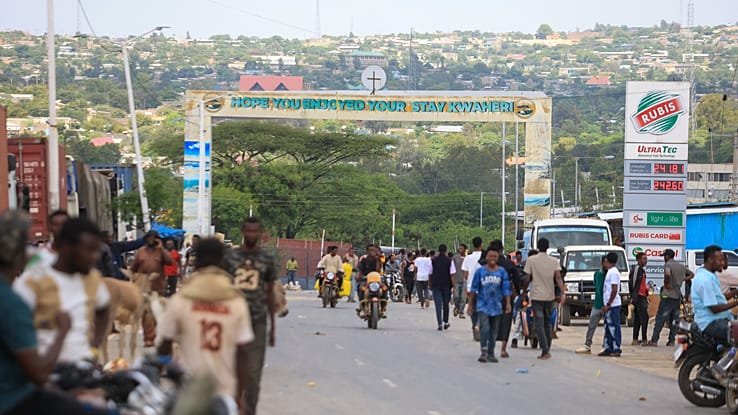
Fighting between members of the Oromo and Ethiopian Somali communities over territorial control and resources in southern Ethiopia has displaced about 700,000 people, with violence spreading across border areas and raising fears of a worsening humanitarian crisis.
The conflict, which reportedly erupted in late October following a dispute over who controls the border town of Moyale, has escalated into clashes involving heavy weaponry, forcing thousands of residents to flee their homes, according to British humanitarian organisation Islamic Relief.
The NGO said the fighting, initially concentrated around Moyale, had spread as far as 300 kilometres from the town, affecting communities along the Ethiopia-Kenya-Somalia border region.
The scale of displacement has placed an increasing burden on humanitarian agencies, with families fleeing violence, destruction of property and the disruption of essential services in affected communities.
Islamic Relief estimated that 329,000 people had been displaced from Dawa Zone in the Somali Region, while another 359,798 had fled across southern Oromia, bringing the total to nearly 689,000. The figures underline the scale of the crisis, although the organisation said access to affected locations remained difficult and humanitarian teams were still working to assess conditions on the ground.
The fighting has reportedly left homes, businesses and fuel stations destroyed or burnt, while health facilities and other critical services have been disrupted. Access to water, sanitation, nutrition and healthcare has become increasingly difficult for displaced families, many of whom have fled with little or no belongings.
Islamic Relief warned that the humanitarian needs could deepen as displaced people struggle to find shelter, food and other basic necessities, with civilians facing continued risks in areas where violence has spread.
The crisis has also spilled across Ethiopia’s border into Kenya, where approximately 50,000 people have reportedly sought refuge, adding pressure on already stretched local services and host communities.
The influx has heightened concerns over access to food, clean water, shelter and healthcare, particularly for women, children, elderly people and other vulnerable groups among those fleeing the violence.
Kedir Musema Hameza, head of Islamic Relief’s Ethiopia programme, described the violence as a volatile conflict driven by competition over land and wealth between the two ethnic communities, warning that civilians were bearing the brunt of the fighting.
He said the organisation was seeking funding to support affected communities, as homes had been burnt and livelihoods destroyed, leaving families in urgent need of assistance.
Islamic Relief said it was preparing humanitarian interventions, including cash assistance, hygiene kits, community support and psychosocial services for people affected by the conflict.
The organisation also reported receiving information from local sources that fighting had stopped, while United Nations teams were travelling to affected areas to assess the condition of displaced people and the extent of damage. However, the situation remained fragile, with the possibility of further violence complicating efforts to provide assistance and facilitate the return of residents.
The conflict has also attracted concern from humanitarian organisations operating across the border, as the growing number of arrivals in Kenya threatens to stretch the capacity of local communities and emergency responders.
Earlier reports from the border area indicated that thousands of Ethiopians, many of them women and children, had fled into Kenya after fighting broke out in Moyale. The Kenya Red Cross and local authorities had been assessing the needs of displaced people, including those staying with relatives and host families.
The violence is rooted in longstanding tensions over territorial boundaries and administrative control in Ethiopia, where regional borders have repeatedly triggered disputes between communities.
The country’s federal structure, established under the 1995 constitution, gives considerable authority to regional states, including powers over administration and local affairs. But contested boundaries and rival claims over territory, resources and political influence have continued to fuel tensions in several parts of the country.
Moyale, which straddles the Ethiopia-Kenya border, is particularly sensitive because of its strategic location and the competing interests of communities living on both sides. The town is also an important corridor for trade and movement between the two countries, making instability there a threat to livelihoods and regional commerce.
Reports surrounding the latest clashes point to tensions over territorial claims and the presence of regional administrative symbols and offices in contested areas, adding to longstanding grievances between the Oromo and Somali communities.
The latest violence comes as Ethiopia continues to grapple with several security crises, putting additional pressure on the government of Prime Minister Abiy Ahmed.
In the northern Tigray region, renewed fighting between government forces and rebel groups has raised fears of a return to a wider conflict following the devastating war that ended with a peace agreement in 2022.
The country has also faced prolonged insurgencies in Amhara and Oromia, two of its most populous regions, with fighting, insecurity and displacement disrupting communities and complicating efforts to restore stability.
Hundreds of thousands of people have been displaced by conflicts in different parts of Ethiopia in recent years, while humanitarian needs have continued to rise amid insecurity, food shortages and limited access to essential services.
The latest displacement in southern Ethiopia adds to that burden, with aid agencies warning that families forced from their homes may require sustained assistance before conditions allow them to return safely.
As humanitarian workers attempt to reach affected communities, the immediate priority remains the protection of civilians, access to basic necessities and efforts to prevent further escalation of the violence.
For thousands of families now separated from their homes and livelihoods, the prospect of returning remains uncertain as the conflict continues to expose the fragile security situation along Ethiopia’s southern border.


