



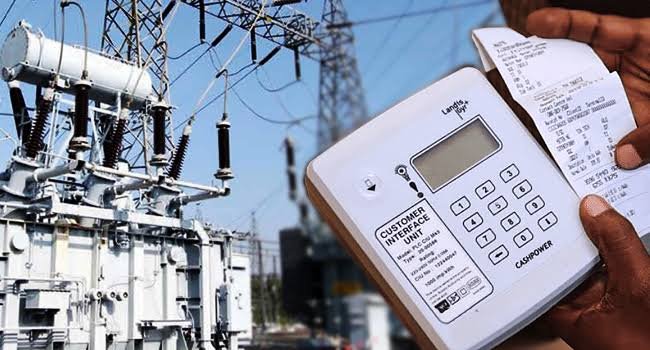
Nigeria’s electricity crisis, which has repeatedly defied government interventions and reform promises, returned with renewed intensity in November 2026, plunging Lagos, Abuja, Ogun, Kwara, Oyo and other parts of the country into darkness and exposing the deep fault lines in the power sector.
Between November 3 and 9, electricity generation fell from 3,996 megawatts (MW) on November 4 to 3,659MW at 3pm the following day, before declining further to 2,692MW by 10am on November 7. Fourteen power plants reportedly recorded zero output, while distribution companies received only 2,926MW to share among a population estimated at over 240 million.
But beyond the worsening supply, the crisis exposed another problem: the inability of the country’s electricity institutions to agree on what went wrong.
The Minister of Power, the Nigerian Independent System Operator (NISO), Transmission Company of Nigeria (TCN), electricity distribution companies and the Nigerian National Petroleum Company Limited (NNPC Ltd) offered different explanations, leaving consumers caught between conflicting accounts and an increasingly familiar cycle of apologies, accusations and promises.
When President Bola Ahmed Tinubu assumed office on May 29, 2023, Nigeria’s peak generation stood at 4,735.1MW, against installed capacity of approximately 13,000MW. His campaign promise of constant electricity within four years, backed by a pledge to deliver 15,000MW of distributable power, raised expectations that the sector would finally receive the attention it desperately needed.
The Electricity Act 2023, signed weeks after his inauguration, introduced a major restructuring of the industry by allowing states to establish electricity markets and participate in generation, transmission and distribution within their jurisdictions.
Yet, the reforms have struggled to translate into reliable electricity for households and businesses. The removal of subsidy for Band A customers in April 2024, which increased tariffs from about N68 per kilowatt-hour to approximately N225, was justified as necessary to attract investment, improve liquidity and sustain the electricity value chain.
For consumers, however, higher tariffs have not consistently delivered the promised hours of supply. Customers paying premium rates have continued to complain of receiving substantially fewer hours than guaranteed, alongside disputes over metering, estimated billing and service delivery.
There were moments of progress. Nigeria recorded available generation of 6,003MW on March 2, 2025, while TCN transmitted 5,801.84MW two days later, both historic records. But the gains remained far below the administration’s targets, while repeated grid collapses underscored the fragility of the system.
Former Minister of Power, Chief Adebayo Adelabu, resigned on April 22, 2026, to pursue political ambitions in Oyo State, leaving the ministry without a substantive political head for weeks. Although the Nigerian Electricity Regulatory Commission’s second-quarter report indicated no grid disturbance between April and June, the relative calm did not resolve the sector’s structural problems.
Generation remained below 5,000MW, plant availability was weak, gas suppliers were owed substantial debts and the metering gap remained above four million customers.
His successor, Chief Joseph Olasunkanmi Tegbe, a former KPMG senior partner and civil engineer, was appointed amid expectations that his professional background would bring a more coordinated approach to the crisis.
At his Senate confirmation, Tegbe avoided sweeping promises but subsequently spoke of stabilising the grid within 100 days. His spokesperson later clarified that he had not made such a commitment, an early indication of the communication difficulties that would accompany his tenure.
He announced a long-term ambition of 70 gigawatts of installed capacity by 2060, advocated renewable energy and initiated the construction of a new National Control Centre for NISO in Osogbo.
However, the October 19 grid disturbance, followed by the November supply crisis, tested the administration’s assurances.
NISO attributed the November shortfall to gas supply constraints affecting thermal plants and reduced hydroelectric output caused by lower reservoir inflows. Ikeja Electric, meanwhile, apologised to Band A customers for failing to meet the minimum supply requirement, blaming grid instability and interruptions beyond its control.
TCN rejected the distributor’s account, describing it as inaccurate and misleading. It argued that only NISO could determine the causes of grid disturbances and said the interruptions were largely associated with inadequate generation, load shedding and distribution network issues.
TCN’s breakdown attributed 68 per cent of the interruptions to frequency-control load shedding resulting from low generation, 26 per cent to Ikeja Electric’s non-compliance with load allocation or faults on its network, and six per cent to transmission maintenance.
NNPC Ltd subsequently disputed the gas shortage narrative, insisting that its gas transportation network remained available to support power plants and that gas production had increased year-to-date.
Tegbe, however, identified multiple factors, including maintenance at Egbin Power Station, gas constraints and vandalism of transmission infrastructure. He said the Benin-Egbin 330kV line and other transmission challenges had reduced supply to Lagos, while the Osogbo-Ikeja West line had remained unavailable following the vandalisation of six towers.
The minister apologised to affected consumers, announced improvements in supply to parts of Lagos and projected that stable electricity would take between three and five years to achieve.
The Association of Nigerian Electricity Distributors also apologised, while criticising what it described as conflicting explanations from NISO and NNPC.
The question of responsibility, therefore, cannot be reduced to one institution.
Generation companies depend on gas supply, payments and functioning equipment. Gas suppliers face outstanding debts and commercial difficulties. TCN must maintain ageing transmission infrastructure, while NISO is expected to coordinate the grid and provide credible information. DisCos must distribute available electricity efficiently, invest in their networks, meter customers and improve revenue collection.
An energy analyst, Thomas Ibile, argued that the Federal Government bears responsibility for the design and management of a system in which generation and distribution were privatised but critical transmission infrastructure, gas pricing and tariff decisions remain heavily influenced by government.
He said the minister also bears responsibility for ensuring that the different institutions operate with common data, coordinated decisions and clear accountability, rather than allowing public disagreements to deepen consumer frustration.
Ibile further criticised gas suppliers, generation and distribution companies, and TCN over commercial failures, inadequate investment, maintenance and infrastructure challenges. He argued that vandalised transmission towers and prolonged outages on critical lines reflected weaknesses that should not be allowed to cripple major economic centres.
The crisis, he maintained, is the consequence of decades of treating electricity as a political promise rather than essential infrastructure.
At a recent meeting with senior editors in Lagos, Tegbe acknowledged the systemic nature of the challenges, citing gas supply, ageing infrastructure, vandalism, transmission limitations, inadequate metering and commercial difficulties across the value chain.
He disclosed that the Federal Government had settled N1.23 trillion out of the N3.3 trillion approved for verified legacy debts owed to generation companies. More than 2.8 million customers, he said, had been metered between 2023 and October 2026, while recent transmission investments had added over 1,300MVA of capacity.
The ministry is also pursuing corridor-based electricity development, including the Lagos-Ogun, Benin-Enugu-Port Harcourt and Abuja-Kaduna-Kano corridors, with the Lagos-Ogun axis and Abuja franchise area proposed as pilot locations for 24-hour energy zones.
These interventions may offer a pathway to improvement, but Nigerians have heard promises of recovery before. The test is whether investments, reforms and assurances translate into measurable improvements in electricity supply, particularly for consumers paying higher tariffs.
Until gas supply is commercially sustainable, infrastructure is adequately maintained, operators are held accountable and the institutions responsible for the electricity value chain stop contradicting one another, Nigeria’s power crisis will remain trapped in a cycle of failure.
And as the darkness returns, households and businesses will continue to spend fortunes on diesel, petrol, solar systems, batteries and inverters to provide what the national grid has failed to deliver.
The light Nigerians need will not come from one minister, one agency or another promise. It will come when the entire system begins to work, and when those responsible are held accountable for the results.


