



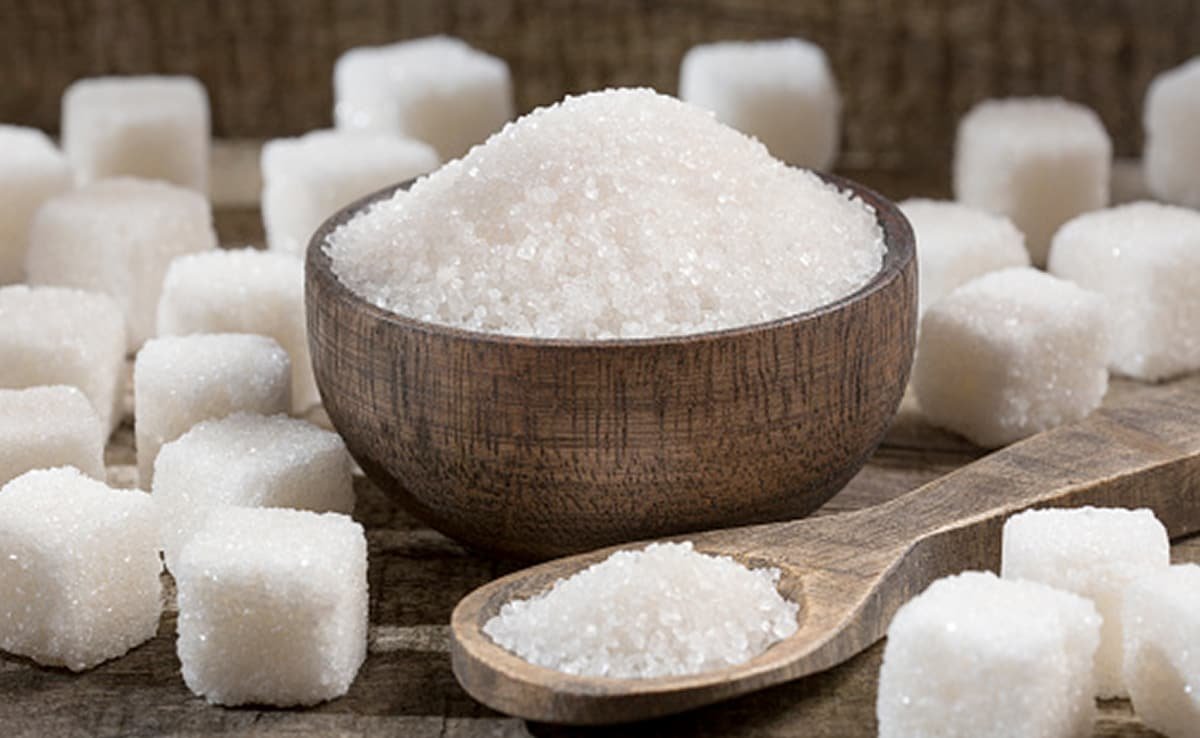
Nigeria’s dependence on imported raw sugar is becoming increasingly evident, with local manufacturers bringing in more than 106,750 metric tonnes of the commodity, valued at about N56 billion ($40 million), from Brazil in a fresh shipment to keep their refineries operational.
The consignment, discharged at Terminal E of the Lagos Port by Greenview Development Nigeria Limited (GDNL), arrived in two vessels within one week, underscoring the country’s continued reliance on foreign supplies despite having the largest sugar refining plant in Africa.
Shipping data from the Nigerian Ports Authority (NPA) showed that Bulk Antigua arrived with 55,000 tonnes, while Sea Diamond 1 conveyed another 51,750 tonnes.
The latest arrivals add to the growing volume of raw sugar shipped from Brazil to Nigeria, raising concerns about the slow progress of domestic sugar production and the country’s exposure to foreign exchange pressures arising from the importation of a commodity that could be produced locally.
The NPA shipping records further showed that 38,000 tonnes of raw sugar were received at the port in September, while 233,026 tonnes were discharged between July and August.
The consignments transported from the Port of Santos in Brazil during the period included 57,693 tonnes aboard Desert Grace, 55,000 tonnes on Marimyra, 52,425 tonnes on Ken Wave, 57,000 tonnes on Equinox Sofrano and 10,908 tonnes on Bulk Colombia.
The frequency and volume of the shipments highlight the important role Brazil continues to play in supplying the raw material required by Nigerian sugar refineries.
Although Nigeria has an installed sugar refining capacity of about 3.69 million metric tonnes annually, its domestic production of raw sugar from locally cultivated sugarcane remains significantly below national demand.
Available industry figures put local raw sugar production at approximately 31,000 tonnes, while the country imports about 1.77 million tonnes annually to bridge the supply gap.
The imbalance means that the existence of large refining facilities has not translated into self-sufficiency in sugar production. Rather, much of the industry’s operations remain dependent on imported raw materials, exposing manufacturers to international commodity prices, shipping costs and fluctuations in the naira-dollar exchange rate.
The country’s annual sugar import bill is estimated at more than $1 billion, representing a substantial foreign exchange outflow that could otherwise support domestic agricultural production, industrial investment and employment.
The situation presents a major challenge for the Federal Government’s ambition to develop an agricultural sector capable of supplying the country’s industrial needs and reducing dependence on imports.
Nigeria’s sugar industry has the capacity to refine large volumes of raw sugar, but the shortage of locally cultivated sugarcane and inadequate domestic processing have continued to limit the contribution of local agriculture to the sector.
This distinction is important because refining imported raw sugar is not the same as producing sugar from locally cultivated cane. While Nigerian factories can process imported raw sugar into finished products for household and industrial consumption, the country still struggles to develop the agricultural estates and processing infrastructure required to supply those factories with locally produced raw materials.
The beverage, food processing and confectionery industries are among the major consumers of sugar in Nigeria. Their demand has created a sizeable domestic market, but the inability of local producers to meet the requirements has sustained the country’s dependence on imports.
Brazil, one of the world’s leading sugar producers and exporters, has consequently remained a major source of supply for Nigerian importers.
The dependence also means that developments in the international sugar market can have implications for the cost of production in Nigeria. Changes in global prices, freight charges, foreign exchange availability and import financing can affect the cost of raw materials and, ultimately, the competitiveness of local manufacturers.
For an economy battling foreign exchange pressures and seeking to conserve scarce dollars, the continued importation of more than one million tonnes of raw sugar annually represents a significant structural weakness.
However, the National Sugar Development Council (NSDC) is seeking to reverse the trend through the Nigeria Sugar Master Plan 2.0, which is designed to expand domestic production, attract investment and reduce the country’s dependence on imported sugar.
The Executive Secretary and Chief Executive Officer of the council, Kamar Bakrin, outlined the economic opportunities in the sector at the 32nd Nigerian Economic Summit, where he argued that the next priority for the country should be translating macroeconomic stability into inclusive growth.
According to him, the sugar value chain offers opportunities to address unemployment, improve rural livelihoods, strengthen food security and reduce pressure on foreign exchange.
Bakrin said the council was pursuing domestic sugar self-sufficiency under the master plan, with benefits extending beyond sugar production to infrastructure development, renewable energy and agricultural employment.
He also urged policymakers and industry stakeholders to consider the sugar and beverage industries as parts of a single value chain, given that the beverage industry is Nigeria’s largest industrial consumer of sugar.
He said: “The gains go beyond the factory gate. Sugar estates bring roads, schools, clinics and electricity generated from bagasse, the fibre left after cane is crushed. Sugarcane is also a source of fuel ethanol, bio-electricity and biodegradable packaging, which links to the circular-economy agenda this session is discussing.”
The NSDC chief said the development of large-scale sugar estates would create economic opportunities in rural communities, where agricultural activities could support farmers, transport operators, suppliers and other small businesses.
The council’s argument is that sugar production should not be viewed solely as an industrial activity but as an agricultural investment capable of creating an interconnected chain of economic activities.
Beyond the production of sugar, sugarcane processing can generate bagasse for electricity generation, molasses for industrial use and other by-products that could support the development of biofuel and biodegradable packaging industries.
Such opportunities could help diversify the revenue base of sugar-producing communities while providing additional income for investors.
Bakrin disclosed that investors operating existing facilities had committed to increasing their annual sugar production to 1.22 million metric tonnes by 2030, two years ahead of the 2032 timeline under the master plan.
He added that a pipeline of new greenfield projects was expected to contribute another 830,000 metric tonnes annually by 2030.
If achieved, the combined commitments would amount to approximately 2.05 million metric tonnes of annual production, potentially placing Nigeria in a stronger position to meet domestic demand and reduce its reliance on imported supplies.
The council has also projected that achieving sugar self-sufficiency could save the country about $1 billion in foreign exchange annually and create approximately 110,000 direct jobs, particularly in rural communities.
The projections are significant for an economy where unemployment, rural poverty and pressure on foreign exchange remain major policy concerns.
However, the commitments will require substantial investment in land development, irrigation, agricultural machinery, sugar mills, transportation infrastructure and electricity generation.
Unlike the importation and refining of raw sugar, domestic sugar production requires a longer investment cycle, beginning with land acquisition and preparation, cultivation and harvesting before the cane can be processed into finished products.
Bakrin warned that sustaining investors’ interest would depend on predictable government policies, noting that sugar estates require considerable capital commitments long before commercial production begins.
He said: “A sugar estate takes at least four years from land clearing to full production, with capital committed long before the first tonne is sold. Investors therefore look for stable demand and a predictable policy environment.”
His warning reflects one of the major challenges confronting agricultural investments in Nigeria, where changes in government policies, financing difficulties and infrastructure constraints can undermine long-term projects.
The NSDC chief maintained that the government must ensure that fiscal and regulatory decisions do not undermine investments in the sugar and beverage industries.
He said the council was not asking policymakers to choose between public health objectives and industrial development but urged them to consider the implications of policy decisions on employment, investment and the implementation of the Nigeria Sugar Master Plan.
“We are not asking anyone to choose between health and industry,” he said, urging policymakers to assess the consequences of measures affecting the sugar and beverage value chain before introducing them.
He also called on beverage manufacturers to support local sugar production through long-term purchasing commitments, assistance to outgrower farmers, provision of market information and investment in the Backward Integration Programme.
Under the programme, companies operating in the sugar industry are expected to support domestic production by investing in local sugarcane cultivation and processing rather than relying predominantly on imported raw materials.
Bakrin further recommended that the Nigeria Industrial Policy Sectoral Competitiveness and Growth Initiative adopt alignment with the Sugar Master Plan as one of its performance measures.
He argued that closer coordination between the sugar and beverage industries would strengthen local manufacturing, create employment and retain more economic value within the country.
According to him, “when the sugar sector and the beverage sector grow together, Nigeria wins: on jobs, on foreign exchange, and on rural prosperity.”
Despite the investment commitments and government initiatives, the real test for Nigeria’s sugar industry will be the ability to translate projected production figures into actual output.
The country has pursued sugar self-sufficiency through successive policy interventions, including the original Nigeria Sugar Master Plan introduced in 2013. However, the gap between installed refining capacity and locally produced raw sugar shows that the desired transformation has remained difficult to achieve.
The challenge is not simply attracting investors to establish factories. It also involves ensuring that sufficient land is available for cultivation, farmers have access to improved seedlings and agricultural inputs, and sugar estates can operate with reliable water, electricity and transportation infrastructure.
The long gestation period of sugarcane cultivation also makes the sector particularly sensitive to financing conditions and policy uncertainty.
The NSDC has sought to address some of these structural challenges through its investment mobilisation and project development initiatives. In August 2026, the council announced a $1 billion engineering, procurement and construction financing partnership with China’s SINOMACH, alongside a N10 billion Sugar Project Acceleration Fund established with the Bank of Industry to support the development of the industry.
The initiatives are intended to improve access to financing and accelerate projects that could expand domestic production.
Nevertheless, the fresh arrival of more than 106,750 tonnes of Brazilian raw sugar at Lagos Port illustrates how much work remains before Nigeria can significantly reduce its dependence on imported supplies.
For now, the country’s refineries continue to rely heavily on raw materials sourced thousands of kilometres away, even as local farmers and prospective investors await the expansion of a domestic production system capable of supplying the industry.
Until the country’s sugar estates and processing facilities achieve sufficient production levels, Nigeria’s ambition of conserving foreign exchange, creating rural jobs and building a self-sustaining sugar industry will remain a work in progress.


