


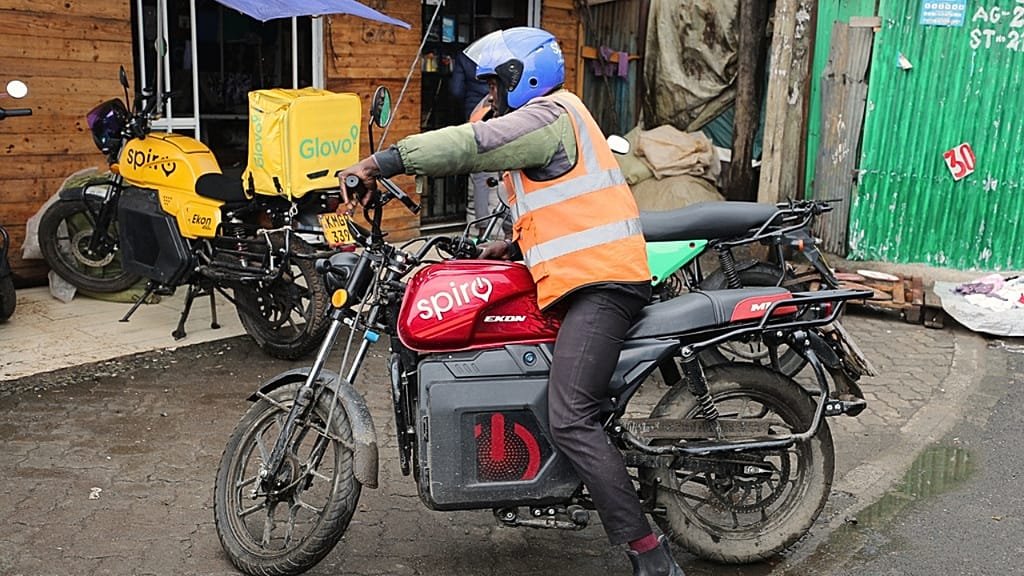
Africa’s imports of electric motorcycles and three-wheelers from China surged by 60 per cent in the first half of 2026, highlighting the growing shift towards electric mobility across the continent.
Imports rose to $114.6 million during the period, with North African countries including Morocco, Egypt and Algeria accounting for much of the increase and emerging as major destinations for Chinese-built electric scooters.
Two- and three-wheelers are widely used across Africa, particularly for commercial transportation and delivery services. Their transition from petrol and diesel engines to electric power could help reduce fuel consumption and urban air pollution.
Morocco recorded the highest imports during the period, bringing in 80,188 electric motorcycles valued at $21.7 million, followed by Egypt and Algeria.
In sub-Saharan Africa, South Africa recorded the highest imports, with 19,635 electric motorcycles worth $6.9 million.
According to Peter Kossakowski, an independent electric two- and three-wheeler specialist, the figures reflect differences between the North African and sub-Saharan markets.
“In North Africa, Chinese imports are largely electric scooters and mopeds bought by consumers for commuting and short trips,” he said.
By contrast, he said motorcycles in East and West Africa are more commonly used as commercial assets, with riders sometimes travelling up to 150 kilometres a day to transport passengers and goods.
Investment in electric-vehicle startups is also increasingly concentrated in East and Central Africa, where companies are developing local assembly plants, battery-swapping networks and commercial motorcycle ecosystems.
Spiro, described as Africa’s largest electric motorcycle company, raised more than $348 million in investments over the past year, while other firms are investing in local assembly and battery-swapping and charging infrastructure targeting motorcycle taxis and delivery operators.
Tom Courtright, a non-resident fellow at the African Tech Futures Lab, said Chinese manufacturers supply many electric motorcycles used in East and West Africa, while local companies are adapting the vehicles for commercial operations and developing the supporting energy infrastructure.
He said battery swapping was particularly important for commercial riders because it allows depleted batteries to be replaced quickly instead of waiting for motorcycles to recharge.
Electric motorcycles accounted for about 20 per cent of motorcycle sales in Uganda last year and approximately 15 per cent in Kenya, Courtright said.
He estimated that widespread electrification could eventually reduce fuel imports by about $600 million annually in Uganda and between $600 million and $800 million in Kenya.
However, Kossakowski cautioned that Chinese customs figures measure vehicles entering countries rather than those ultimately registered or put into use.
He also noted that much of sub-Saharan Africa’s electric motorcycle industry remains focused on assembling imported components rather than manufacturing vehicles entirely locally. Motors, controllers and battery cells are still largely imported, while local production is concentrated on simpler components such as seats, footrests and metal frames.
Kossakowski said the region’s strongest competitive advantage could lie in the wider ecosystem developing around commercial motorcycles, including battery swapping, financing and servicing.
However, fragmented battery systems could constrain future growth. Many operators use proprietary batteries, connectors and software, preventing riders from easily switching between networks and limiting economies of scale for local battery manufacturing.
“Battery swapping solved the range problem by building closed systems,” Kossakowski said. “It now costs the sector twice by limiting manufacturing scale and battery resale value.”
Courtright said the continued expansion of electric motorcycles would depend on affordable financing, reliable electricity, adequate charging and battery-swapping infrastructure, predictable government policies and greater standardisation across African markets.


