


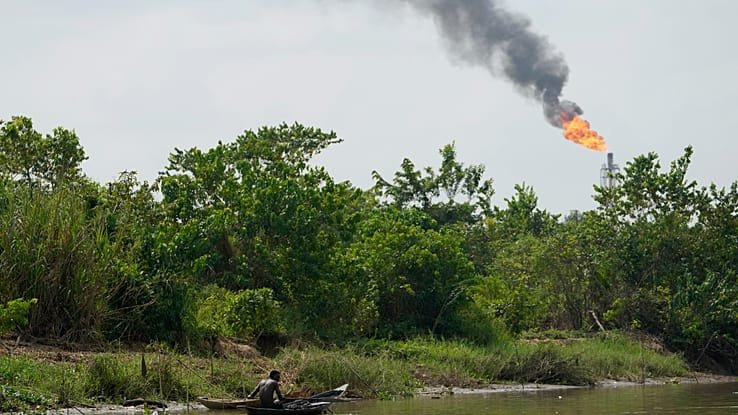
Oil production activities are worsening environmental degradation and affecting agricultural output in the Republic of Congo, according to a report by the Catholic Church and Caritas.
The report, co-authored by the Diocese of Pointe-Noire and Caritas, said farmers in the Kouilou department had reported significant declines in cassava yields, raising concerns about the impact of oil-related activities on local livelihoods.
It also said fruit trees in the area had been affected by unusual diseases, with some trees reportedly drying up or losing their fruits before they mature, French broadcaster RFI reported.
According to the report, residents have attributed the environmental problems to gas flaring by oil companies operating in the region.
It further alleged that soil, water and air in affected communities had recorded contamination levels exceeding limits established by the World Health Organisation.
The diocese identified TotalEnergies, Eni, Congo’s national oil company SNPC and Wing Wah among the companies it associated with the reported environmental problems.
Gas flaring was banned in the Republic of Congo in 2007, although the authorities granted exemptions in 2022.
The report adds to concerns previously raised by international rights organisations over the environmental and human rights impact of industrial activities in the country.
In 2024, Amnesty International said Congolese authorities were not doing enough to ensure that industrial companies protected human rights and the environment in communities where they operate.
The organisation examined oil spills and smoke emissions associated with the activities of TotalEnergies EP Congo, Wing Wah and Metssa Congo, as well as their reported impact on communities in the Pointe-Noire and Kouilou departments along the Atlantic coast.
The latest report by the Diocese of Pointe-Noire and Caritas has renewed concerns over the effects of oil production on farming communities and the wider environment in the oil-producing region.


