


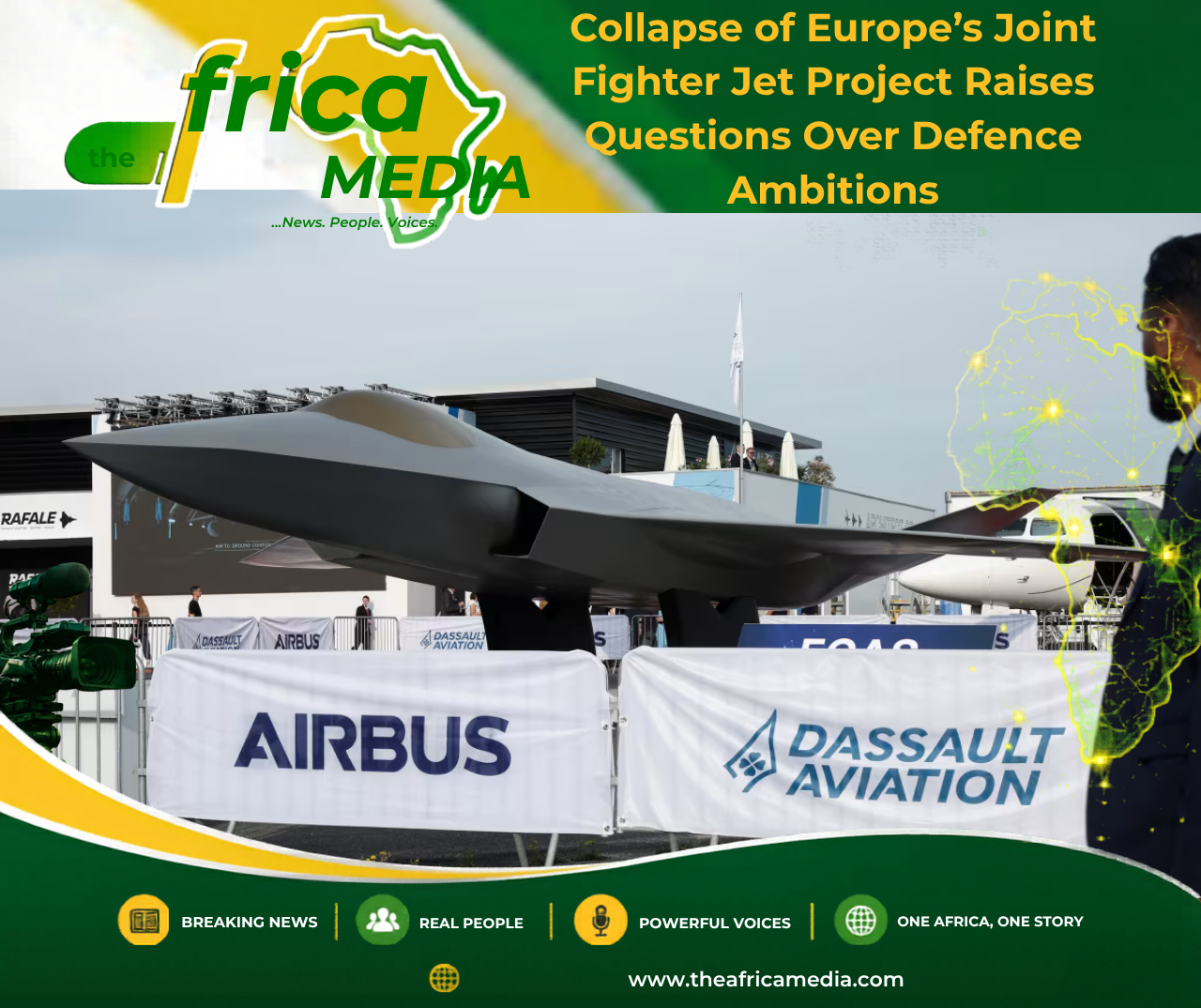
Europe’s plans to develop a next-generation fighter jet capable of rivaling the US-made F-35 have officially collapsed. This deals a major blow to one of the continent’s most ambitious defence projects.
The fighter aircraft was the centerpiece of the Future Combat Air System (FCAS), a joint initiative launched by France and Germany in 2017 to strengthen European military cooperation. The project also aimed to reduce reliance on foreign defence technology. However, years of disagreements between manufacturers and conflicting military requirements ultimately brought the project to an end.
The aircraft was to be jointly developed by French aerospace company Dassault Aviation and European aerospace group Airbus. Industry experts say the two sides struggled to agree on the aircraft’s design, capabilities, and production responsibilities.
While the fighter jet project has been abandoned, other elements of FCAS — including advanced military drones and a digital “combat cloud” designed to share battlefield information — may still continue.
Analysts note that France and Germany had different visions for the aircraft from the beginning. France sought a versatile multi-role fighter similar to its Dassault Rafale, capable of conducting a wide range of missions. Germany, meanwhile, favored a more traditional air-superiority platform and explored concepts that could eventually reduce the role of human pilots.
The collapse also raises broader concerns about Europe’s ability to jointly develop major defence systems. This comes at a time when the continent is seeking greater military independence amid changing relations with the United States under President Donald Trump.
Despite the setback, defence experts argue that Europe’s military capabilities are unlikely to suffer significantly in the short term. They point out that modern warfare increasingly relies on networks, artificial intelligence, and unmanned systems rather than fighter aircraft alone.
The failure of the project comes as European nations continue increasing defence spending and prioritising domestically produced military equipment. For example, countries such as Germany and Denmark have recently shifted procurement policies toward European-made systems. This reflects a broader push for strategic autonomy.
Some analysts believe the end of the fighter jet programme could even benefit European defence. This could happen if the funds originally allocated to it are redirected toward more immediate military needs, including ammunition production, equipment stockpiles, drones, and battlefield technologies.
The collapse of the FCAS fighter project also casts uncertainty over future Franco-German defence cooperation, including plans to jointly develop a next-generation battle tank. However, both governments have indicated they remain committed to working together on other defence initiatives.
With security concerns across Europe growing and military budgets rising, the challenge now will be finding faster and more practical ways to strengthen the continent’s defence capabilities. At the same time, it is important to maintain cooperation among its major powers.


