



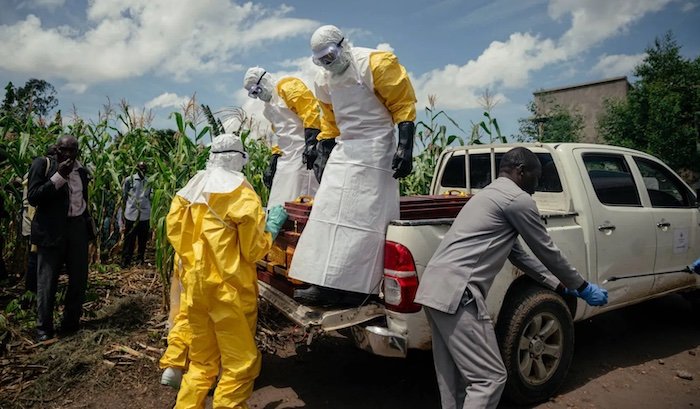
The Democratic Republic of Congo is set to receive 70,000 doses of the Ervebo Ebola vaccine as health authorities intensify efforts to contain an outbreak that has become the largest Ebola epidemic ever recorded in the country.
The allocation, announced by the World Health Organization and its partners, comes as the outbreak continues to spread rapidly across six provinces. More than 5,000 confirmed cases and about 2,400 deaths have now been reported, according to recent official figures. The outbreak has been described by health officials as exceptionally fast moving, raising fears that it could become one of the most serious Ebola epidemics ever seen.
The outbreak is being caused by the Bundibugyo virus, a strain for which there is currently no licensed vaccine or approved treatment. This creates a major challenge for health authorities attempting to slow transmission and protect communities and medical workers.
Ervebo, the vaccine being supplied, is licensed for protection against Ebola virus disease caused by the Ebola virus, commonly known as the Zaire strain. It has played an important role in previous Ebola outbreaks. However, scientists do not yet know whether it can effectively protect people against the Bundibugyo virus.
The World Health Organization has said laboratory and animal research provides some reason to investigate whether Ervebo could offer protection, but evidence remains limited. For that reason, the vaccine is being used within a controlled research programme rather than being presented as a proven solution to the current outbreak.
Of the 70,000 doses being released, 20,000 will be used in a Phase 3 clinical trial designed to assess whether the vaccine can protect against Bundibugyo virus. The remaining 50,000 doses will be allocated to frontline and healthcare workers in line with recommendations from WHO experts.
The decision comes as health authorities face enormous difficulties in tracking infections. Recent reports have highlighted problems with contact tracing, healthcare access and community trust, particularly in areas affected by conflict and weak health infrastructure. WHO has warned that sustained transmission could continue for months without a stronger response.
The current epidemic has already surpassed previous Ebola outbreaks in Congo in both infections and deaths. It is also spreading considerably faster than the devastating 2014 to 2016 West African Ebola epidemic, which killed more than 11,000 people and remains the deadliest Ebola outbreak on record.
Health experts say vaccination alone will not stop the crisis. Surveillance, rapid testing, treatment, contact tracing, infection prevention and community engagement will all be essential to bringing the outbreak under control.
For Congo, the arrival of the vaccine represents an important opportunity to protect those working on the front line while also generating urgently needed scientific evidence about how to fight the Bundibugyo virus.


