



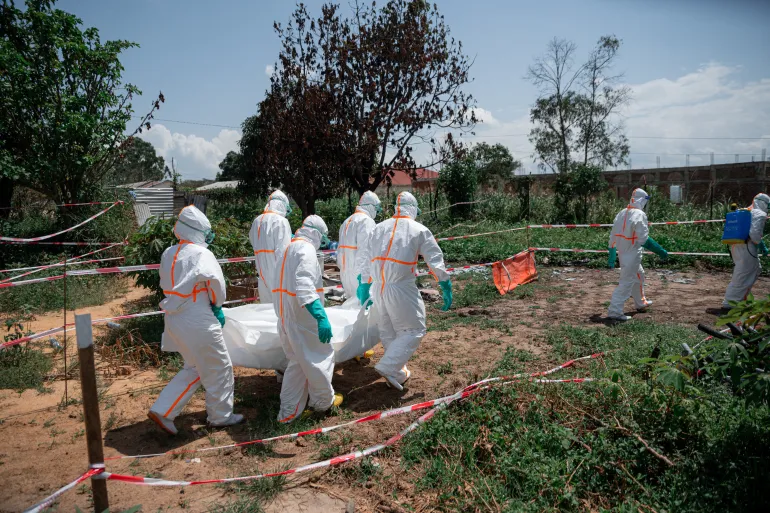
The latest Ebola outbreak in the Democratic Republic of Congo (DRC) has spread to a sixth province after a death was recorded in the previously unaffected Bas-Uele province, health officials have confirmed.
Jean Kaseya, head of the Africa Centres for Disease Control and Prevention (Africa CDC), said a man died in the city of Buta, the capital of Bas-Uele, after travelling from the neighbouring Haut-Uele province, where infections have already been reported.
Health Officials Warn of Growing Crisis
Kaseya warned that the outbreak could become the largest Ebola epidemic ever recorded if it is not brought under control.
“If we do not stop this outbreak, it will last more than a year and will be the largest in the world,” he said, adding that continued transmission would increase the risk of the virus spreading beyond the DRC’s borders.
The World Health Organization (WHO) has also expressed concern, saying the outbreak is spreading faster than any previous Ebola epidemic.
Death Toll Continues to Rise
According to government figures, the outbreak has resulted in 2,128 deaths from approximately 4,566 recorded cases.
The virus, which began spreading in the northeastern Ituri province, has since been detected in North Kivu, South Kivu, Haut-Uele, Tshopo and now Bas-Uele provinces.
WHO Director-General Tedros Adhanom Ghebreyesus warned that the outbreak is on course to surpass the deadliest Ebola epidemic on record, which began more than a decade ago and claimed over 11,000 lives.
Although the outbreak was officially declared on May 15, health authorities revealed that the virus had likely been circulating since February before being detected.
No Approved Vaccine Yet
The current outbreak is being driven by the Bundibugyo strain of Ebola, for which there are currently no approved vaccines or treatments.
However, efforts to combat the disease are underway. Clinical trials of two potential treatments began in Ituri province last month, while two vaccines specifically developed for the Bundibugyo strain are being tested in humans for the first time.
The WHO is also evaluating whether an existing Ebola vaccine could offer protection against the virus after promising results from animal studies.
WHO Targets Containment
The UN health agency hopes to reverse the spread of the outbreak within the next three months, although officials have cautioned that eliminating the disease entirely will take longer.
Ebola is a highly contagious viral disease that spreads through contact with infected bodily fluids and contaminated materials such as bedding and clothing. The illness can cause severe symptoms and is often fatal if not treated promptly.
Health authorities continue to intensify surveillance, testing and treatment efforts as they work to contain the outbreak and prevent further spread across the country and beyond.


