


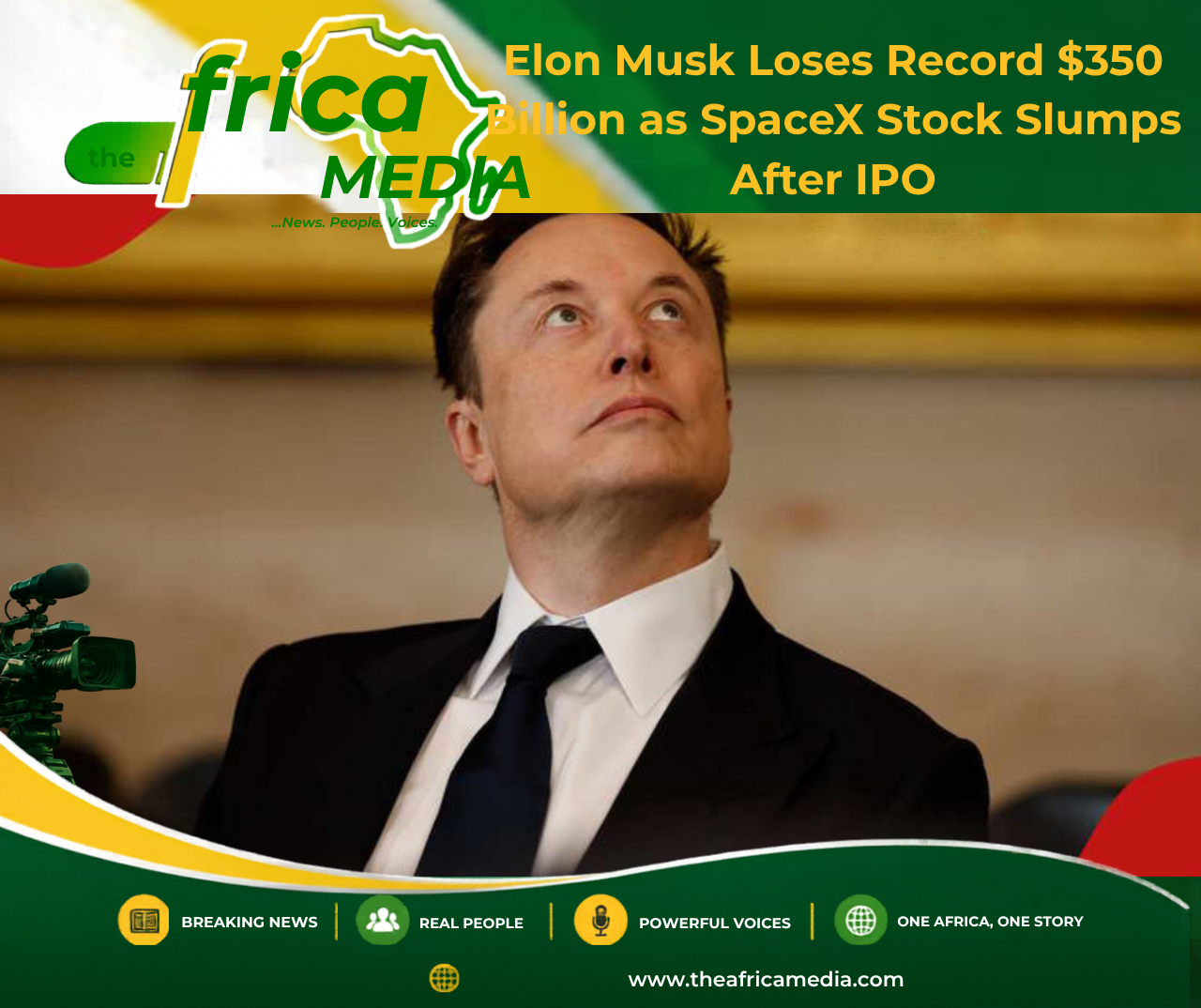
Elon Musk has suffered the largest weekly decline in personal wealth ever recorded, with his net worth dropping by an estimated $350 billion following a sharp fall in the share price of SpaceX after its highly anticipated public listing.
According to reports, Musk’s fortune fell from a peak of about $1.45 trillion to roughly $1.1 trillion within a week as SpaceX shares declined more than 30% from their post-IPO high. Despite the massive loss, he remains one of the wealthiest people in the world and is still valued at over $1 trillion by some estimates.
SpaceX’s Rapid Rise and Sudden Fall
SpaceX made history when it launched its initial public offering (IPO) in June 2026, with shares priced at $135. Investor enthusiasm quickly pushed the stock higher, sending the company’s valuation above $2 trillion and briefly making Musk the world’s first trillionaire.
However, the rally proved short-lived. Shares later retreated sharply, erasing hundreds of billions of dollars in market value. The decline accelerated after SpaceX announced plans to raise $20 billion through a bond offering to support its artificial intelligence expansion strategy, a move that sparked concerns among investors.
Investor Concerns Drive Sell-Off
Analysts say the sell-off was driven by a combination of factors, including:
- Concerns about increased borrowing to fund future projects.
- Growing fears that technology and AI-related stocks may be overvalued.
- Wider market volatility and expectations of higher interest rates.
- Questions about whether SpaceX’s lofty valuation can be sustained over the long term.
Still the World’s Richest Figure
Although Musk’s wealth has fallen dramatically, the majority of his fortune remains tied to his holdings in SpaceX and Tesla. Financial rankings continue to place him well ahead of other billionaires despite the recent market correction.
The episode highlights the extreme volatility that can follow major stock market debuts, particularly for high-growth technology companies whose valuations are heavily influenced by investor expectations about future innovation and expansion.


