


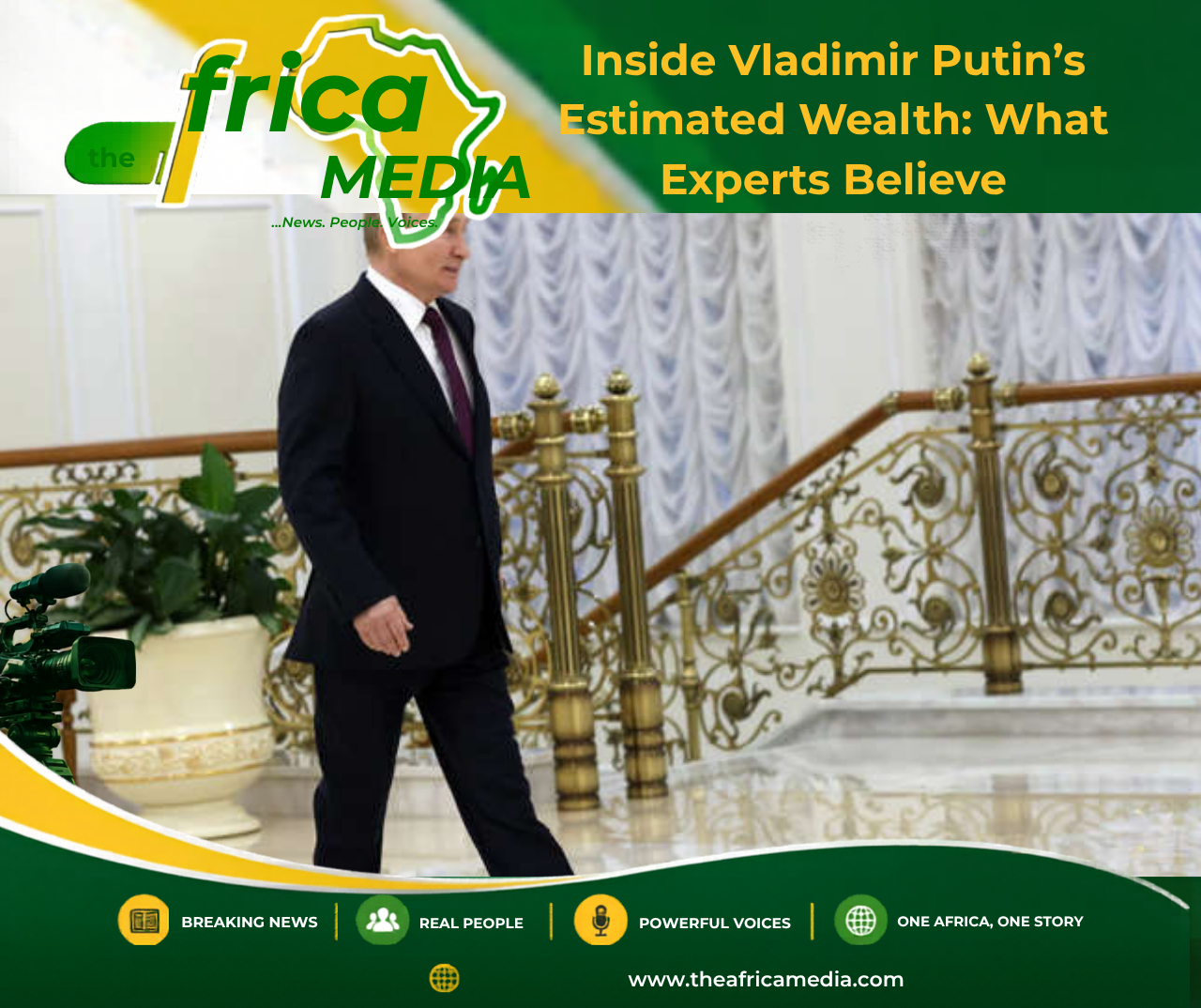
Russian President Vladimir Putin officially portrays himself as having relatively modest personal wealth.
As part of his 2024 re-election campaign, Putin’s financial disclosures listed income primarily from his presidential salary, pensions, and savings. The filings also included a limited number of declared assets, such as bank accounts, an apartment, a garage, and a small collection of vehicles.
However, many analysts, political observers, and anti-corruption investigators have long argued that Putin’s true wealth may be far greater than what appears in official records.
What the Official Records Show
According to publicly released disclosures, Putin’s declared assets include:
- Income from his government salary and pensions.
- Several bank accounts and savings.
- An apartment in Saint Petersburg.
- A garage and a few vehicles.
Based solely on these declarations, Putin would appear wealthy by ordinary standards but far from being one of the world’s richest individuals.
Why Experts Dispute the Official Picture
Critics argue that official disclosures may not reflect the full extent of Putin’s influence over assets allegedly held through associates, family members, or business allies.
Over the years, various investigations by journalists, opposition figures, and researchers have claimed that Putin may have access to:
- Luxury residences and estates.
- Yachts and private aircraft.
- Financial interests connected to powerful Russian business figures.
- Extensive hidden assets held through complex ownership structures.
Estimates Vary Widely
Because there is no publicly verified evidence establishing Putin’s actual net worth, estimates vary dramatically.
Some commentators have suggested his wealth could amount to tens of billions of dollars, while others have speculated even higher figures. These estimates are largely based on allegations of indirect control over assets rather than documented ownership.
Importantly, none of the highest estimates have been independently verified, and there is no publicly available financial record proving that Putin personally owns the vast fortunes often attributed to him.
Why It Is Difficult to Know
Determining the wealth of political leaders in highly centralized systems can be challenging because:
- Assets may be held by relatives, associates, or trusted intermediaries.
- Ownership records can be difficult to access.
- Much of the evidence comes from investigative reports rather than official documentation.
- Governments often dispute or deny such claims.
The Bottom Line
Officially, Putin’s declared wealth is relatively modest and consists mainly of salary income, savings, and a small number of assets. Unofficially, many experts and investigators believe he may have access to far greater resources through networks of allies and associates. However, the true extent of his wealth remains unknown, and the largest estimates have not been conclusively proven.


