



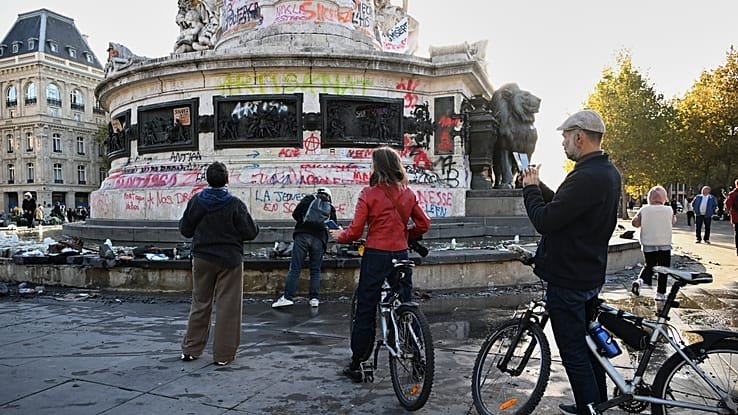
Cities across France were left counting the cost of violent protests on Sunday, with smashed storefronts, burned buildings and damaged streets marking the aftermath of demonstrations over the rising cost of living.
More than 500,000 people took part in nationwide protests on Saturday, with Paris, Marseille, Bordeaux, Limoges and Nice among the cities hit by clashes between demonstrators and police, widespread looting and fires.
French Prime Minister Sébastien Lecornu condemned what he described as the “extreme intensity” of the violence, saying 1,200 people had been arrested and 150 police officers injured.
A 17-year-old boy also lost his right hand after a crowd-control grenade exploded in the southern city of Saint-Etienne.
The unrest followed weeks of student protests and erupted about six months before France’s presidential elections, drawing international attention to the country’s growing social tensions.
The demonstrations also triggered political reactions abroad, with United States Vice President JD Vance blaming immigration and what he called “problems of assimilation” for the unrest in a social media post, without providing evidence to support the claim.
Far-right leader Marine Le Pen accused the party of her far-left presidential rival, Jean-Luc Mélenchon, of having “legitimised the violence.”
Mélenchon, who had backed the demonstrations and student protests, urged participants to refrain from looting, describing such actions as “contrary to our methods.”
President Emmanuel Macron vowed that those responsible for vandalism, attacks on administrative offices and businesses, and looting would face legal consequences.
He said those involved in the destruction, including incidents at town halls, would be prosecuted and punished.


