


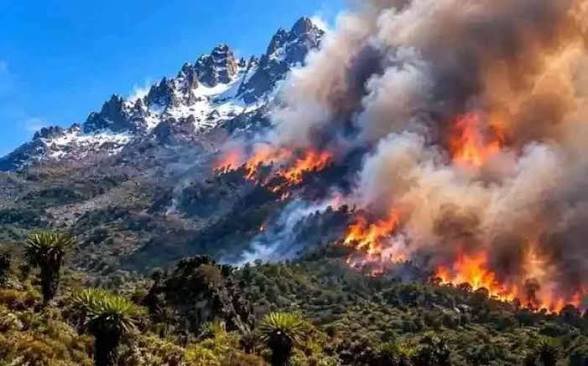
A wildfire has destroyed about 8,700 hectares of vegetation on Mount Kenya since it was first reported on September 1, raising concerns over its potential impact on wildlife, water sources and the mountain’s fragile high-altitude ecosystems.
Mount Kenya Trust, an environmental conservation organisation, disclosed the extent of the damage as firefighting teams continued efforts to contain the remaining flames.
The cause of the wildfire has yet to be established by authorities.
Teams from Mount Kenya Trust, the Kenya Forest Service, Kenya Wildlife Service, Kenya Defence Forces, Lewa Wildlife Conservancy and Rhino Ark, supported by local community members and aerial assistance from Tropic Air, were involved in efforts to bring the fire under control on Tuesday.
Conservationists are particularly concerned about the possible effects of the blaze on the mountain’s unique alpine habitats and wildlife.
Mount Kenya National Park and the surrounding natural forest form part of a UNESCO World Heritage site, which includes forests, wetlands and alpine ecosystems of significant ecological value.
The mountain is also a major source of water for communities, farms and wildlife across parts of central and eastern Kenya, with several rivers originating from its slopes.
The wider Mount Kenya ecosystem provides habitat for several threatened species, including the critically endangered mountain bongo.
Standing at 5,199 metres above sea level, Mount Kenya is the highest mountain in Kenya and the second-highest in Africa, after Mount Kilimanjaro in neighbouring Tanzania, which rises to 5,895 metres.
Although Mount Kenya is significantly lower than Mount Everest, the world’s highest mountain at 8,849 metres, its equatorial alpine environment, glaciers and rich biodiversity make it an important ecological site of global significance.
The ongoing wildfire has therefore heightened concerns about the long-term effects of vegetation loss on the mountain’s biodiversity and its role as a critical water catchment for the region.


